






































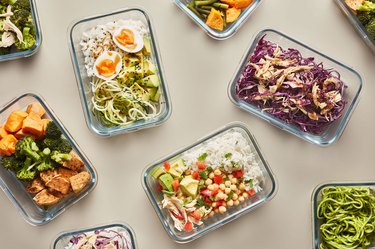





In the last few days before an endurance competition, such as a marathon, a triathlon or a long-distance mountain-bike race, you may benefit from a carbohydrate-loading diet. The goal of following this diet after a after carbohydrate-depletion diet is to maximize your glycogen, or stored carbohydrate, for fuel for your muscles. Carbohydrate-loading can have slightly different effects on each individual, and as such, you need to find a personal strategy which work best for you.
Starches
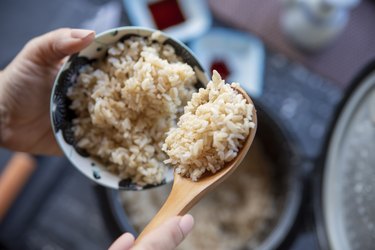
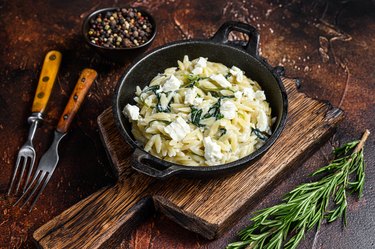
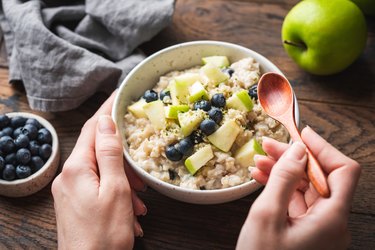
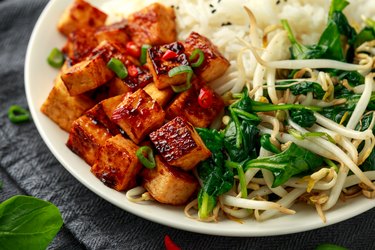
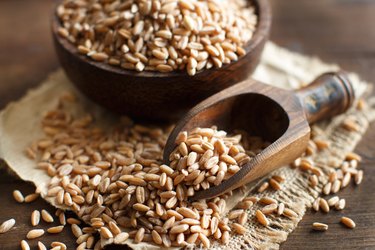
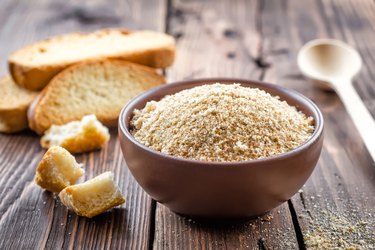
Starchy foods are very concentrated sources of carbohydrates, and good choices for a carbohydrate-loading diet include grains and starchy vegetables. Cooked pasta has 20 g carbohydrate per 1/2 -cup cooked, while a slice of wheat bread or 1/2 cup of oatmeal has 13 g, and 1/2 -cup of white rice has 15 g. A baked potato has 34 g carbohydrates, and 1/2 cup of cooked carrots has 7 g, according to Iowa State University. You should obtain 3.5 to 4.5 g of carbohydrates per pound of body weight during your carbohydrate-loading phase, according to the Mayo Clinic.
Peanuts, Nuts and Dairy
Peanut butter provides 6 g per 2-tbsp. serving, while walnuts have 4 g per 1/4 cup. Peanuts and nuts are not as high in carbohydrates as grains and fruit, but they are good foods to include in your carbohydrate-loading diet because they are high in heart-healthy fats. Dairy products provide calcium and protein. Each cup of milk has 12 g of carbohydrate, while 1 cup of sugar-sweetened, low-fat fruit yogurt has 47 g carbohydrates and chocolate ice cream has 18 g per 1/2 cup.
Fruits and Vegetables
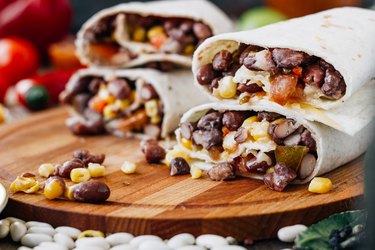
Most fruits get nearly all of their calories from carbohydrates, and good choices for carb-loading include strawberries with 6 g carbohydrate per 1/2 cup, fruit juice with 46 g carbohydrates per 12-oz. serving, and apples with 25 g each. Baby carrots have 10 g of carbohydrate per 12-carrot serving, while 1 cup of broccoli has 11 g. Dietary fiber can give you cramps, so do not have high-fiber foods for a day or two before your event. MayoClinic.com recommends avoiding beans, with about 6 to 10 g per 1/2 cup and broccoli with about 5 g of fiber per 1-cup serving, cooked.
Sports Supplements
Many sports nutrition supplements and meal replacement bars or shakes are high in carbohydrates and you can use them as foods on your carbohydrate-loading diet. They are easy to carry around so that you do not find yourself without the carbohydrates you need to maximize your glycogen stores. Your body is fast to digest high-glycemic sports gels or drinks, and these sports supplements can also help keep your energy levels up during a competition. Take them immediately after you finish exercising to promote glycogen replenishment.


Member Comments