






















































Duck Fat and Cholesterol

Duck Fat and Cholesterol
Photo Credit Jupiterimages/Comstock/Getty Images

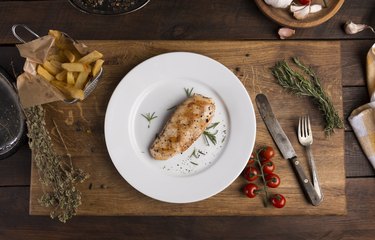
The most commonly eaten duck in the U.S. is the Pekin, and the meat is primarily taken from the breast and the legs. Duck is a particularly succulent meat, primarily because of its high fat content. While duck offers a plentitude of nutritional value, including healthy fats, protein, minerals and vitamins, it is high in unhealthy saturated fat and cholesterol.

Total Fats

The majority of the weight and caloric value of duck comes from fat. Raw duck meat, containing both the skin and flesh, contains 39.34 g of fat per 100 g. Fat contains 9 calories per 1 g, so a 100 g serving of duck meat contains about 354 calories from fat. Most adults need about 44 to 78 g of fat each day, according to the Mayo Clinic.

Monounsaturated Fats

The majority of the fat in duck meat is healthy, monounsaturated fat. Monounsaturated fat can help reduce your low-density lipoprotein, or unhealthy cholesterol, levels and improve your overall cardiovascular health. Of the 39.34 g of total fat in a 100 g serving of duck meat, about 18.7 g come from monounsaturated fats.

Saturated Fats

Duck meat also contains an abundance of saturated fat, with over 13 g per 100 g serving. While monounsaturated fat lowers blood cholesterol, saturated fat intake is associated with elevated LDL cholesterol levels and increased cardiovascular risk. Major health organizations vary slightly in their recommended maximum daily saturated fat intake, with the American Heart Association being the strictest, advising 7 percent of total caloric intake.

Polyunsaturated Fats

Duck meat contains about 5 g of polyunsaturated fats per 100-g serving. Like monounsaturated fats, polyunsaturated fats can help lower LDL cholesterol and improve cardiovascular health. Polyunsaturated fats may also lower blood glucose levels and reduce the risk of type 2 diabetes, according to the Mayo Clinic. Monounsaturated and polyunsaturated fat should comprise the vast majority of your dietary fat intake.

Cholesterol

A 100 g serving of duck meat contains 76 mg of cholesterol. Cholesterol is a compound lipid, found only in animal products. This natural animal lipid is similar to saturated fat and can increase the risk of cardiovascular disease when consumed in excess. Both the USDA and AHA recommend consuming less than 300 mg of cholesterol each day, and 200 mg or less if you have a history of cardiovascular problems.

References

Article reviewed by JEL Last updated on: May 31, 2011

Must see: Photo Galleries