

































































Bedridden Exercises for CFS

Chronic fatigue syndrome, or CFS, is the more commonly used term for myalgic encephalomyelitis, a condition that affects the immune and nervous systems. CFS is a debilitating illness in which you may experience extreme exhaustion, muscle and joint pain, headaches, disruptive sleep patterns and overall weakness. For reasons that are not clear, some people can function with CFS better than others. Unfortunately, some people may become bedridden. Even if you are quite ill from CFS, you may be able to perform easy exercises.

Avoiding "Push and Crash"

If you are stricken with CFS to the point that managing everyday activities is near impossible, making you housebound, exercise may be the last thing on your mind. However, people who can manage even a few minutes of flexibility exercises may begin to feel better over time and might be able to undertake everyday activities like getting dressed, reports the Centers for Disease Control and Prevention. Following a strict exercise-to-rest ratio is important to avoid the post-exertional crash that some people with CFS experience after exercising. For every minute of exercise, no matter how minor the activity, rest for three minutes before resuming exercise.

Pacing

Everyone who has CFS must pace themselves to avoid the "payback" of exerting themselves too much too soon. Becoming bedridden by chronic fatigue syndrome is the worst case scenario of the disease. If you are bedridden, speak to your physician about the level of exercise that is appropriate for you to begin, and stick with your plan until you can perform the exercises without experiencing payback, or the post-exertional crash the next day. Always stop exercising before you become tired, to conserve your strength. Recognize your limits and realize that if you are bedridden, you may not be able to exercise at all without feeling completely sapped of energy.

Hand Stretches

Hand stretches are the first exercise that you may be able to accomplish from your bed. Simple range of motion exercises are ideal: pumping your hand into a fist, spreading out all fingers wide and touching each finger to your thumb in turn. The number of repetitions you can accomplish will vary according to your energy level on any given day. Numerous repetitions are not as important at this point as simply moving your joints and muscles slowly to avoid atrophy and stiffness. Don't forget to rest three times as long as you push yourself, to avoid crashing.

Increasing Flexibility

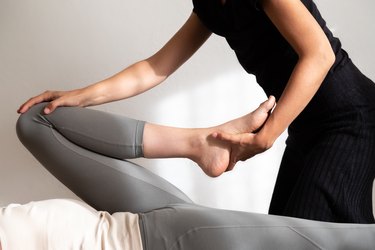
Once you can manage hand stretches, add active range of motion exercises to maintain your flexibility as you rest in bed. Ankle or wrist rotations may be on the low end of the scale in terms of energy output on your part; turn your ankles or wrists in small circles. If you can perform the rotations without experiencing negative effects, progress to knee bends. Place the sole of your foot flat on the bed and slowly inch your foot up toward your buttocks, bending your knee as you go. Elbow bends and shoulder shrugs are also range of motion exercises that can help you stay limber.

References

Article reviewed by J.A. Rist Last updated on: Jun 2, 2011

Must see: Photo Galleries