































































Fish Oil and Niacin Vs. Cholesterol

Fish Oil and Niacin Vs. Cholesterol
Photo Credit Jupiterimages/Photos.com/Getty Images

Your bloodstream contains three types of lipids that affect your cardiovascular health: low-density lipoprotein cholesterol, high-density lipoprotein cholesterol and triglycerides. Each lipid responds differently to foods and dietary supplements. Niacin can improve all of your lipids, but proves more beneficial for HDL cholesterol than LDL cholesterol. Fish oil can lower triglycerides but large doses may elevate your LDL cholesterol.

Cholesterol and Triglycerides

Aim to keep your total cholesterol -- a number that includes the total of your LDL cholesterol and HDL cholesterol and a percentage of your triglycerides -- below 200 mg/dl, or milligrams per deciliter of blood. Your LDL, or "bad" cholesterol, should stay below 100 mg/dl or lower if you face additional risks for heart attacks or strokes. Keep your HDL cholesterol, the "good" cholesterol that helps eliminate LDL cholesterol and triglycerides from your arteries, to 60 mg/dl or more. Healthy triglycerides measure 150 mg/dl or less. The American Heart Association in April 2011 lowered its recommendation for triglyceride levels to 100 mg/dl or less.

Niacin

Niacin, prescribed for more than 50 years to improve cholesterol levels, may not offer as much protection from heart disease as believed. The National Institutes of Health halted a multi-year niacin study 18 months earlier than planned because of disappointing results. All of the 3,414 participants in the trial took statins, a drug that lowers LDL cholesterol. About half also took 2,200 mg of niacin daily. The persons who took the combination treatment enjoyed lower levels of triglycerides and higher levels of protective HDL cholesterol than participants who took only statins. But persons who took niacin suffered just as many heart attacks and twice as many strokes as persons who took only statins. NIH halted the study in May 2011.

Fish Oil

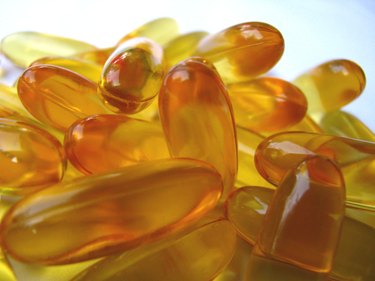
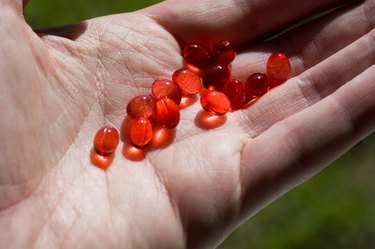
Fish oil contains omega-3 fatty acids and can counteract the artery-clogging effects of saturated fat in your diet. The American Heart Association recommends you eat fish at least twice a week. You can obtain more omega-3 fatty acids if you take fish oil supplements. This could benefit your triglycerides but harm your LDL cholesterol. In one study, a 68-year-old woman took 2.8 g of fish oil daily for six weeks. Her triglycerides lowered by nearly 50 percent, but her LDL levels nearly doubled, according to an article published in the July 2007 issue of "The Annals of Pharmacotherapy."

Considerations

Talk to your doctor before taking large amounts -- anything more than 100 mg daily -- of niacin. Side effects include liver disease, stomach ulcers and skin flushes -- redness, burning and tingling in your face and chest. Timed-release niacin helps alleviate flushes but increases your risk of liver disease. Your diet naturally contains small amounts of niacin; about 14 mg to 16 mg daily, from sources such as beets, tuna, poultry and breakfast cereals. Do not take more than 3 mg daily of fish oil. You will not exceed this dose eating three servings -- about 3 oz. of cooked or 3/4 cup of flaked -- fish per week.

References

Article reviewed by Carolyn Williams Last updated on: Jun 5, 2011

Must see: Photo Galleries

Member Comments