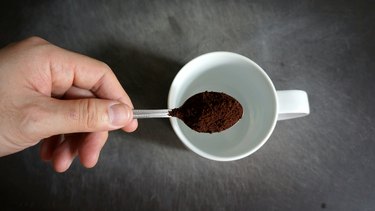
Mornings are hard. When you're rushing out the door, it makes sense to reach for a cup of instant coffee rather than waiting for it to brew — but how much caffeine is in instant coffee? Will you feel the same effects?
Tip
Instant coffee may be quick, but it doesn't pack the same punch as regular coffee. One 2-gram packet contains only 63 milligrams of caffeine.
Video of the Day
Instant Coffee vs. Brewed Coffee
The main difference between instant coffee and brewed coffee is the way it's prepared. Like regular coffee, instant coffee comes from beans that are ground, brewed, and then freeze-dried or spray-dried into a concentrated powder. This means that once the powder is mixed with water, it will regain normal coffee flavor and texture.
Video of the Day
According to the USDA, one 2-gram packet of instant coffee contains 63 milligrams of caffeine. One cup (8 fluid ounces) of regular-brewed coffee contains 92 milligrams of caffeine. Though you may notice the strong taste in instant coffee, it actually packs less punch.
One shot of espresso (1 fluid ounce) contains 63 milligrams of caffeine, equivalent to the amount of caffeine in instant coffee.
Read more: How Many Cups of Coffee Can You Drink a Day?
Caffeine Can Vary by Brand
Depending on where you get your morning brew, the amount of caffeine may vary slightly. For instance, one Starbucks "Tall" coffee contains 260 milligrams of caffeine, much higher than your average cup of joe. Meanwhile, 1 teaspoon of Folgers Classic Roast instant coffee contains 74 milligrams of caffeine, according to the Center for Science in the Public Interest.
Caffeine content is difficult to measure by size or variety of coffee. Instead, check the specific nutrition information for the brand you like to drink. A September 2013 study in the_ Journal of Caffeine Research_ found that the caffeine in a cup of coffee can be anywhere between 50 milligrams and 330 milligrams, depending on where you get it.
Is Instant Coffee Healthy?
For the most part, instant coffee is nutritionally similar to regular coffee, since it's made pretty much the same way. And research has shown that coffee (in moderation) is healthy for you and can even lower your risk of many fatal diseases, according to a November 2015 study by Circulation.
One thing to look out for, however, is the amount of acrylamide that might be present in instant coffee. Acrylamide is a chemical formed in coffee during the high-temperature roasting process, and it has been named as a possible carcinogen, according to a December 2015 study by the American Journal of Preventive Medicine.
Presently, though, the link between acrylamide and cancer is still too weak to prompt any major warning signs. If you're trying to be super careful about the quality of the coffee you drink, you might want to steer clear of instant coffee, since it contains a higher amount of acrylamide than the regular-brewed variety.
It's worth noting that acrylamide isn't found just in coffee — it's also present in a number of fried foods, bread and cereal. But the quantity is usually small enough not to warrant concern.
When to Drink Instant
Don't worry about reaching for that speedy cup of instant coffee on days when you need it. While the caffeine in instant coffee compared to brewed coffee is slightly lower, and its health benefits slightly less, these are only modest differences. Overall, it's the same beverage you've grown to know and love — just a whole lot quicker to prepare.
- United States Department of Agriculture: "USDA Food Composition Databases"
- Center for Science in the Public Interest: "Caffeine Content List"
- Circulation: "Association of Coffee Consumption With Total and Cause-Specific Mortality in 3 Large Prospective Cohorts"
- American Journal of Preventative Medicine: "Hot Food and Beverage Consumption and the Risk of Esophageal Cancer"
- Roczniki Państwowego Zakładu Higieny: "Studies of Acrylamide Level in Coffee and Coffee Substitutes: Influence of Raw Material and Manufacturing Conditions"
- Harvard Health Publishing: "Health Benefits of Coffee and a Proposed Warning Label"
- Journal of Caffeine Research: "Caffeine Content Labeling: A Missed Opportunity for Promoting Personal and Public Health"