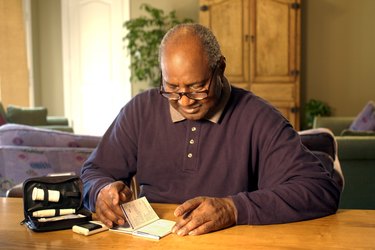
Glucose is a main source of energy for the body, and some amount of glucose, or sugar, always needs to be present in the blood to ensure this energy reaches all of the body cells. But a problem in both prediabetes and diabetes is that too much sugar stays in the blood, and over time these abnormally high levels can harm the body. To reduce the risk of health problems, blood sugars need to be kept as close to a normal range as possible. Monitoring your own blood sugar is the only way to tell if you are keeping your day-to-day readings -- both before and after meals -- within an acceptable range.
Monitoring Blood Sugars
Video of the Day
Self monitoring of blood sugars is accomplished by using a glucose meter or a continuous glucose monitor (CGM). To use a glucose meter, a tiny drop of blood, typically from the fingertips, is placed on a test strip which is inserted into the meter. Within seconds, the meter provides a blood sugar reading. Another way to monitor blood sugar is to use a CGM, in which a small sensor wire under the skin measures glucose in the fluid between your cells, and wirelessly sends the information to a monitor, insulin pump or smart phone.
Video of the Day
Blood Sugar Targets
The amount of sugar in the blood is not constant and can vary minute to minute. So your goal is not a specific blood sugar number, but an acceptable or target range. After fasting, a person without diabetes or prediabetes will have a blood sugar between 70 to 99 mg/dL, according to the American Diabetes Association (ADA). If a person has a diagnosis of diabetes, ADA's target range for home checks of fasting, or premeal blood sugars is between 80 to 130 mg/dL. ADA does not yet have specific testing targets for prediabetes, so ask your doctor for guidance. However, people with prediabetes should try to achieve readings at least within the diabetes target range.
What to Expect After Meals
Food affects blood sugars, and most people who monitor their blood sugars notice their readings rise -- and can be more challenging to control -- after meals. If you do not have diabetes or prediabetes, your blood sugars may rise only slightly after meals -- typically not exceeding 140 mg/dL when checked 2 hours after the start of a meal. If you have diabetes, ADA recommends post-meal blood sugars stay below 180 mg/dL. If your readings exceed this, you may be able to improve them. For instance, blood sugar can often be reduced by eating smaller meals, choosing healthful, high fiber foods, increasing physical activity, and by taking prescribed diabetes medications on time. If your readings are consistently above target, work with your doctor and diabetes care team to discuss solutions.
The Big Picture
If you have prediabetes or diabetes, your doctor, diabetes educator and dietitian can help you understand how to achieve your target ranges. This may involve a healthy diet with moderate portions, achieving or maintaining a healthy weight, regular physical activity and medications. Monitoring your blood sugar helps you learn how your current lifestyle and medication program works to manage blood sugars, and provides valuable information for your diabetes team team so they can guide you on improving your numbers. If you have tested your blood sugars on your own, and they are outside of the target ranges and you do not yet have a diagnosis of prediabetes or diabetes, see your doctor.
Reviewed by Kay Peck, MPH RD
Is this an emergency? If you are experiencing serious medical symptoms, please see the National Library of Medicine’s list of signs you need emergency medical attention or call 911.