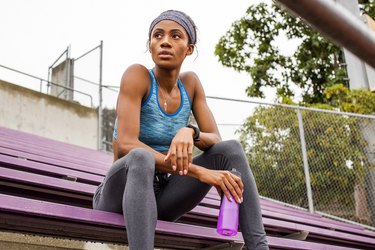
Feeling bloated after working out can be a painful and discouraging experience, but it's not necessarily cause for concern. It might be what you're eating or drinking (or not drinking) that's causing the problem, and making simple adjustments can remedy the situation.
Warning
However, if bloating after workouts persists for more than two weeks, despite your making adjustments, or if you start to experience other symptoms along with the bloating, such as dizziness, pain, fatigue or weakness, contact your doctor.
Video of the Day
Eating Too Much or Too Soon
According to a 2017 study in the Turkish Journal of Gastroenterology, exercise speeds up the movement of gas through your digestive system, which in turn should reduce bloating. However, while physical activity did decrease gas in healthy subjects who participated in the research, their perception of bloating remained unchanged.
Video of the Day
When you engage in vigorous exercise, blood is moved away from your intestines and out to your extremities. This impairs the digestive process, which can lead to bloating if you have eaten too much, too soon before working out.
Consuming a food or other substance that is either hard to digest or that irritates the lining of your intestines may produce similar results. In some instances, working out exacerbates an underlying gastrointestinal disorder, such as irritable bowel syndrome.
Related Reading
Hydration and Electrolyte Imbalance
One of the most common causes of bloating after exercise, water retention occurs as the result of an imbalance in the amount of salt in your body, according to the Mayo Clinic.
The amount of sodium in your body has to be in the right proportion to the amount of blood plasma. If you're dehydrated, overhydrated or otherwise have relatively low levels of sodium, your body starts to get out of balance and bloating can occur.
Dehydration is common when working out. With dehydration, both the levels of sodium and water are low, and you'll stop sweating and retain water. This can lead to a bloated stomach after exercising.
But drinking too much water before, during or after exercise can lead to overhydration, especially in endurance athletes, which leads to bloating because your body is saturated with fluids, and your sodium levels are relatively low.
It could be that you have a tendency to retain water, particularly if you sweat out a lot of salt when exercising. Some beginning exercisers retain water because their bodies interpret working out as a trauma and retain fluids as a precautionary measure.
Medications
Although digestive issues and water retention are the more common causes of abdominal bloating after exercise, other factors can cause or contribute to the problem. Prescription medications can lead to bloating, particularly if they contain lactulose or sorbitol, according to MedlinePlus.
Certain medications, such as anti-depressants and pain control pills, can make you sweat or urinate more. Your body reacts by retaining as much water as possible, leading to a bloated feeling, especially after a workout.
Some medications can also increase your appetite, which can be a contributing factor to feeling bloated. Birth control pills that are high in estrogen often lead to weight gain in the form of water retention.
Health Conditions
Although not as common, certain medical conditions can lead to water retention and bloating. Hyperthyrodism, gastrointestinal issues, PMS and some endocrine disorders can cause imbalances in the body that lead to water retention.
Swallowing air, which is a nervous habit, can also lead to abdominal bloating. Rarely, a more serious issue, such as pancreatic insufficiency, ovarian cancer, tumors or ascites, is the culprit.
How to Prevent Bloating After Exercising
To avoid digestion issues, eat a full meal at least two hours before working out to allow for proper digestion. Include mostly carbohydrates and some protein in your meals and eat slowly.
Avoid consuming caffeine, aspirin, high doses of vitamin C, carbonated drinks and foods with high amounts of fiber, sugar or fats.
Drink water when you're thirsty or consider trying a sports drinks with added electrolytes before and after exercising. To determine the proper amount of water you need to drink, weigh yourself before and after working out. The weight you lose will be mostly water.
If you have white marks on your clothes or have a bitter or salty taste when you sweat, you could be a "salty sweater," according to Beginner Triathlete, which means you lose more sodium than most people when you sweat.
Consuming the higher-sodium snacks like chips or pretzels before, during and after exercise can help. However, it's best to consult with physician before increasing your sodium levels because high levels of sodium can lead to high blood pressure or other problems.