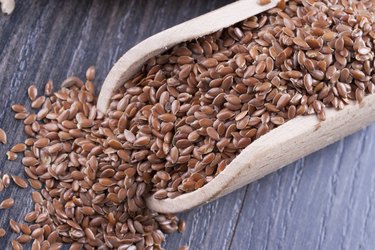
Bread made with soy flour and linseed, or flaxseed, can be a good alternative to white bread if you are looking for some extra nutrition or if you have gluten sensitivities and cannot eat wheat products. Soy and linseed bread may provide some health benefits, but it cannot cure or prevent specific diseases, so talk to your doctor if you have health concerns.
Delivers High Protein Content
Video of the Day
A benefit of soy and linseed bread is that it is higher in protein than wheat bread, since soy flour provides 30 to 50 grams of protein per cup, compared to 16 grams of protein per cup of wheat flour for bread. Protein can help you control your weight because it is a filling nutrient. Another benefit is that the protein from soy is a complete protein, which means that it provides each of the essential amino acids you need from the diet.
Video of the Day
Provides Essential Fats
A benefit of soy and linseed bread is that it provides alpha-linolenic acid, an essential omega-3 fatty acid. Each tablespoon of ground linseed, or flaxseed, provides about 1.5 grams of alpha-linolenic acid, or more than 100 percent of the daily value. This fat may reduce your risk for sudden cardiac death, according to the Linus Pauling Institute Micronutrient Information Center. Bread made with full-fat soy flour is higher in calories than soy bread from defatted flour, but it provides heart-healthy polyunsaturated omega-6 fats.
Lowers Cholesterol
Soy and linseed bread provides dietary fiber, which lowers levels of bad LDL cholesterol in your blood. Alpha-linolenic acid and lignans from linseed may lower cholesterol, and isoflavones from soy have a similar effect, according to the Linus Pauling Institute Micronutrient Information Center. No single food is likely to significantly affect your cholesterol levels, so eat an overall healthy diet and talk to your doctor if your cholesterol is high.
Provides Essential Micronutrients
A benefit of soy and linseed bread is that it is high in iron, an essential mineral for healthy red blood cells. It has more folate, which reduces the risk for neural tube defects, than white bread from enriched flour. Potassium is an essential nutrient for regulating your blood pressure, and soy and linseed bread is a good source. Limit the amount of bread you eat if you are concerned about your blood pressure, since most bread is high in sodium from added salt.