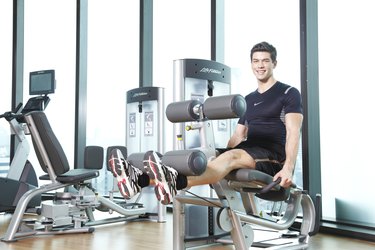
Weight training should be eased into after a hip replacement. It helps re-engage muscles as well as build muscle strength and endurance around the hip. After a hip replacement, being able to return to a normal weight training program with few limitations is likely. However, consult your surgeon before starting any exercise program.
Progression
Video of the Day
Because of pain and decreased flexibility post-surgery, don't do weight training right away. It's usually started during the later phases of rehabilitation and continued following discharge from physical therapy. Discuss your weight training goals with your doctor and physical therapist for specific recommendations and limitations.
Video of the Day
Frequency and Intensity
With your doctor's approval, you can weight train two to three times a week. Your fitness level before surgery, pain, fatigue and age play a significant role in the frequency and intensity of weight training after hip replacement. When starting resistance exercises, your routine may include two or three exercises at a very low resistance, performing one set of 10 repetitions. Increasing resistance, number of sets and repetitions varies, depending on your recovery and the guidelines set by the physical therapist. Avoid any resistance exercises that are high-impact and may put excessive strain on the hip joint.
Equipment & Positions
Resistance machines, resistance bands and ankle weights are frequently used in your rehabilitation. A non-weight-bearing or seated position may be more comfortable and stable. Progress into standing positions using resistance bands or ankle weights while holding onto a chair, rail or countertop for support. Once your stability improves, use dumbbells during weight-bearing positions such as squats. Position and movement limitations include bending or flexing the hip past 90 degrees and crossing the affected leg past the midline of the body, according to the Patient Education Institute.
Key Exercises
Although weight training and resistance exercises vary, a few key exercises are normally prescribed. The American Academy of Orthopaedic Surgeons recommends performing the standing hip extension and standing hip abduction with a resistance band while holding onto a chair. The Orthopaedic Institute at Hays Medical Center also recommends using resistance bands during seated knee extension and flexion and straight leg raises. The leg press is also used during weight training after a hip replacement.
Is this an emergency? If you are experiencing serious medical symptoms, please see the National Library of Medicine’s list of signs you need emergency medical attention or call 911.