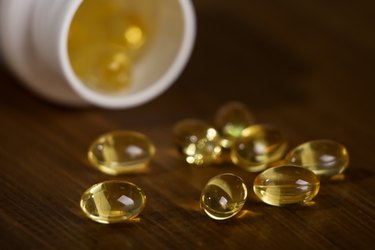
Vitamin E is essential for many aspects of good health. Fortunately, it's usually easy to get your recommended daily amount of this nutrient through the foods you eat. If you don't think you're getting enough vitamin E, talk to your doctor about the best vitamin E supplement for you.
Tip
Vitamin E is an essential nutrient, but you only need it in limited amounts. As this vitamin is fat-soluble, it can build-up in your body if too much of it is ingested. This means that even the best vitamin E supplement can be harmful if you're taking it large quantities.
Video of the Day
Video of the Day
Vitamin E Function and Health
You may have been under the impression that vitamin E is a single nutrient, but the name actually refers to a group of fat-soluble compounds. According to the National Institutes of Health (NIH), vitamin E has a function as an antioxidant. However, it's also important for your skin, immune system and cardiovascular system. In addition, it's essential for the health and ongoing function of your body's cells.
According to a May 2014 study in the Sultan Qaboos University Medical Journal, there are eight different natural forms of this vitamin E: alpha, beta, gamma and delta tocopherol and alpha, beta, gamma and delta tocotrienol. Out of all of these, alpha and gamma tocopherols are considered to be the two main forms of this nutrient.
Adults generally need to consume about 15 milligrams of vitamin E each day. Harvard Health Publishing says this is the equivalent of about 22 international units (IU) from natural sources, like food products, or 33 IU from synthetic sources, like supplements.
Vitamin E benefits men and women equally. However, women should consume larger amounts (19 milligrams) per day if they plan on breastfeeding.
Where to Find Vitamin E
Many commonly consumed foods have vitamin E, so most people don't require supplements of this nutrient. According to the study in the Sultan Qaboos University Medical Journal, this nutrient can be easily obtained from vegetable oils. These plant-based fats typically contain various types of vitamin E.
If you cook with fats like sunflower, safflower or corn oil, you'll likely get a substantial amount of vitamin E from these fats alone. The NIH says that a tablespoon of sunflower oil has 37 percent of the recommended daily value for this nutrient, while each tablespoon of safflower and corn oil have 37 and 13 percent of the daily value, respectively.
According to the NIH, you can also obtain vitamin E from foods like nuts, seeds, fruits and vegetables. You can find:
- 49% of the daily value (DV) in 1 ounce of dry-roasted sunflower seeds
- 45% of the DV in 1 ounce of dry-roasted almonds
- 29% of the DV in 1 ounce of dry-roasted hazelnuts
- 19% of the DV in 2 tablespoons of peanut butter
- 15% of the DV in 1 ounce of dry-roasted peanuts
- 13% of the DV in half a cup of boiled spinach
The USDA also recommends foods like avocado, butternut squash, kiwi, rainbow trout and shrimp as foods rich in vitamin E.
Vitamin E Deficiency and Supplementation
Vitamin E deficiency is very rare. However, the NIH and the study in the Sultan Qaboos University Medical Journal say that this issue can occur in people who have malabsorption disorders, like Crohn's disease, or certain genetic diseases. When it does occur, it's likely to cause nerve, muscle, vision and immune system problems.
If you don't think you're getting enough vitamin E from the foods you're consuming, you may want to consider taking a supplement. However, it's important to talk to your doctor or dietitian about this first.
Read more: The 10 Best Supplements
Vitamin E supplements are rarely considered beneficial. Both the NIH and a September 2015 study in the Cochrane Database of Systematic Reviews have reported a lack of benefits for most people taking vitamin E supplements.
Vitamin E is a fat-soluble vitamin. Unlike water-soluble vitamins, which are excreted in your urine, your body stores this nutrient. This means that vitamin E has the potential to build up in large amounts, especially in healthy people.
The vitamin E found in foods isn't of concern, but you should make sure that you're not consuming more than 1,500 IU per day from natural vitamin E supplements or 1,100 IU per day from synthetic supplements. Regularly consuming high doses of vitamin E might increase the risk of certain cancers and might prevent your blood from clotting after an injury. Ultimately, even the best vitamin E supplement can be harmful, in large amounts.
- National Institute of Health: "Vitamin E"
- Sultan Qaboos University Medical Journal: "The Role of Vitamin E in Human Health and Some Diseases"
- Harvard Health Publishing: "Listing of Vitamins"
- USDA: "Top 10 Foods Highest in Vitamin E"
- Cochrane Database of Systematic Reviews: "Vitamin E Supplementation in Pregnancy"
Was this article helpful?
150 Characters Max
0/150
Thank you for sharing!
Thank you for your feedback!