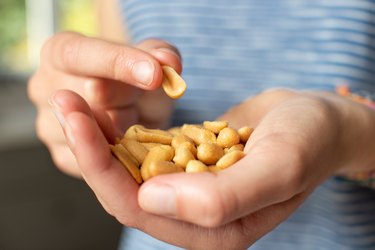
Peanuts are a healthy snack packed with protein, fiber and healthy fats. But what happens if eating them makes you poop or your stomach hurt?
"In general, it's not common to have digestive problems from eating a handful of peanuts," says Supriya Rao, MD, a gastroenterologist with Tufts Medicine Lowell General Hospital in Lowell, Massachusetts.
Video of the Day
Video of the Day
But for some people, eating large quantities of peanuts could cause GI symptoms like gas, bloating, cramping or constipation. Here's why.
1. They're High in Fiber
While high-fiber foods have big health benefits, eating a lot of fiber at once when your body isn't used to it can cause gas and bloating, Dr. Rao says.
The 2.4 grams of fiber in a one-ounce serving of peanuts, according to the USDA, won't typically affect your GI tract. But grabbing handful after handful can add up. A cup of peanuts packs 12 grams of fiber, or close to half of what you need in a day. That's enough to cause symptoms, Dr. Rao says.
2. Certain Flavors Are High in Sugar
Eating a lot of sugar in one sitting might mess with your belly, too. "The sugar can interact with your gut bacteria and cause gas and bloating," Dr. Rao says.
That's not a concern with plain or salted peanuts. But if you're having a large helping of honey-roasted peanuts or another sweetened variety, you might be inadvertently taking in a stomach-churning amount of the sweet stuff: 23 grams in a one-cup serving, according to the USDA, which is more than what you'd get in a chocolate doughnut.
3. You Could Be Allergic
Peanuts are one of the most common food allergens. If you have a peanut allergy, eating even a tiny amount could trigger stomach cramps, vomiting or diarrhea, according to the American College of Allergy, Asthma and Immunology.
Most of the time, digestive symptoms from an allergic reaction usually occur with other issues like wheezing, coughing, hives, throat tightness or swelling. In rare cases, eating peanuts can also cause an allergic person to experience anaphylaxis, a life-threatening reaction that requires emergency medical attention.
4. They Can Irritate Diverticulitis
Contrary to popular myth, eating peanuts doesn't cause diverticulitis, a condition where small, bulging pouches that form in the lining of the digestive tract become infected or inflamed, Dr. Rao says.
But if you develop diverticulitis, eating peanuts can make the problem worse. "When someone is flaring, I'll recommend they have bland, soft foods to rest their bowel," Dr. Rao says. "But once they're better they can go back to their regular high-fiber diet, including nuts."
What About Phytates and Aflatoxins?
Heard that peanuts contain toxins that could make your stomach hurt? You shouldn't be too concerned, Dr. Rao says.
It's true that peanuts contain phytic acid or phytate, which is sometimes called an anti-nutrient because humans lack the enzyme to properly digest it. (Phytates are also found in other nuts, seeds, legumes and whole grains.)
Because of that, it's possible that eating a large amount of phytates in one sitting could cause digestion problems like nausea or bloating, Dr. Rao says.
However, experts don't know the exact amount of peanuts it would take to cause symptoms. If you're concerned about trouble digesting phytates, soaking your peanuts overnight can make them more digestible, according to Harvard Health Publishing.
Peanuts are also among the many foods (along with corn, wheat, rice and sesame) that can potentially be contaminated with aflatoxin, a toxic fungi that can affect certain crops when stored improperly. Consuming large amounts of aflatoxins in contaminated food can cause nausea, vomiting and abdominal pain. That said, there have been no known outbreaks in the U.S., according to the U.S. Food and Drug Administration.
How to Treat and Prevent Gastrointestinal Reactions to Peanuts
Unless you have a food allergy, a sour stomach from eating peanuts likely means you ate more fiber than your GI tract is used to, Dr. Rao says. Next time, you can reduce your symptoms by being mindful about your portions. Try to stick to a one-ounce serving of peanuts, or a small handful, according to the Cleveland Clinic. (If your symptoms are from eating too much sugar, watching your portion sizes should help there, too.)
Pay attention to how much fiber you're getting overall, as well. If you're trying to eat more roughage, up your intake gradually by just a few grams per day and drink plenty of water. That'll give your body time to adjust and reduce symptoms like gas, bloating and constipation, according to the Mayo Clinic.
If you are allergic, you likely need to avoid peanuts entirely. And if you're experiencing a diverticulitis flare, hold off on the peanuts until you're feeling better.
When to See a Doctor
Let your doctor know if you're consistently experiencing gas, bloating or other gastrointestinal discomfort when you eat peanuts (or any other food). Together, you can talk through your symptoms to determine whether you have an underlying health problem that needs to be addressed.
FAQ
Common Questions
Are peanuts inflammatory?
There's no evidence peanuts cause or worsen inflammation. In fact, they contain anti-inflammatory compounds that can help lower your risk for high blood pressure, high cholesterol and high blood sugar, per a March 2023 review in Nutrients. As long as you don't have an allergy, "peanuts are a very healthy food. They're a staple around the world and are integral to many different cuisines," Dr. Rao says.
How long do peanuts stay in your digestive system?
It generally takes food 24 to 48 hours to pass through your digestive tract, Dr. Rao says. However, if you're experiencing an allergic reaction to peanuts, symptoms will usually start within two hours of eating the offending food, per the Mayo Clinic.
Are peanuts bad for your colon?
Peanuts are high in fiber, which is good for gut health. They can support regular bowel movements and reduce your risk for diverticulitis flares, Dr. Rao says. They may also lower your chances of colon cancer: People who ate three or more servings of nuts per week (including peanuts) were around 30 percent less likely to develop colon cancer compared to those who ate no nuts in a March 2018 Nutrition Journal study.
- ACAAI: "Peanut Allergy"
- Harvard Health Publishing: "Are Anti-Nutrients Harmful?"
- FDA: "Bad Bug Book"
- Cleveland Clinic: "The Health Benefits of Nuts"
- Mayo Clinic: "Dietary fiber: Essential for a healthy diet"
- Nutrients: "Effect of Nuts on Markers of Inflammation and Oxidative Stress: A Narrative Review"
- Mayo Clinic: "Food Allergy"
- Nutrition Journal: "The relationship between nut intake and risk of colorectal cancer: a case control study"
- USDA: "Peanuts, unroasted"
- USDA: "Peanuts, honey roasted"
Was this article helpful?
150 Characters Max
0/150
Thank you for sharing!
Thank you for your feedback!
Is this an emergency? If you are experiencing serious medical symptoms, please see the National Library of Medicine’s list of signs you need emergency medical attention or call 911.