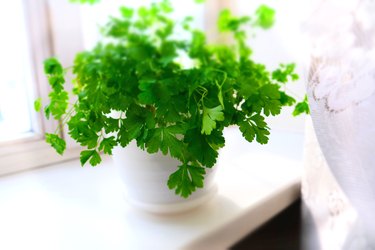
Eating a healthy diet is one of the most effective ways to lower blood pressure or keep it at a healthy level, according to the American Heart Association (AHA). And some specific foods may have an additional effect on lowering blood pressure, including the common herb known as parsley.
Video of the Day
Video of the Day
Diet for Lowering Blood Pressure
The basic tenets of a healthy diet for lowering blood pressure are fairly straightforward, and they also tend to mirror the general advice that most people should be following for general health. The AHA recommends eating a diet rich in:
- Whole grains.
- Fruits.
- Vegetables.
- Nuts.
- Legumes.
Meat sources should be lean poultry or fish, with limited red meat and saturated fat. And sources of dairy should be low-fat options whenever possible. Sodium, sugar and other processed foods should also be kept to a minimum.
In addition, the Mayo Clinic notes that certain foods can also have a direct impact on blood pressure. Sodium, or salt, for example, seems to directly raise blood pressure in certain people. Potassium, on the other hand, may help lower it. Potassium is plentiful in bananas, as well as other fruits and vegetables like oranges, cantaloupe and apricots, among others, according to the USDA.
Parsley for High Blood Pressure
Uses for parsley run the gamut. A relatively common and seemingly benign seasoning or garnish in many dishes, it may also help with blood pressure.
"People only think of it as a garnish, but the reality is that parsley packs in a lot of nutrition," says New York City-based Samantha Cassetty, MS, RD, a nutrition and wellness expert and coauthor of Sugar Shock. "Parsley supplies nitrates, which are substances that help relax your blood vessels, which then improves blood flow. As a result, parsley may be helpful in maintaining healthy blood pressure levels."
A secondary benefit of parsley is that it can help you reduce your salt intake by replacing salt as a flavor enhancer in many dishes. "Play up the flavor of your foods with parsley, which may bring added benefits," Cassetty says.
"For example, try a tabbouleh salad, which features parsley as the prime ingredient, and serve it alongside grilled fish or chicken," she says. "Or use parsley in chimichurri sauce or pesto, which are flavorful sauces that can dress up chicken and seafood. Of course, pesto is also great over pasta."
You just might enjoy a parsley juice for a fresh green boost or the addition of parsley to your next smoothie concoction, too.
Lower Blood Pressure Holistically
Rebecca Yellin, RD, a registered dietitian with Montefiore Health System in New York City, adds that parsley should not be the featured star in your diet if your goal is to lower blood pressure. Instead, she looks at it as a nutritious way to add flavor to an overall healthy meal.
"Adding parsley as a garnish or a seasoning can increase the palatability and visual aesthetic of a healthy meal, such as 4 ounces of salmon, a half-cup of brown rice and 1 cup of non-starchy vegetables," she says. "As a whole, meals like this can contribute to lowering blood pressure."
Cassetty seconds this advice, noting that the whole-diet approach is the best way to lower your blood pressure to a healthy level. "To manage blood pressure levels, it's important to move away from heavily processed foods that are high in sodium and emphasize vegetables, fruits, whole grains, nuts, seeds and dairy foods, which supply nutrients that support healthy blood pressure levels," she says.
The Mayo Clinic notes that one dietary approach that emphasizes these principles is the DASH diet, which stands for Dietary Approaches to Stop Hypertension. Following this diet can cause blood pressure to drop by a few points after just a couple of weeks and by eight to 14 points if you follow it over a longer period of time.
- American Heart Association: “Managing Blood Pressure With a Heart-Healthy Diet”
- Mayo Clinic: “10 Ways to Control High Blood Pressure Without Medication”
- Samantha Cassetty, MS, RD, nutrition and wellness expert, New York City; coauthor, Sugar Shock
- Rebecca Yellin, RD, registered dietitian, Montefiore Health System, New York City
- Mayo Clinic: “Dash Diet: Healthy Eating to Lower Your Blood Pressure”
- USDA: "22 Fruits High in Potassium - Ranking From Highest to Lowest"
Is this an emergency? If you are experiencing serious medical symptoms, please see the National Library of Medicine’s list of signs you need emergency medical attention or call 911.