Vitamin E may not get the same hype as other vitamins (ahem, vitamin D), but the nutrient is just as essential for health.
Getting vitamin E on your plate is extra important; E boasts both antioxidant and immune-boosting properties.
There are many benefits of vitamin E supplements and whole foods in which E is naturally present. Here, we'll examine everything you need to know about vitamin E, how much you need and where to source it from.
What Is Vitamin E?
Vitamin E is one of the four fat-soluble vitamins along with vitamins A, D and K.
As a fat-soluble vitamin, vitamin E gets stored in fat tissue in the body and is also best absorbed when consumed along with a source of healthy fat (though most foods that contain vitamin E are fat-rich themselves).
Vitamin E is naturally present in a number of plant foods, and is best known for its powerful antioxidant properties. It also suppor healthy immune function, per the National Institutes of Health (NIH).
How Much Vitamin E Per Day Do You Need?
The recommended daily value (DV) of vitamin E increases with age, per the NIH.
Vitamin E Recommended Dietary Value
Age | Daily Value |
|---|---|
Birth to 6 months | 4 mg |
7 to 12 months | 5 mg |
1 to 3 years | 6 mg |
4 to 8 years | 7 mg |
9 to 13 years | 11 mg |
18+ years | 15 mg |
Tip
Pregnant people should aim to get 15 milligrams of vitamin E daily, while those breastfeeding should aim for 19 milligrams.
Best Vitamin E Foods
When it comes to getting adequate vitamin E, go nuts (and seeds).
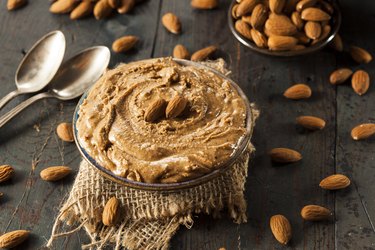
"Vitamin E is abundant in whole foods including almonds, peanuts, hazelnuts and sunflower seeds," says Wendy Bazilian, RD, a San Diego-based registered dietitian and author of the Eat Clean, Stay Lean series.
"It's also found in vegetable oils like sunflower, safflower and soybean oils."
Leafy greens like spinach and broccoli as well as whole grains are also great sources of vitamin E. Just be sure to choose whole grains over refined grains, says Bazilian.
"Over 90 percent of the vitamin E in a whole grain is lost through refining and processing," she tells LIVESTRONG.com. Opt for unrefined grains like brown rice, oats or quinoa to maximize your vitamin E intake.
Top Food Sources of Vitamin E
- Wheat germ oil: 20.3 mg, 135% DV in 1 tablespoon
- Sunflower seeds: 7.4 mg, 49% DV in 1 ounce
- Almonds: 6.8 mg, 45% DV in 1 ounce
- Sunflower oil: 5.6 mg, 37% DV in 1 tablespoon
- Safflower oil: 4.6 mg, 31% DV in 1 tablespoon
- Peanut butter: 2.9 mg, 19% DV in 2 tablespoons
- Peanuts: 2.2 mg, 15% DV in 1 ounce
- Boiled spinach: 1.9 mg, 13% DV in ½ cup
- Boiled broccoli: 1.2 mg, 8% DV in ½ cup
Need ideas for how to add more vitamin E to your day?
Snack on a handful of nuts or whip up this Peachy Almond Cobbler for a better-for-you treat. Other options: this Creamy Vegan Spinach side or Peanut Butter Oatmeal Muffins.
Benefits of Vitamin E
1. It's Linked to Brain Health
This antioxidant vitamin might play a role in keeping your brain sharp as you age.
In a randomized, double-blind trial of people with Alzheimer's disease, supplementing with 2000 IU every day was associated with slowing the progression of the disease, per an older April 1997 study in the New England Journal of Medicine.
Getting vitamin E either from foods or supplements is associated with less cognitive decline with age, a July 2002 study in Archives of Neurology found.
What's more, a December 2014 review in Nutrients found that vitamin E is linked to promoting healthy brain aging and to delaying Alzheimer's disease-related functional decline. However, more research needs to be done to fully confirm vitamin E's positive effect on brain health.
2. It Boasts Antioxidant Properties
"Vitamin E's main role is to act as an antioxidant, collecting and grabbing free radicals that can damage the body by weakening and breaking down healthy cells," says Isabel Smith, RDN, a New York City-based registered dietitian.
"Vitamin E has the ability to protect cells from free radical damage, as well as stop the production of free radical cells entirely."
Specifically, the nutrient stops the production of reactive oxygen species, or free radicals, that are formed when fat undergoes oxidation, according to the NIH.
3. It Helps Support Your Immune System
Though more research is needed, there is some evidence that suggests vitamin E helps your immune system with effects that may improve our resistance against infections, per a November 2018 review in the journal Nutrients.
"Vitamin E plays a role in helping maintain a vital immune system by assisting in thwarting bacterial and viral hits to the system," adds Bazilian.
Natural vs. Synthetic Vitamin E
Natural vitamin E has only one isomer, which is a compound that has the same chemical makeup of vitamin E, but different structure.
Synthetic vitamin E is esterified to form eight isomers, only one of which has the identical chemical makeup of natural vitamin E. The remaining seven isomers have limited bioactivity in your body and have about half the function of natural vitamin E.
In supplements and fortified foods, natural vitamin E has a "d" or "RRR" before the compound name, such as "d-alpha tocopherol" or "d-alpha tocopheryl acetate."
Synthetic forms of the nutrient have "dl" or "all-rac" in front of the name, like "dl-alpha-tocopherol."
Vitamin E Deficiencies
"Vitamin E deficiency is typically fairly rare, but does still happen in specific cases," says Smith.
"Individuals with digestive disorders or do not absorb fat properly can develop a vitamin E deficiency, along with other fat-soluble vitamins." Premature, very low birthweight babies are also at risk of vitamin E deficiency, according to the NIH.
Smith says common signs of vitamin E deficiency can include:
- Retinopathy, or damage to the retina of the eyes that can impair vision
- Decreased immune function
- Reduced control of bodily movements, also known as ataxia
- Peripheral neuropathy, which consists of damage to the peripheral nerves (usually in the hands or feet) that can cause weakness or pain
In addition to people who are pregnant or breastfeeding, other groups that may benefit from vitamin E supplementation include individuals at an increased risk of or diagnosed with eye conditions like age-related macular degeneration, Bazilian says.
Women with severe breast tenderness pre-period may also try vitamin E supplementation for symptom improvement, but the intervention should be assessed and approved by a health care professional, per the Mayo Clinic.
What Happens If I Get Too Much Vitamin E?
While it's highly unlikely you'll take in too much vitamin E from whole foods, supplements are another story.
"In my professional opinion, supplementation with vitamin E should be selective, not universal," Dr. Bazilian says.
"For a brief time, the active encouragement of vitamin E supplements became the norm, but we now know that while it is a very important nutrient that we need to focus on in the diet, supplementation may not always be helpful and actually may put some people at increased health risk."
In this sense, overdosing with vitamin E can have toxic effects.
Research suggests high dose supplementation of the popular form of vitamin E called alpha-tocopherol could lead to blood abnormalities, including hemorrhage and diminished clotting function, according to the NIH.
How Much Vitamin E Is Too Much?
The Office of Dietary Supplements sets tolerable upper intake levels for all vitamins, including vitamin E. Vitamin E ULs are the safest amount you can consume — from food and supplements — without facing a significant risk for side effects.
The UL for teenagers between 14 and 18 years old is 1,200 IU per day, or 800 milligrams. If you're 19 or older, you can consume up to 1,500 IU per day, or 1,000 milligrams. More than this amount, especially if you take it regularly, might present health risks.
Interactions and Risks
Vitamin E supplements can interact with common medications, per the NIH and a December 2014 report in Nutrition Research Reviews, including:
- Anticoagulant and antiplatelet medications
- Simvastatin and niacin
- Aspirin
- Tamoxifen
- Cyclosporine A
- Cancer treatments such as chemotherapy and radiotherapy
Some research suggests that vitamin E could decrease the absorption and effectiveness of tricyclic antidepressants, particularly desipramine, per one early December 2006 study in Planta Medica.
It might also interfere with the absorption of chlorpromazine, an antipsychotic medication, per Mount Sinai.
While vitamin E can prevent blood clotting, that might not a good thing for those on anticoagulants. That's because vitamin E supplements can work a little too well, meaning they can actually increase one's risk of bleeding to a dangerous degree.
Vitamin E should never be used as a "replacement" for anticoagulants or anti-platelet drugs.
When it comes to heart health, vitamin E supplements (which often include additional antioxidant nutrients like vitamin C) have been shown to block an increase in HDL cholesterol in adults taking statins.
Remember: HDL is the good kind of cholesterol that protects against adverse heart outcomes, so a reduction in HDL is not desirable.
What to Look for in a Vitamin E Supplement
It's important to give any dietary supplement careful consideration before adding it to your routine.
Ideally, supplements should be pursued in consultation with a health care professional or registered dietitian who is well-informed about supplements and educated about your health history.
Also smart: Look for supplements that are third-party tested, GMP (or Good Manufacturing Practice) certified and made by brands that are committed to science and transparency, says Dr. Bazilian.
Tip
While vitamin E supplementation was previously thought to help reduce heart disease risk, the American Heart Association does not recommend vitamin E supplements for those trying to reduce blood pressure, lower blood cholesterol or stop smoking.
When it comes to vitamin E in particular, there are two forms that are available as supplements.
"There is the natural form, which is d-alpha-tocopherol, and the synthetic form, which is dl-alpha-tocopherol," explains Smith. "Ideally, you'll want to choose the natural form, as it is more active and useful in our bodies."
What Is Alpha-Tocopherol?
The term "vitamin E" refers to a group of eight different compounds, including alpha, beta, delta and gamma tocopherol, as well as alpha, beta, delta and gamma tocotrienol.
Alpha-tocopherol is a natural form of the vitamin and is the only form of vitamin E stored in your body with the help of the alpha-tocopherol transfer protein in your liver, according to the Linus Pauling Institute.
Alpha tocopherol has the highest measurable amount of biological activity in your body and has the highest concentrations in your blood, says the Office of Dietary Supplements.
Tocopheryl acetate is the ester form of tocopherol, meaning it has an alcohol in the structure. Alpha tocopheryl acetate has equivalent bioavailability to alpha tocopherol.
Since d-alpha tocopheryl acetate has the same bioavailability as alpha tocopherol, the recommendations are the same.
Don't forget to check the dosage on your supplement label.
The upper limit for vitamin E is 1000 milligrams (or 1465 IU) for adults 19 and older, Smith says, so be sure to check that you're not overdoing it with your supplement.
A common dosage for vitamin E supplements is 400 IU. See the recommended brands that are Consumer Lab-approved below.
Recommended Vitamin E Supplements
- GNC Vitamin E 400 IU ($8.99, Amazon.com)
- Kirkland Signature Vitamin E 400 IU ($13.99, Amazon.com)
- NOW Vitamin E 400 IU ($22.56, Amazon.com)