







Goalkeeper Diets

Goalkeeper Diets
Photo Credit Martin Rose/Getty Images Sport/Getty Images

Whereas field players in soccer run five or more miles per 90-minute match, the goalkeeper spends about 12 minutes in intense physical activity per game, saving shots and collecting crosses, reports coach Debra LaPrath in "Coaching Girls Soccer Successfully." The demands of the position require specialized training and some tweaking of general soccer diet guidelines.

Significance

Goalkeepers watch what they eat, given their need to summon energy on the spot yet also fly across the 24-foot-wide goal in the bat of an eyelash, not slowed by excess weight or girth. "They need to be lean enough to jump high and move very quickly," notes Nancy Clark, a registered dietitian and board-certified specialist in sports dietetics, who wrote "Food Guide for Soccer" with co-author Gloria Averbuch.

Nutrient Balance

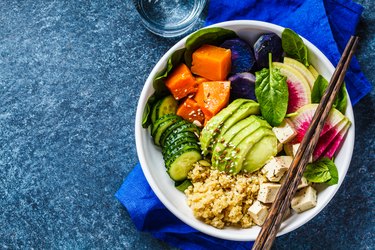
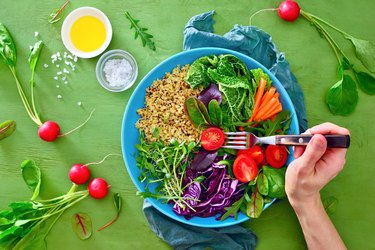
"Food Guide for Soccer" recommends that you consume 55 to 65 percent of your calories from carbohydrates, whether you play in goal or on the field, a proportion in line with recommendations from Stanford University nutritionist professor Paul Insel. Carbs provide energy stored in the muscles in the form of glycogen that you can draw on as you play in goal. Clark and Averbuch recommend grains, such as breads, cereals and pastas, as the cornerstone of your diet. Twenty-five percent of calories can come from healthy fats, and the remainder from protein. These nutrient proportions are more carb-heavy and less fatty than the typical American diet of 50 percent carbs, 34 percent fat and 15 percent protein.

Team Table

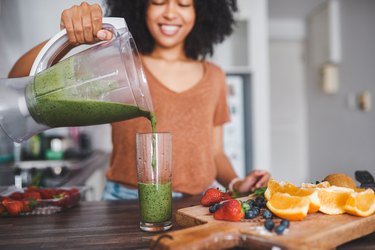
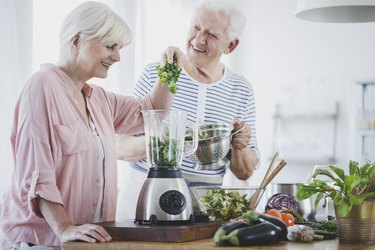
"Goalies are unlikely to run as much as the other players on the team, so they would burn fewer calories," Clark observes. "But if they eat with the team, they can easily chow as much food, and then overweight can become an issue." The astute goalkeeper watches the quantities of what eats to keep in a good weight range to play effectively. U.S. Women's National Team goalkeeper Hope Solo notes that the team travels with a blender, allowing her and her teammates to make soy protein shakes to build muscle and avoid calorie-heavy fats even when on the road. Aware of the importance of nutrition, Solo has supported efforts by Congress to battle childhood obesity, noting she couldn't have made it as a goalkeeper in international competition without making sound nutrition choices.

Game Day

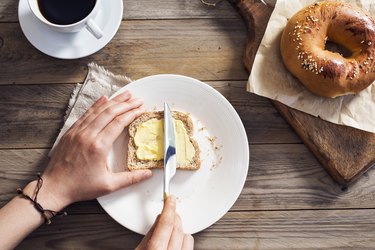
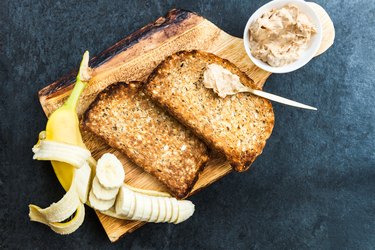
During training, goalies undergo rigorous workouts, with exhausting and repetitive work on diving and leaping to save the ball. "But during games, the lucky goalie might get bored," Clark notes. "Yet, she has to fuel well pre-game to be sharp and focused. No low blood sugar is allowed during a game." "Food Guide for Soccer" recommends snacks such as peanut butter on a bagel as a late-afternoon "second lunch" to keep the blood sugar up for an evening game. "If the goalie is hungry, and his low blood sugar drops, reaction time and ability to focus can be compromised. He can live on adrenaline for just so long," Clark concludes.

References

Article reviewed by Alva Dane Last updated on: Jul 6, 2011

Must see: Photo Galleries

Member Comments