


















































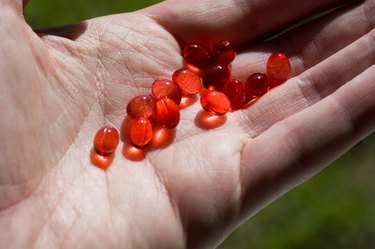








Varicose veins are abnormally enlarged veins that typically appear in your upper or lower legs. They occur when the valves in your veins weaken or undergo destructive changes. Fish oil contains substances called omega-3 fatty acids, which can help relieve or prevent certain blood vessel problems. However, fish oil and omega-3s don't appear to help varicose veins.
Background
Your veins carry oxygen-depleted blood from your body to your heart and lungs. Tiny valves inside your veins help maintain this process by offsetting the effects of gravity and preventing any backward flow or blood pooling in your legs. In people with varicose veins, these valves don't work properly, and backed-up blood abnormally enlarges the size of the affected vessels. Potential factors that can contribute to the formation of varicose veins include advancing age, inborn weaknesses in your vein valves, obesity, habitual physical inactivity, pregnancy, family history, natural hormonal changes and hormonal changes associated with the use of birth control pills or hormone-based medications.
Fish Oil Uses
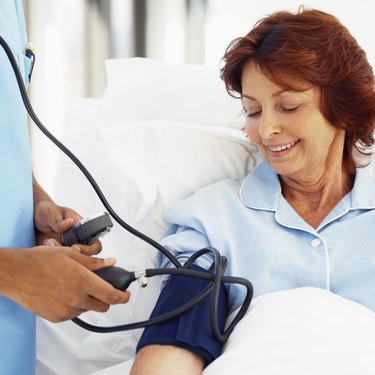
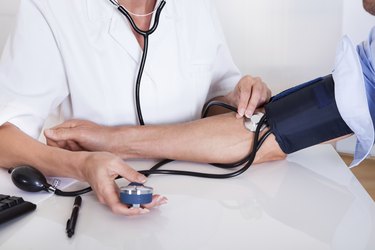
The omega-3s in fish oil can affect your blood and blood vessels in several ways, according to the U.S. National Library of Medicine's MedlinePlus. First, they widen the interiors of your blood vessels and trigger moderate decreases in your blood pressure. They also lower your blood's tendency to form clots. In addition, they can significantly lower the blood levels of a harmful form of fat called triglyceride, which is linked to the presence of uncontrolled diabetes and heart disease. In addition to heart disease and high blood pressure, omega-3-containing fish oil can potentially provide blood vessel-related benefits that include treatment or prevention of stroke, hardening of the arteries, a circulation disorder called Raynaud's disease and post-surgical complications of coronary bypass surgery.
Varicose Vein Treatments
If your varicose veins aren't painful or swollen, your doctor may recommend certain lifestyle modifications to stop them from worsening. They include getting more exercise, losing any excess weight, avoiding consumption of salty foods, elevating your feet whenever possible, avoiding high heels or restrictive clothing, avoiding sitting with your legs crossed and avoiding extended periods of standing or sitting. If you have more prominent symptoms, your doctor may ask you to wear specialized stockings called compression stockings, which squeeze your legs and encourage proper blood flow. Treatments for severe varicose veins include laser surgery, endoscopic vein surgery and additional procedures that include vein stripping, sclerotherapy and ambulatory phlebectomy.
Considerations
Fish oil can potentially relieve leg pain associated with a blood flow disorder called claudication, MedlinePlus reports. People with this disorder have abnormally narrow arteries that provide reduced blood flow in certain circumstances. Further study is needed to confirm fish oil's benefit in claudication treatment. The same steps used to prevent worsening of non-symptomatic varicose veins can also help prevent them from forming in the first place. Consult your doctor for more information on varicose vein treatments and the potential uses of fish oil.


