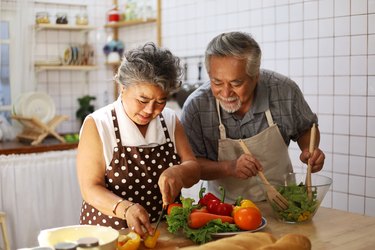
The nutritional needs and requirements for older adults differ from people in other age groups. It's important to keep these in mind as the years go by.
Malnutrition is common in older adults, according to an August 2021 study in Nutrients.
Video of the Day
Video of the Day
Undernourishment commonly occurs because older adults don't have the funds to buy certain foods, they have illnesses or other health conditions or they're not following a proper diet. As people age, the need for some nutrients increases while the need for others decreases.
Calorie Needs for Older Adults
Getting older usually leads to lower activity levels, more fat stores and less muscle mass, according to the Nutrients research. That being said, older adults don't generally need to take in as many calories as they did in their earlier years.
Calorie needs vary depending on your sex assigned at birth and your activity level. Inactive adults — defined as getting less than 30 minutes per day of physical activity — need fewer calories than adults who are moderately active (between 30 and 45 minutes of activity per day) or active (more than 45 minutes per day), according to the National Institute on Aging (NIA).
How Many Calories Do Older Adults Need?
Sex Assigned at Birth | Activity Level | Daily Calories |
|---|---|---|
Male | Inactive | 2,000 to 2,200 |
Male | Moderate | 2,200 to 2,400 |
Male | Active | 2,400 to 2,800 |
Female | Inactive | 1,600 |
Female | Moderate | 1,800 |
Female | Active | 2,000 to 2,200 |
Carbohydrates
Older adults are advised to get 45 to 65 percent of their daily calories, or about 130 grams if they're eating around 2,000 calories per day, from carbohydrates, per the NIA.
Most of those should come from complex carbohydrates such as sweet potatoes and other starchy vegetables, legumes and whole grains such as brown rice. Glucose tolerance declines in older adults. Eating more complex carbs can help with blood sugar management, according to the NIA.
Fiber is important for everyone — especially older adults — to regulate bowel movements and reduce the risk of conditions like diabetes and heart disease, according to the 2020-2025 Dietary Guidelines from the USDA.
Older people assigned male at birth (AMAB) should aim to eat 30 grams of fiber per day, while older people assigned female at birth (AFAB) should get 25 grams.
Foods high in fiber include beans, vegetables, grains, fruits and nuts.
How Many Carbs Do Older Adults Need?
Total Calories Per Day | Carbs |
|---|---|
1,600 to 1,800 | 260 g to 293 g |
1,900 to 2,100 | 309 g to 341 g |
2,200 to 2,400 | 358 g to 390 g |
Protein
When it comes to protein, older adults will need about the same amount as they did in their younger years, according to the USDA. Eating enough of this nutrient may help prevent muscle loss that can naturally occur with aging, a condition known as sarcopenia.
USDA guidelines indicate that adults ages 71 and older tend to eat less protein compared to adults ages 60 through 70. In that group, 50 percent of people AFAB and 30 percent of people AMAB fall short of protein recommendations.
Older adults should aim to eat 0.8 grams of protein for each kilogram of their body weight, which ends up being about 10 to 35 percent of your daily calories, per the USDA.
To calculate how much protein per day you should eat, divide your weight in pounds by 2.2 to convert to kilograms, then multiply that number by 0.8. For example, at a weight of 175 pounds, or 80 kilograms, your recommended daily intake (RDI) for protein is about 64 grams daily.
Nutritious sources of protein include meat, poultry, seafood, eggs, legumes and dairy products. The USDA suggests older adults opt for seafood, beans, peas and lentils over foods like red meat, which may help reduce the risk of conditions like heart disease.
How Much Protein Do Older Adults Need?
[Your weight in pounds ÷ 2.2] x 0.8 = your daily protein
Fat
Fats should make up 20 to 35 percent of the calories in an older person's diet, with less than 10 percent coming from saturated fats (which are found in foods like meat and dairy products).
The USDA recommends that older adults opt for polyunsaturated and monounsaturated fat from products like olive oil (and other vegetable oils), nuts (and nut butters), salmon (and other fatty fish) and avocados.
How Much Fat Do Older Adults Need?
Total Calories Per Day | Fat |
|---|---|
1,600 to 1,800 | 62 g to 70 g |
1,900 to 2,100 | 74 g to 82 g |
2,200 to 2,400 | 86 g to 93 g |
Vitamins
Adequate calcium and vitamin D support bone health and may help lower the risk of fractures as people age, according to the USDA.
Adults between age 50 and 71 should get 600 IUs of vitamin D per day, and adults over age 71 should get at least 800 IU. All adults over 50 should aim to take in 1,200 milligrams of calcium per day.
You can add more calcium and vitamin D to your diet by eating green leafy vegetables and yogurt or by drinking milk, fruit juice and other products fortified with vitamin D.
Older adults don't always get enough vitamin B12 in their diets, according to the Academy of Nutrition and Dietetics.
This is particularly true for those who take acid-reducing or diabetes medications (like Prilosec and Metformin, respectively), which reduce the ability to absorb vitamin B12, according to the National Institute of Health (NIH). If you do take these medications, talk to your doctor to make sure you're getting enough of the nutrient.
In general, though, older adults should aim to get 2.4 micrograms of vitamin B12 each day, according to the NIH.
Foods high in vitamin B12 include animal products like clams and Alaskan king crab, as well as vegan options like tofu and fortified cereals.
Vitamin Needs for Older Adults
- Vitamin D: 600 to 800 IU per day
- Calcium: 1,200 mg per day
- Vitamin B12: 2.4 mcg per day
Minerals
Getting the right amount of minerals like potassium and sodium is important for long-term health. Adults AMAB over 51 should aim for 3,400 milligrams per day of potassium, while people AFAB over 51 should aim for 2,600 milligrams per day, according to the NIH.
Older adults are also advised to limit their sodium to 1,500 milligrams per day.
Get more potassium with fresh fruits, vegetables, milk and milk products. Having the proper sodium and potassium balance is linked with a lower risk for high blood pressure, kidney stones and bone loss, according to the NIH.
Mineral Needs for Older Adults
- Potassium: 2,600 mg per day
- Sodium: 1,500 mg per day
Water
Up to 60 percent of the adult human body is made up of water, according to an October 2022 article in StatPearls.
Your brain and heart are about 73 percent water, your lungs are about 83 percent and even your bones are 32 percent water — so H2O is obviously essential to survival. At all ages and stages of life, your body depends on water, so it should come as no surprise that hydration is key to staying healthy and feeling good.
In addition to helping the body build new cells, eliminate waste, keep joints lubricated and much more, water is an important part of a system that keeps fluids and electrolytes balanced. Electrolytes are minerals in the body that carry an electric charge, and they help regulate nerve and muscle function, hydrate the body, balance blood pressure and acidity and rebuild damaged tissue, according to the National Library of Medicine.
In older adults, this regulation system may no longer function correctly on its own, making dehydration more common — and making adequate hydration even more important, according to July 2011 research in Advances in Chronic Kidney Disease.
What's more, as you age, the amount of total water in your body decreases, as does your ability to sense thirst, which means dehydration can come on quickly.
Knowing When You're Dehydrated
Symptoms of dehydration in older adults include dry mouth, little to no urine or very concentrated urine, sunken eyes, lethargy, low blood pressure, rapid heart rate and dry skin, according to a May 2012 study in J-Stage Internal Medicine.
If you suspect that you're dehydrated, try frequently drinking small amounts of water. If your symptoms don't improve, call your doctor or go to the hospital, as severe dehydration can lead to seizure, kidney failure, coma and even death, the same study notes.
Tip
If you're drinking juice or soda, try mixing in half a glass of water to cut down on the sugar and calorie content. You can also get fluids through foods such as soups, fresh fruits and vegetables.
Hydration Requirements for Older Adults
There's no specific recommendation on how much water older people need to drink, despite the old rule to gulp eight 8-ounce glasses per day. Water needs vary by weight and activity level, along with the other liquids and foods you're enjoying.
Drinking 30 to 50 ounces, or 4 to 6 glasses, of water per day may prevent dehydration, according to Harvard Health Publishing.
All this being said, it is possible to drink too much water. If you have a condition like thyroid disease or have kidney, liver or heart problems, or if you're taking medications that make you retain water, like non-steroidal anti-inflammatory drugs (NSAIDs), opiate pain medications and some antidepressants, talk to your doctor about how much water you should be drinking.
If you're sick (with vomiting or diarrhea), your hydration needs are going to increase, so make sure to drink more water.
If you're active (especially outside in warm weather), the American College of Sports Medicine advises drinking at least 16 to 20 ounces of fluid one to two hours before. From there, you should drink 6 to 12 ounces of fluid every 10 to 15 minutes that you are outside. Once you're done, you need to replace what you've lost by drinking at least another 16 to 24 ounces.
Recommended Fluid Intake for Older Adults
Aim for at least 4 to 6 glasses of water per day, and drink more if you're active. Talk to your doctor about any health conditions that may affect your hydration requirements.
- National Institute on Aging: "Healthy Eating After 50"
- J-Stage Internal Medicine: "Physical signs of dehydration in the elderly"
- American College of Sports Medicine: "Exercise and Fluid Replacement"
- Harvard Health Publishing: "How much water should you drink?"
- Advances in Chronic Kidney Disease: "Electrolytes in the Aging"
- National Library of Medicine: "Electrolytes"
- StatPearls: "Physiology, Water Balance"
- NIH: "Potassium"
- NIH: "B12"
- Academy of Nutrition and Dietetics: "Special Nutrient Needs of Older Adults"
- Nutrients: "Malnutrition in Older Adults—Recent Advances and Remaining Challenges"
- USDA: "Life Stage Nutrition"