






























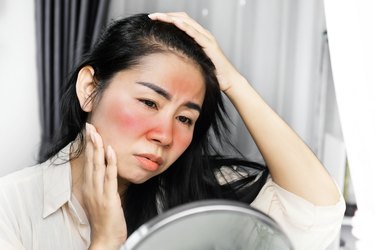











Skin rashes can affect any area of your baby's body and have a variety of appearances. Several factors can cause a dry skin rash including an allergic reaction, viral illness or contact to something irritating. Although you can treat most skin rashes at home with over-the-counter medicines, it is important that you call your pediatrician if your baby has other symptoms including being uncomfortable, a fever or lack of appetite.
Contact Rash
Contact rashes are caused by irritants touching your baby's skin. These rashes are divided into two categories based on the appearance of the rash and the areas of skin affected. A contact rash characterized by red, raised bumps and a slightly crusty surface usually appears on one or two small areas in your baby's body. This type of rash can be caused by poison ivy, cleaners and other chemicals, according to AskDrSears.com. A contact rash characterized by fine, red pimples or small spots generally appears throughout the body and can be caused by new clothes, soaps, shampoos, fabric softeners, bed sheets or any other irritant to which your baby is sensitive. Both of these rashes can be treated with 1 percent hydrocortisone cream, though you should consult your doctor before using medications on your child. Your doctor may also prescribe a stronger cream for a more persistent rash.
Atopic Eczema
Atopic eczema, also called atopic dermatitis, is a type of skin rash that typically appears during your baby's first year of life. The rash can appear on your baby's face, scalp, inner elbows, trunk, hands, feet and behind the knees. Mild eczema appears as a flat, dry, white patches in your baby's skin; in more severe cases, the skin can turn red, scaly, dry and thickened. The rash can also consist of bumps or blisters that are oozing and crusting, the MedlinePlus online medical encyclopedia notes. Eczema is caused by a hypersensitivity reaction that is similar to allergy and can be aggravated by irritants including heat, chemicals from detergents, lotions, soaps and dry skin. Treat eczema by keeping your baby's skin moist with petroleum jelly or other creams free of alcohol, dyes and scents; check with her pediatrician before using any over-the-counter treatments.
Hives
Hives are welts characterized by round or irregularly shaped, raised areas of the skin that are partly red and partly skin-colored. The hives can be small or large and can spread rapidly on the skin. They commonly appear in the trunk, arms and legs but rarely on the face. The appearance of hives is highly erratic --- they might appear and disappear in 10 to 15 minutes or within a few hours. Hives are an allergic reaction that can be caused by anything from insect bites to foods and clothing materials. Your baby can also get hives during cold or fever, AskDrSears.com notes. If your baby has a severe allergic reaction and breathing difficulties, take him to the emergency room immediately.
Viral Infections
Rashes that appear on your baby's skin can also be a result of viral infections. Viruses your baby is most apt to contract include chicken pox, roseola and fifth disease. Rashes from viral infections can appear pimply, flat, puffy, and lacy in the form of spots, bumps or blotches. Viral rashes are usually associated with fever, though this is not always true with fifth disease. Viral rashes are typically contagious, making it important not only that you consult your doctor but also isolate your child from others.
References
- AskDrSears.com: Rashes
- MedlinePlus: Atopic Eczema
- "Your Baby's First Year"; The American Academy of Pediatrics; 2005


