















































Arginine and zinc are essential nutrients that accelerate wound healing. Arginine is an amino acid part of proteins and a precursor for the synthesis of growth hormone and nitric oxide, a gas that enhances blood flow. Zinc is a trace mineral that stimulates the immune system and supports cellular function. Consult your doctor about the benefits of arginine and zinc for healing wounds.
Arginine and Protein Synthesis
Adequate dietary protein and protein synthesis are essential to support the healing of tissue after injury or surgery. A protein deficiency can delay wound healing and increase inflammation, according to research published in the "Alternative Medicine Review" in November 2003. Arginine plays a vital role in stimulating protein synthesis during wound healing. Scientists at Shriners Hospital for Children in Galveston, Texas, report that arginine supplementation increases net protein balance in skin wounds and muscle wounds, according to research published in "Clinical Nutrition" in August 2008.
Arginine and DNA Synthesis
DNA synthesis is vital to stimulate protein production and cellular growth and reproduction for wound healing. Scientists at Shriners Hospital for Children in Galveston, Texas, found enternal arginine supplementation increases DNA synthesis in wounds, which in turn increases cell proliferation for wound healing, according to research published in "Clinical Nutrition" in June 2011. Enternal nutrition is a type of feeding for people who are unable to eat by mouth or swallow; it involves a tube that feeds directly into the stomach or small intestine.
Zinc and Hip Fractures
Hip fractures are common among older people, usually requiring surgery. The blood level of zinc is a key indicator of the recovery time for the post-surgical healing process. Scientists at Complejo Hospital in Ciudad Real, Spain, found that serum zinc levels that are less than 95 mcg/dL increase the risk of delayed healing by almost twelve-fold, according to research published in "Clinical Orthopedic Related Research" in March 2004. These researchers conclude that serum zinc levels are predictive of the time it takes to heal patients who have surgery for hip fractures.
Zinc and Mohs Micrographic Surgery
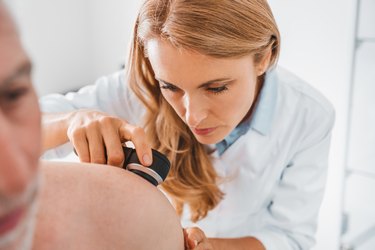
Mohs micrographic surgery is an outpatient procedure for removing skin cancer that usually involves administration of local anesthesia and Unna boots to accelerate wound healing. A Unna boot is gauze that contains zinc oxide that physicians apply to the post-surgical wound. Scientists at Vanderbilt University in Nashville, Tennessee, found that the application of weekly Unna boots significantly improves healing, decreases pain and minimizes wound care in patients with lower leg post-operative wounds, according to research published in "Dermatologic Surgery" in February 2011.
References
- "Dermatologic Surgery"; Enhanced Healing of Surgical Wounds of the Lower Leg Using Weekly Zinc Oxide Compression Dressings; William Stebbins, et al.; February 2011
- Linus Pauling Institute, Oregon State University; Zinc; Jane Higdon, Ph.D.; December 2003
- "Alternative Medicine Review"; Nutritional Support for Wound Healing; Douglas MacKay, ND, and Alan L. Miller, ND; November 2003
- "Clinical Nutrition"; The Anabolic Effect of Arginine on Proteins in Skin Wound and Muscle Is Independent of Nitric Oxide Production; X.J. Zhang, et al.; August 2008
- "Clinical Nutrition"; Enternal Arginine Supplementation Stimulates DNA Synthesis in Skin Donor Wound; X.J. Zhang, et al.; June 2011
- "Clinical Orthopedic Related Research"; Serum Zinc as a Prognostic Tool for Wound Healing in Hip Hemiarthroplasty; Pedro Zorrilla, et al.; March 2004


Member Comments