




























































Most Americans consume more sodium than is good for their health, according to the Centers for Disease Control and Prevention. The body needs a certain amount of sodium for proper daily functioning. Sodium helps regulate blood pressure and volume and is necessary for proper nerve and muscle function. Sodium also adds flavor to foods and acts as a preservative. Too much sodium, however, can increase risk of several diseases. The Department of Agriculture and the Food and Drug Administration forbid food manufacturers from labeling a product "healthy" if it contains more than 480 mg of sodium.
Recommended Levels
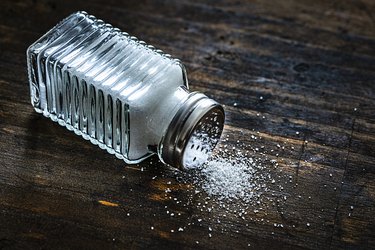
Sodium can be found naturally in foods. Most people do not need to add much sodium, if any, to their diet in order to receive an adequate daily supply. The American Heart Association recommends eating less than 1,500 mg of sodium each day. Food manufacturers are required by federal law to print the sodium content of packaged foods on their nutrition labels. Table salt, or sodium chloride, is 40 percent sodium, with 1 tsp. of salt containing 2,300 mg of sodium, the same amount that the Food and Nutrition Board set as the tolerable upper intake level of sodium for adults and adolescents over 14 in 2004.
Sodium Toxicity
If sodium concentration in the body is higher than the kidneys can process and excrete, it may have a toxic effect, causing kidney failure and increased risk of kidney disease. Toxicity from eating too much salt can also cause abdominal cramps, diarrhea, nausea and vomiting. Hypernatremia, or abnormally high sodium levels in the blood is normally a result of insufficient water and rarely the result of too much sodium in the diet. Symptoms of mild hypernatremia include low blood pressure, fainting, dizziness and reduced urine production, while symptoms of severe hypernatremia include rapid heart rate, high blood pressure, breathing difficulties, convulsions, coma and death.
High Blood Pressure and Cardiovascular Disease
As high as 97 percent of American children and adolescents consume too much sodium, according to the AHA. Too much sodium can increase blood pressure by retaining fluids in the body. This can cause high blood pressure, a major risk factor for cardiovascular disease. High blood pressure can also lead to organ damage in the kidneys, heart and blood vessels.
Other Risks
Sodium can also increase risk of heart failure, stroke and osteoporosis. Sodium also promotes calcium excretion through the urine which has been associated with increased risk of kidney stones. Several studies link high salt diets with increased incidents of gastric cancer, or stomach cancer, such as a 2005 study in "Cancer Science" which found a close coorelation in Japanese immigrant populations between their high salt intake of and gastric cancer deaths.
References
- U.S. Centers For Disease Control And Prevention; "Most Americans Should Consume Less Sodium"; Mar 2009
- American Heart Association; "Sodium (Salt Or Sodium Chloride)"; Jul 2011
- National Academies Press; "Sodium and Chloride: Dietary Reference Intakes for Water, Potassium, Sodium, Chloride, and Sulfate"; Food and Nutrition Board, Institute of Medicine; 2005
- "Cancer Science"; Salt, Salted Food Intake, And Risk Of Gastric Cancer: Epidemiologic Evidence; S. Tsugane; Jan 2005
- Linus Pauling Institute At Oregon State University; "Sodium (Chloride)"; Jane Higdon, et al.; Nov 2008
- MedlinePlus Medical Encyclopedia; "Sodium In Diet"; David Zieve, et al.; May 2010


Member Comments