



































Does My 1-Year-Old Have a Cold Sore?

Does My 1-Year-Old Have a Cold Sore?
Photo Credit Hemera Technologies/AbleStock.com/Getty Images

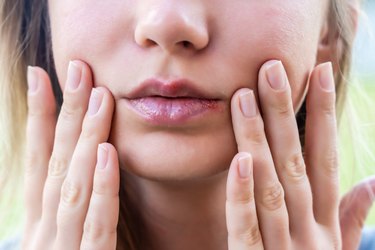
A cold sore is a small, reddish blister that occurs around the mouth, usually on the outer edge of the lip. Cold sores typically last one or two weeks, tend to go away on their own and can occur in people of all ages, including infants and toddlers. They are caused by a contagious virus called herpes simplex, which is one of the most common viruses in the world, according to Children's Hospital Colorado. There are two types of herpes simplex virus -- Type 1 and Type 2. Type 1 usually results in cold sores and infects more than half of the U.S. population, notes the Children's Hospital Colorado.

Causes and Symptoms

One-year-olds can easily get cold sores by kissing a person with a cold sore or by sharing a drink or utensils with a person with a cold sore. In some cases, kids who get infected with herpes virus simplex Type 1 get cold sores for the rest of their lives. While the cold sores heal and disappear, the virus stays in the body. Cold sores often reappear in the same location.

Sign and Symptoms

Your child may experience no symptoms from being infected with herpes, or he or she may develop painful and unsightly cold sores appearing on the lips, chin, cheeks on in the nostrils. They may also develop inside of the mouth, either on the gums or the roof of the mouth.

Treatment

Although there is no cure for cold sores, ointments and pain relievers, administered under the guidance of a physician, can relieve some of the pain and discomfort. In most children, the sores go away on their own. If your 1-year old gets a cold sore, try holding some ice wrapped in cloth on the sore or give him a freezer pop to help relieve some of the pain. Make sure your child's hands are always clean and do not allow him or her to pick at the sore because this will increase the chance that it will spread to other parts of the body. In some case, the cold sore may be making the child sick, so a doctor is may prescribe a medication to fight the herpes virus or antibiotics to combat bacterial infections that may develop around the sores.

Prevention

Cold sores are rarely a cause for concern, but it is advisable to take measures to prevent them when possible. Do not allow your child to kiss someone with a cold sore or use the same utensils, dishes, towels, wash clothes or napkins because the herpes virus can survive on these locations. Also, make sure your child is eating well and getting enough sleep to prevent the cold sore from coming back.

References

Article reviewed by Sharon Bohling Last updated on: Aug 23, 2011

Must see: Photo Galleries