




































Beta-Carotene and Orange Skin

Beta-Carotene and Orange Skin
Photo Credit Jupiterimages/Photos.com/Getty Images

Eating too many carrots can turn your skin orange, but it won’t hurt you. Switch to other vegetables lower in beta-carotene content until the orange color fades. The condition, known as carotenodermia, poses no health risk and disappears when you reduce your intake of foods high in beta-carotene for a few days.

Definition

Beta-carotene, one of the carotenoids or pigments commonly found in plants, is an orange pigment and vitamin A precursor that can be converted into the active form of the vitamin. Carotenoids rank among the best known phytochemicals or nonnutrient compounds, derived from plant-based foods, that have biological activity in your body. Beta-carotene is best known for promoting healthy vision, but it also contributes to the health of your teeth, skin and hair, and your immune and reproductive systems.

Plant Sources

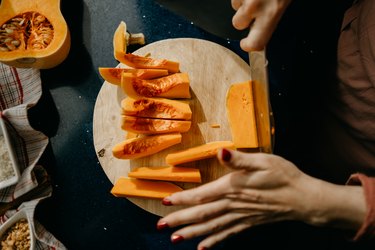
Look for foods of bright colors, especially orange and yellow, for rich sources of beta-carotene. Orange and yellow fruits and vegetables, such as carrots, apricots, cantaloupes, pumpkins, sweet potatoes, mangoes and squash, have high levels of beta-carotene. Dark-green vegetables, such as broccoli, spinach and collard greens, also have beta-carotene that is masked by the deep green color of their chlorophyll. Generally, the deeper the color, the greater the amount of beta-carotene contained in a food.

Other Sources

The Food and Drug Administration, or FDA, approves beta-carotene for use as a food color additive. Food products such as margarine often include beta-carotene to produce the color expected by consumers. Farm-raised salmon are sometimes fed beta-carotene to enrich their pink color. Beta-carotene is also available as a nutritional supplement in capsule or gel form to be taken with meals containing at least 3 grams of fat to enhance absorption.

Storage

Beta-carotene is generally considered safe because your body stops converting it to vitamin A when your needs for vitamin A have been met. Instead, your body stores the excess beta-carotene in the fat tissue just under your skin. Depending on how much is stored, your skin may take on an orange hue.

Toxicity

Beta-carotene from your food does not typically cause toxicity. Overconsumption of beta-carotene from foods may turn your skin orange or yellow, but this is not harmful. Overconsumption of beta-carotene from supplements, however, may be harmful. If consumed in excess, rather than functioning as an antioxidant, it may act as a pro-oxidant by promoting cell division and destroying vitamin A. Adverse effects of beta-carotene supplements tend to show up more evidently in people who drink alcohol and smoke cigarettes, according to Eleanor Whitney, Ph.D., and Sharon Rolfes, M.S., R.D., in “Understanding Nutrition.” Early research suggests that smokers and people exposed to asbestos may have an increased risk of lung cancer when they take beta-carotene supplements, according to the University of Maryland Medical Center. For now, avoid taking beta-carotene supplements if you smoke.

References

Article reviewed by demand25069 Last updated on: Sep 1, 2011

Must see: Photo Galleries

Member Comments