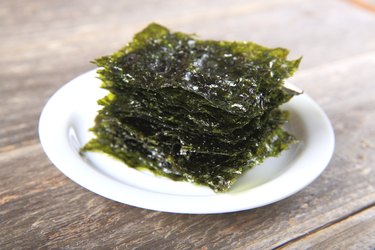
Dried seaweed, often sold as nori or kelp, is a common addition to Japanese dishes, including sushi. This food often imparts a briny flavor and a crisp texture. Look for it in specialty shops, although some grocery stores sell it in thin, square sheets for use in recipes. Dried seaweed is good for you when eaten in moderation — it contains many vitamins and minerals, but is quite high in sodium and iodine.
Basic Nutritional Facts for Seaweed
Video of the Day
A 1/3-cup serving of dried seaweed contains:
Video of the Day
- 17 calories
- 0 g of fat
The majority of the calories in this sea vegetable derive from carbohydrates — each serving has 3 g. You need much more than this in this meal plan, though, so consider serving seaweed with a healthy carbohydrate, such as rice, to meet your daily requirements of 225 to 325 g. You also take in 1 g of protein, or 1.7 to 2.1 percent of the ideal intake.
Sodium in High
Dried seaweed contains 312 mg of sodium per serving. For a healthy person who can eat up to 2,300 mg of sodium, this accounts for 13.5 percent of the sodium you may consume in a day. However, if you have hypertension or heart disease — or you are at risk of developing heart disease — limit your sodium intake further to 1,500 mg. Eating dried seaweed may be ill-advised if you qualify for the lower limit.
Iodine Is Very High
Eat a serving of dried seaweed, and you consume 6,720 percent of the daily recommended intake of iodine. While your body requires iodine for the healthy function of your thyroid, too much is a bad thing. Consuming a serving of seaweed occasionally will not harm your health, but taking in too much of this food regularly may lead to the development of benign thyroid conditions or exacerbate preexisting thyroid conditions. If you or a family member has a thyroid condition, be sure to ask your doctor about high iodine intake.
Other Nutrients Are Present
Including dried seaweed in your diet gives you access to a good supply of vitamin B-6, with 30 percent of the amount you need each day in a serving; this vitamin is critical for brain health and function. This food also provides 22 percent of the potassium and 17 percent of the iron your body requires daily. You also take in lesser amounts of calcium, magnesium, phosphorus, zinc, copper, vitamin A, thiamin, riboflavin, vitamin E, niacin and vitamin B-12.
Antioxidants in Seaweed
Dried seaweed contains antioxidants that can benefit your health. A study in the September 2009 issue of "Plant Foods for Human Nutrition" notes that dried seaweed provides more antioxidants than heat-treated seaweed. Antioxidants protect every cell in your body from damage caused by free radicals and other environmental stress.
- University of Maryland Medical Center Iodine
- Fitbit: Seaweed, Kelp, Dry
- Centers for Disease Control and Prevention; Sodium Intake Among US Adults
- MedlinePlus; Iodine in Diet; March 2009
- "Plant Foods for Human Nutrition"; Antioxidant Activities...; M. Yangthong, et al.; September 2009
- MedlinePlus; Antioxidants; February 2011