




































































Many people run to lose weight or to tone up and stay in shape. Some runners may be dismayed when the numbers on the scale don't drop drastically after they begin a running program. Running burns a high number of calories and increasing your running can help you burn more calories, but it does not guarantee weight loss or prevent weight gain. Several factors come into play when tracking your running program and weight fluctuations.
Your weight is a product of your activity level and calorie consumption. If you burn the same number of calories you consume each day, your weight will stay about the same, with some minor fluctuations based on the time of day you weigh yourself and your level of hydration. To lose weight, you need to burn more calories than you consume, with 3,500 calories equaling about 1 lb. of body weight. If you gain weight, you are consuming more calories than you burn each day — no matter how much you're running.
Running and Calories
Running burns more calories than most forms of cardiovascular exercise, making it a useful tool for weight loss. In general, the longer you run or the higher the intensity of your runs, the more calories you will burn. A 200-lb. person who runs at a speed of 5 miles per hour -- a 12-minute-mile pace -- burns about 364 calories in an hour, MayoClinic.com calculates. If the same person increases the length of her run to an hour, she will burn 728 calories, or twice as much. Running at 8 mph, the same person will burn 615 calories in 30 minutes and 1,229 in an hour.
Diet
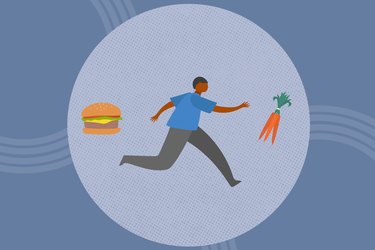
Increasing the length or intensity of your runs does not guarantee you will lose weight because half of the weight equation is your diet. If you gorge yourself after a long run or regularly eat a high-calorie diet, you might not only replace the calories you burned running but add more, which would cause weight gain. Some runners are surprised when they gain weight, but it's likely they are not eating a nutritious diet or keeping track of their caloric intake. You can calculate your individual caloric need by using the U.S. Department of Agriculture's MyPlate Daily Food Plan, for example, to create a healthy eating program for your size and activity level.
Considerations
Other factors can influence your weight, such as the time of day you weigh yourself, your level of hydration and your muscle mass. You will notice more weight fluctuations if you weigh yourself at different times, as people tend to weigh less in the morning after hours of not eating or drinking and more in the evening, after a day of eating and drinking. Weight alone does not determine your level of fitness, because you might have a high amount of lean muscle tissue. Since muscle mass weighs more than fat, it is not uncommon for beginning runners to experience some weight gain. You can use a device to measure your body fat percentage, measure your waistline or calculate your body mass index for additional indicators of your health. If you are worried about running and weight gain, discuss your exercise regimen and diet with your doctor, who can give advice specific to your situation.


Member Comments