
Trying to fit in cardio exercise can be struggle when you have a full calendar of work and personal obligations; but making the time is crucial if you want a fit, healthy body. If your primary reason for exercising is to burn calories to either shed a few pounds or maintain your weight, you want to get the most out of every hour. Cardio should be about more than burning calories, however; it should include activities you enjoy so you'll look forward to your next workout.
Aerobics Classes
Video of the Day
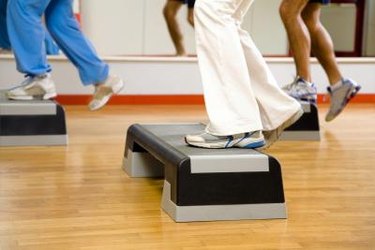
Taking an aerobics class is an ideal way to burn calories if you enjoy exercising as part of a group. Zumba, step aerobics and cardio kickboxing are some of the most popular classes, and they all have the potential to burn a lot of calories.
Video of the Day
According to a study by the American Council on Exercise, Zumba is a top pick, burning 9.5 calories per minute for the 19 healthy females who participated in the study. That's almost 600 calories per hour. Cardio kickboxing burns about 8 calories a minute, while step aerobics burns approximately 6 calories per minute, according to the study data.
Gym Cardio Exercise

If you prefer to go it alone while doing cardio at the gym, you have lots of options for torching calories. Riding a stationary bike at a moderate pace burns an average of 520 calories per hour, while riding an elliptical machine for an hour burns about 670 calories. Climbing a stair-step machine for an hour will burn around 450 calories per hour, and using a rowing machine at a moderate pace will help you unload about 520 calories.
Read more: Cardio Exercise Benefits
Water Exercise
Swimming and water aerobics are calorie-burning options for people who have joint problems or an injury, or those who simply prefer getting their workout in an aquatic environment. An hour of water aerobics will set you back about 300 calories, and an hour of freestyle swimming burns about 450 calories.
More challenging strokes will burn more calories. For example, you can burn 600 calories doing the backstroke for an hour, 700 doing breast stroke and a whopping 820 calories doing butterfly stroke for an hour. It's unlikely you'd be able to keep that up, however.
Other Cardio Exercises
The gym doesn't have to be the only venue for your cardio workout. Exercising elsewhere in your community or at home provides a wealth of ways of improving your cardiovascular fitness and burning calories.
Jump rope for an hour -- if you can -- and you'll torch over 700 calories. Go for a jog to burn about 450 calories an hour. Pick up the pace and you'll burn closer to 800 calories running at a speed of 6 miles per hour.
Hiking is a great way to enjoy the great outdoors and get in a workout. An hour-long hike burns about 450 calories, but a hilly hike could burn significantly more. An hour of downhill skiing burns about 450 calories, rollerblading torches 520 calories an hour and whitewater kayaking burns about 370.
Playing Sports
Exercise your competitive spirit and enjoy the camaraderie of team sports while burning off some energy. Play water volleyball for an hour to burn 220 calories, or play competitive land volleyball to shed 300. Fencing and wrestling will both set you back about 450 calories, while an hour of soccer or tennis will knock off closer to 520.
Factors Influencing Calories Burned
Of course, these are all just estimates. How many calories you'll burn depends on many factors, including your gender, body weight and genetics. Calorie burn is also largely a result of how hard you work. If you put in a lot of effort, you'll burn a lot of calories.
You can wear a fitness monitor to get a more accurate count of your calories burned while exercising. Better yet, just do cardio exercise you enjoy for several hours a week, eat a healthy diet and watch the pounds come off.
Read more: List of Cardio Exercise