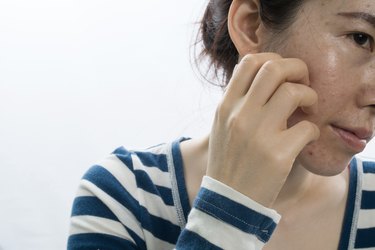
Seborrheic dermatitis is a form of eczema, and a mild version of this condition is called dandruff. Unfortunately, there is no recommended seborrheic dermatitis diet for people with this disorder that can cause a red, sometimes itchy rash on the scalp, face or chest.
Studies on Seborrheic Dermatitis
Video of the Day
There are very few academic studies involving the relationship between diet and seborrheic dermatitis. One such study has tried to determine the effects of a seborrheic dermatitis diet. The results were published in the January 2019 issue of the Journal of Investigative Dermatology. Current treatments, the authors reported, provide only temporary relief. Two of the study authors may have conflicts of interest. One is a shareholder in Unilever, a company which makes skin products. Another received a grant from Unilever.
Video of the Day
Researchers looked at lifestyle factors, mainly diet, to see if there are some seborrheic dermatitis nutrition recommendations. They focused on whether specific dietary patterns or total antioxidant intake is associated with the skin condition. The study examined the eating habits of 4,739 subjects, including 636 people with this skin condition, to see if there is indeed a diet that can help.
Subjects who ate lots of fruits had a 25 percent lower risk for seborrheic dermatitis. This effect was more pronounced in women. Diets in the study were based on four factors: vegetables, a typical Western diet, a diet rich in fat and a diet rich in fruits. Seborrheic dermatitis was more common in women who followed a traditional Western diet, which is largely based on processed foods.
A second, smaller study featured in the January 2018 issue of Our Dermatology Online looked at 51 patients with this skin condition. Twenty-eight were female and 23 male. The study also included a control group consisting of 50 people: 30 females and 20 males.
Scientists have concluded that eating patterns made no difference for those with or without the skin condition. There were no seborrheic dermatitis nutrition recommendations. The only difference they found was that those with seborrheic dermatitis consumed significantly more vegetables than those who didn't have this disorder, but dietary patterns were not associated with an increased risk.
Why No Seborrheic Dermatitis Diet?
Popular medical literature is full of suggestions for foods to avoid if you have seborrheic dermatitis. But this skin condition isn't related to diet, according to the British Association of Dermatologists (BAD), and current research doesn't note any specific foods that may trigger it. This skin disease can, however, resemble other similar conditions, such as atopic dermatitis.
According to a review published in the March 2014 edition of the Journal of Clinical and Aesthetic Dermatology, people with atopic dermatitis did notice improvements in their symptoms when they stopped eating foods that caused either allergies or sensitivities. But the authors noted that elimination diets should be recommended with caution and only in specific cases of atopic dermatitis.
The symptoms associated with this skin condition range from mild to severe. There are things you can do to feel better, but because there are no specific seborrheic dermatitis nutrition guidelines, changing your diet may not be one of them. Instead, you may want to focus on proven remedies.
Medical organizations, including the National Eczema Association (NEA), the American Academy of Dermatology (AAD) and the Mayo Clinic, don't consider dietary factors as a cause of this condition. Instead of focusing on foods that trigger seborrheic dermatitis, they focus on other potential causes, especially yeast infections and abnormal immune system responses.
What Causes Seborrheic Dermatitis?
This uncomfortable skin condition is very common, according to the Mayo Clinic. It mainly affects the scalp, causing scaly, dry patches on your skin, redness and dandruff. It may also affect oily areas of your body, including your face, sides of the nose, eyebrows, ears, eyelids and chest.
Also called dandruff, seborrheic eczema and seborrheic psoriasis, it's not unusual for babies to develop this condition. The infant version of this skin problem is known as cradle cap, and it causes crusty, scaly patches on the scalp. Some babies also get this skin problem in the crease of the neck, armpits or groin, according to Harvard Health.
There is no exact known cause, states the National Eczema Association. Genes and hormones may play a role. Certain factors may lead to it, according to the Mayo Clinic. A yeast infection called malasezzia, which occurs in the oil secretion on the skin, could be one. Another possible cause may be an overreaction of your skin's immune system to this yeast infection.
Seborrheic dermatitis typically appears on the body in spots where there are oil-producing glands, like the upper back, nose and scalp. Most people who get it are adults ages 30 to 60 and infants under 3 months old.
Symptoms of Seborrheic Dermatitis
Symptoms can include dandruff, which is characterized by flakes of skin that often develop on the scalp, causing tiny bits of skin to appear in your hair, according to the Mayo Clinic. This symptom may affect not only your scalp but your eyebrows too. Beards and mustaches can also develop this form of dandruff.
Other symptoms of this often unsightly skin condition include greasy, swollen skin spots covered with white or yellow scaly patches, notes the Mayo Clinic. These can develop on the scalp, face, sides of the nose, eyebrows, eyelids, ears, chest, armpits, groin area or under the breasts.
You may also have red spots, which may or may not itch. Some people may feel an itchy, burning sensation, but Harvard Health reports that not everyone feels discomfort. Even if you don't have that itchy or burning feeling, your symptoms may get worse if you're stressed. Additionally, they may flare up in cold, dry seasons, the Mayo Clinic reports.
Risk Factors for Seborrheic Dermatitis
Certain risk factors can trigger this skin condition. According to the NEA, these may include:
- Stress
- Hormonal changes or illness
- Harsh detergents, solvents, chemicals and soaps
- Cold, dry weather
- Medications, including psoralen, interferon and lithium
The Mayo Clinic says that neurological conditions like Parkinson's disease and depression may trigger the condition too. A weak immune system caused by an organ transplant, HIV/AIDS, alcoholic pancreatitis and some forms of cancer may be a risk factor as well. Even being tired can jumpstart this condition.
This skin disorder is somewhat more common in men than in women. It can also affect people who have epilepsy, alcoholism, acne, rosacea and even those with eating disorders, according to the NEA. It may occur in healthy individuals as well. One thing that doesn't cause this skin condition, though, is poor personal hygiene, according to the American Academy of Dermatology (AAD).
Treatment Options for Seborrheic Dermatitis
Harvard Health reports that treatment aims to help sufferers manage this condition. There is no cure. There are several treatment options available, the Mayo Clinic reports.
Creams, shampoos or ointments: You have lots of options when it comes to these. Prescription-strength hydrocortisone or other corticosteroids can be applied to the scalp or other affected area.
Don't use these products for weeks or months, however. You may end up with thinning skin, or skin that shows streaks or lines. Creams or lotions like Protopic and Elidel may be more effective, but the FDA is concerned about possible associations with cancer.
Try antifungal gels, creams or shampoos alternating with another medication. Antifungal medicines can help too, but they have potential possible side effects and may cause drug interactions.
You may also try over the counter dandruff shampoos, like Head & Shoulders or Selsun Blue. Others include Nizoral A-D, Neutrogena T/Gel, DHS Tar or Neutrogena T/Sal. Some of these shampoos contain coal tar, selenium sulfide or zinc pyrithione, Harvard Health reports. You can also use dandruff shampoos on your skin, according to the AAD.
Cradle cap in infants tends to disappear without treatment. Typically, this skin condition also clears up without treatment for babies who might have it in areas beyond the scalp. Unfortunately, if you are older, this condition doesn't usually go away without treatment, the AAD states.
For skin problems, the AAD recommends soap with 2 percent zinc pyrithione and a fragrance-free moisturizer. For rough, scaly patches, use a scale softener. Examples include a cream that contains coal tar or salicylic acid and sulfur. Don't use petroleum jelly as it can make your symptoms worse.
Other Home Remedies
The Mayo Clinic suggests you look into other treatments and self-care tips to make living with seborrheic dermatitis easier. These include:
- Apply mineral oil or olive oil to your scalp, and leave it for an hour or so. Then comb or brush your hair and wash it. This will soften and remove scales from your hair.
- Wash your skin regularly. Avoid harsh soaps and use a moisturizer. Rinse the soap off your skin and scalp completely.
- Avoid styling products like hair sprays, gels and other products while the condition is active.
- Don't use skin and hair products that have alcohol. These can cause the condition to flare.
- Wear smooth-textured cotton clothing that will keep air moving around your skin and reduce irritation.
- If you have a beard or mustache, wash your facial hair regularly. It can be worse around beards or mustaches. Use a shampoo with 1 percent ketoconazole until you start to get better. Then, shampoo once a week. Another option is to shave.
- Clean your eyelids if they show signs of red or scaly skin with baby shampoo and a cotton swab or warm compresses.
- Wash your baby's scalp with non-medicated baby shampoo once a day. Loosen the scaly patches with a small, soft-bristled brush before you rinse. If it persists, try applying mineral oil to the scalp for a couple of hours before shampooing.
You may have to experiment a little to find the best treatment for seborrheic dermatitis. Dandruff shampoos that work for some may not work for others, the AAD reports. They recommend trying different shampoos and monitoring your symptoms. Make sure you follow the directions on the package.
If your problem is dandruff and you find the right shampoo, use it as long as you need. As your scalp condition improves, gradually taper off the dandruff shampoo and go back to using your regular products.
- British Association of Dermatologists: "Seborrhoeic Dermatitis"
- National Eczema Association: "Seborrheic Dermatitis"
- Mayo Clinic: "Seborrheic Dermatitis: Symptoms and Causes"
- Mayo Clinic: "Seborrheic Dermatitis: Diagnosis and Treatment"
- Harvard Health Publishing: "Seborrheic Dermatitis: What Is It?"
- American Academy of Dermatology: "Seborrheic Dermatitis: Tips for Managing"
- The Journal of Investigative Dermatology: "Association Between Diet and Seborrheic Dermatitis: A Cross-Sectional Study"
- Our Dermatology Online: "Relationship Between Diet and Seborrheic Dermatitis"
- The Journal of Clinical and Aesthetic Dermatology: "Diet and Dermatitis: Food Triggers"