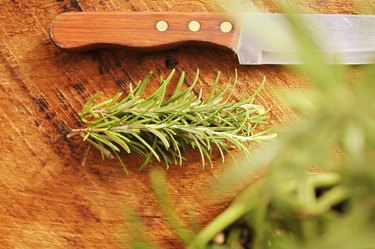
With its distinctive aroma and flavor, rosemary punches up the taste of a variety of foods, such as pasta and grilled meat. Resembling pine trees, rosemary is actually a member of the mint family, and it supplies a good dose of several nutrients you need for good health. Whether you use fresh rosemary or dried rosemary, you'll reap the health benefits of this herb.
Calories, Fat and Fiber
Video of the Day
A teaspoon of dried rosemary contains 4 calories and a negligible amount of fat. Fresh rosemary has 1 calorie and only a trace amount of fat per teaspoon. A teaspoon of dried rosemary contains 0.5 gram of fiber, which doesn't sound like a lot, but it's 2 percent of the 25 grams women need each day in just that tiny amount. It's 1 percent of the 38 grams of fiber men require on a daily basis. A teaspoon of fresh rosemary contains 0.1 gram of fiber.
Video of the Day
Vitamins and Minerals
A 1-teaspoon serving of dried rosemary delivers 0.35 milligram of iron, a nutrient that aids in energy production. That amount is 4 percent of the 8 milligrams of iron men need each day and 2 percent of the 18 milligrams women require daily. Both dried and fresh rosemary supply trace amounts of vitamins A and C, as well.
More Health Benefits
Rosemary is a good source of antioxidants, according to a 2006 article published in the "European Journal of Lipid Science and Technology." These antioxidants might help reduce inflammation in conditions such as rheumatoid arthritis, note Michael T. Murray and Joseph E. Pizzorno in their book "The Encyclopedia of Healing Foods." Rosemary contains specific antioxidants, called caffeic acid and rosemarinic acid, that might help prevent and fight cancer, according to the Pacific College of Oriental Medicine. The scent of rosemary can improve concentration and memory, as well, according to the University of Maryland Medical Center.
Incorporating Rosemary into Your Diet
Fresh rosemary is more flavorful than dried versions, according to Murray and Pizzorno, but adding either to your diet is fairly simple. Sprinkle the herb over potatoes and roast them as you normally would, or scatter rosemary over a grilled steak or pork chop just before eating it. Rosemary lends flavor to lamb and fish recipes, too, note Murray and Pizzorno. The flavor of rosemary also pairs well with scrambled eggs and pasta sauce.
- Encyclopedia of Healing Foods; Michael T. Murray and Joseph E. Pizzorno
- U.S. Department of Agriculture: Spices, Rosemary, Dried
- U.S. Department of Agriculture: Rosemary, Fresh
- University of Maryland Medical Center: Iron
- European Journal of Lipid Science and Technology: Natural Antioxidants From Herbs and Spices
- Pacific College of Oriental Medicine: The Cancer Fighting Benefits of Rosemary
- University of Maryland Medical Center: Rosemary
- U.S. Department of Agriculture: Dietary Guidelines for Americans 2010