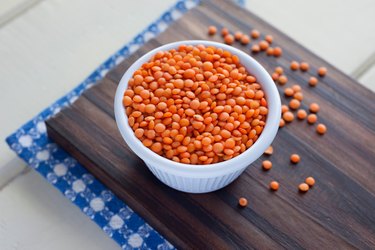
Red lentils, like all types of lentils, are not only a great source of low-fat, plant-based protein, but contain a wealth of B vitamins, many essential minerals and fiber. Economical and easy to prepare, lentils can help your digestion, protect the heart, maintain your bones and support weight loss.
What Are Lentils?
Video of the Day
Lentils are a pulse, which includes beans, chickpeas and other edible seeds of legumes. Lens-shaped, lentils exist in a variety of sizes from extra small to large. Although lentils come in many colors, such as brown, green, yellow, red or black, red lentils are among the most common type appearing in grocery stores in the U.S. If you buy split red lentils, their seed coat is removed and the inner part split in half, which makes them cook much faster than if left whole.
Video of the Day
The U.S. Dietary Guidelines considers all types of lentils and other pulses to be a member of both the protein and vegetable food groups because of their high content of plant-based protein and dietary fiber, according to Annals of the New York Academy of Sciences, published in March 2017.
The established, recommended, single-daily serving for cooked pulses is 100 grams (125 milliliters) or one-half cup. Data from Nutrition Reviews, published in December 2017, reports that this amount represents a reasonable target for promoting the dietary and nutritional attributes of legumes, including protein, fiber, folate, iron, potassium and zinc.
According to a review published in the International Journal of Molecular Sciences in November 2017, lentils have a potential beneficial connection to reducing the incidence of diseases, such as diabetes, obesity, cancer and heart disease, due to their nutritive value, bioactive compounds and polyphenol-rich content.
Red Lentils Nutrition
The lentil is a powerhouse — full of nutrients, flavor, health benefits and taste. One-quarter cup of raw lentils is the equivalent of a half cup of cooked pulses, according to USA Pulses.
One-quarter cup of raw red lentils is low in calories — 172 or 9 percent of the daily value (DV), according to USDA. Red lentils are also low in fat, with only 1 gram per one-quarter cup. They do not contain any cholesterol or sugar and are gluten-free. Lentils' calories include 30 grams of complex carbohydrates, or 10 percent of your DV, which provide your body with energy to fuel your muscles, brain, heart and nervous system.
All types of lentils are an excellent and economical source of protein, especially important for vegetarians or people who don't eat meat. The USDA reports that dry red lentils provide 11.5 grams of protein, or 23 percent of the DV per one-quarter cup, to help your body build and maintain tissue and promote growth and development.
High in Beneficial Fiber
Red lentils are high in dietary fiber, essential for maintaining digestive health and for helping to maintain your weight. These little seeds provide 5.2 grams of fiber, or 21 percent of the DV per quarter cup, according to USDA. Fiber is the part of food that your body cannot break down, so it travels intact through your intestines and colon, adding bulk to your stool and encouraging regular bowel movements.
Fiber not only helps prevent constipation, but its bulking action in the digestive tract may contribute to weight management_._ Fiber can increase satiety by slowing digestion, giving you a "full" feeling for longer. By reducing your appetite, you may resist the urge to overeat, which could lower your overall calorie intake. Furthermore, consuming high-fiber foods may help to decrease caloric absorption by binding with fat, as reported in a Nutrients review published in December 2018.
The fiber content in foods may also help protect you from cancer, reports a large prospective study published in the American Journal of Clinical Nutrition in October 2015. Results of the population-based screening trial found that high intakes of dietary fiber resulted in reduced risk of colorectal adenoma and colon cancer.
Great for a Healthy Heart
Eating red lentils may be associated with an overall lower risk of heart disease. They contain nutrients that have positive effects on several risk factors. Some minerals found in lentils, including potassium and magnesium as well as folate, have been found to have a beneficial effect on your heart by maintaining your blood pressure and cholesterol levels naturally.
According to the USDA, per quarter cup, raw red lentils contains 321 milligrams of potassium which your body needs for proper nerve transmission and muscle function, including your heart. Potassium helps balance your fluid levels and counteracts the damaging effect of sodium. A low intake of potassium can increase your risk of developing high blood pressure, especially if your diet includes a high-salt intake, according to National Institutes of Health (NIH).
Magnesium is another mineral that plays diverse roles in protecting your heart, and red lentils contain 28.3 milligrams or 7 percent of the DV per quarter cup, according to USDA. Your body needs magnesium to regulate blood pressure and blood sugar levels, in addition to helping your muscles and nerves function effectively. The NIH reports that people who have more magnesium in their diets may have a lower risk of some types of heart disease and stroke.
A report, published in BMJ Open Heart in July 2018, suggested that a magnesium deficiency could be implicated in cardiovascular diseases such as hypertension, cardiomyopathy, abnormal heartbeat, hardening of the arteries, elevated cholesterol and diabetes.
Of all the plant-based foods, lentils contain the most folate. A quarter-cup serving of lentils contains 98 micrograms or 24 percent of the DV for folate, lists USDA. Although it's best known for its prevention of birth defects in babies, folate also plays an important role in reducing the risk of heart disease by lowering the artery-damaging amino acid in your blood called homocysteine. Too much of this compound in your body increases your risk of coronary heart disease, stroke and peripheral artery disease, according to the American Heart Association.
In addition to the vitamin and mineral content that can help your heart stay strong, the fiber in lentils can also participate by helping to lower your cholesterol levels. According to the American Heart Association, increased fiber intake can reduce LDL, or "bad" cholesterol levels, even more than a diet low in saturated and trans fats alone.
Good for Strong Bones
Calcium isn't the only mineral in lentils that contributes to the health of your bones by maintaining their structure and strength. Others include phosphorus, magnesium, potassium, copper, iron and zinc.
Your bones store 99 percent of the calcium, 85 percent of the phosphorus and 66 percent of the magnesium in your body, so it's easy to understand why these minerals are crucial to mineral bone density. Red lentils contain 23 milligrams of calcium, 141 milligrams of phosphorus and 28.3 milligrams of magnesium per quarter cup, as listed by USDA.
Potassium neutralizes acids, which helps keep calcium and phosphorus from being lost from your bones by excretion from the kidneys. Red lentils provide 321 milligrams of potassium per serving, according to USDA.
Copper, iron and zinc in lentils are all necessary for collagen production and synthesis, which helps provide the structural platform for bone formation. In addition, a March 2018 study, published in the Journal of Affective Disorders, assessed 14,834 adults and concluded that copper, iron and zinc, along with selenium, may help relieve depression.
B Vitamins and Iron
A serving of red lentils can help ensure your body gets the energy it needs to function normally.
Lentils are a good source of non-heme iron, delivering 20 percent of the DV in each serving says USDA. Not getting enough iron affects how your body uses energy, and a deficiency can result in fatigue, weakness, GI upset, poor memory and low immunity to infections. Severe low levels may result in serious iron-deficiency anemia.
Red lentils are a great source of B vitamins, necessary to transform the food you eat into the energy that your cells must have for the proper functioning of your heart, brain and blood cells. The USDA lists the B vitamin-content, per quarter-cup uncooked red lentils, as:
- 20 percent of the DV for thiamin (B1)
- 4 percent of the DV for riboflavin (B2)
- 4 percent of the DV for niacin (B3)
- 3 percent of the DV for vitamin B5 (PA)
- 11 percent of the DV for vitamin B6
- 24 percent of the DV for folate (B9)
- Annals of the New York Academy of Sciences: "Dietary Guidance for Pulses: The Challenge and Opportunity to be Part of Both the Vegetable and Protein Food Groups"
- Nutrition Reviews: "Enhancing Nutrition with Pulses: Defining a Recommended Serving Size for Adults"
- International Journal of Molecular Sciences: "Polyphenol-Rich Lentils and Their Health Promoting Effects"
- USA Pulses: "Pulses are a Superb Addition to any Meal Thanks to Their Nutritional Benefits!"
- MyFoodData: "Nutrition Facts for Lentils Pink Or Red Raw"
- Nutrients: "Body Composition Changes in Weight Loss: Strategies and Supplementation for Maintaining Lean Body Mass, a Brief Review"
- American Journal of Clinical Nutrition: "Dietary Fiber Intake and Risk of Colorectal Cancer and Incident and Recurrent Adenoma in the Prostate, Lung, Colorectal, and Ovarian Cancer Screening Trial"
- National Institutes of Health: "Potassium"
- National Institutes of Health: "Magnesium"
- BMJ Journals: Open Heart: "Magnesium for the Prevention and Treatment of Cardiovascular Disease"
- Lentils: "Nutritional Information"
- American Heart Association: "Heart and Stroke Encyclopedia: Folic Acid and Cardiovascular Disease""
- American Heart Association: "Whole Grains, Refined Grains, and Dietary Fiber"
- ASBMR Bone Curriculum: "Bone Structure and Function"
- American Bone Health: "Minerals for Bone Health"
- Journal of Affective Disorders: "Association of Total Zinc, Iron, Copper and Selenium Intakes With Depression in the US Adults"
- National Institutes of Health: "Iron"