



































































Does Running Increase Dopamine?

Does Running Increase Dopamine?
Photo Credit Polka Dot Images/Polka Dot/Getty Images

Running is popularly believed to increase dopamine production in the brain. And while that's true, the impact of that action in a runner's brain is more complicated than merely making you feel good. That's because dopamine is more than just a "feel good" substance. According to "Psychology Today," dopamine is released in the brain "when something good happens," and teaches people and animals to react positively to rewards and negatively to punishment. It also affects the extent to which people seek thrills and become addicted to drugs.

What Is Dopamine?

According to Phil Newton, in "Psychology Today," dopamine is a neurotransmitter. That means it sends signals between nerve cells. Mike T. Nelson, a Ph.D. candidate at the University of Minnesota, says that "Dopamine does tons of stuff in the brain. Everything from motor activity, motivation/reward, sleep, mood, learning" and more. Nelson also points out that dopamine release is closely associated with delivering feelings of pleasure.

Exercise

To find out whether exercise increases dopamine production, scientists put rats on treadmills for five days per week for eight weeks. The authors of the study, which was published "Pharmacology, Biochemistry, and Behavior," say the results "suggest that chronic running elevates dopamine secretion." Another study suggested that running and other exercise causes such a flood of dopamine that going for a run on a regular basis may help meth amphetamine addicts manage the depressive effects of quitting meth as they recover form their addiction.

Parkinson's Disease

To validate the theory that running and exercise increase dopamine levels, scientists at the University of Southern California looked at the impact of exercise on test subjects with Parkinson's disease. The test is revealing because Parkinson's disease is caused by a lack of dopamine in the brain. The study shows that exercise helped patients with Parkinson's, which the researchers attributed to increased dopamine levels and more efficient dopamine uptake by structures in the brain.

More Dopamine, More Running

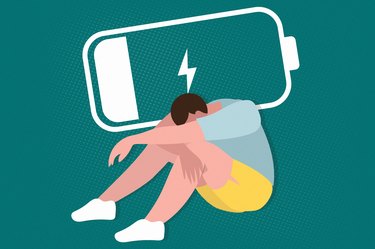
Research suggests while running helps increase dopamine production, increased dopamine production may help you run more because it fights feelings of fatigue. Dopamine has an effect on how the brain controls movement. For example, Parkinson's patients with low dopamine levels suffer from tremors. People who have high dopamine levels, namely runners, may also have increased "exercise capacity," according to a study performed by researchers at University of Colorado, Boulder.

References

Article reviewed by John Hagemann Last updated on: Sep 30, 2011

Must see: Photo Galleries

Member Comments