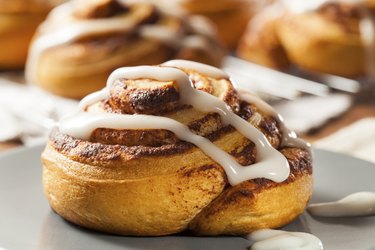
A cinnamon craving hasn't been connected with a definite cause. If you crave cinnamon, it may just reflect your desire for a favorite food, especially if you haven't eaten it for a while. It could also come from a need to eat sweets or be an ingredient in the type of foods you like to eat when your mood dips or stress levels are high.
Desire for Sweets
Video of the Day
Cinnamon's natural flavor isn't exactly sweet, but the spice is often associated with sweet-tasting baked goods. In fact, in one study, researchers included cinnamon rolls in the same category with other sweets that might be craved.
Video of the Day
Eating sugar activates the same brain chemicals that create addictions to other substances, such as alcohol. As a result, you can become addicted to sweets. This triggers cravings, then turns into a cycle where the more you eat, the more you want.
A cinnamon craving grounded in a desire for sweets could also mean your blood sugar is low, but don't turn to sweets to remedy the problem. It's better to choose a complex carbohydrate or fruit that contains sugar, fiber and nutrients because they replenish blood sugar without causing a large spike.
Check Your Mood
When your mood takes a dive, you're more likely to crave comfort foods. Everyone has a different idea of a comfort food, and if a cinnamon-based food fits the bill for you, that may explain your craving. It's also possible this type of craving is related to the carbs gained from baked goods made with cinnamon. Carbs boost the amount of serotonin in your brain, which in turn improves mood.
Food is so closely tied to emotions and memories that the smell of food can cause a craving. Thinking of cinnamon, or actually smelling cinnamon, may trigger a cinnamon-related craving because it's connected to a pleasant event.
Nutrient Needs
For a long time food cravings were seen as the body's way of giving a head's up that it was low in nutrients. Current research shows that cravings are more complex and have multiple causes, but it's true that some types of food cravings are associated with specific nutritional deficiencies, notes Tufts Now.
Studies to date haven't linked cinnamon cravings to lack of a particular nutrient, but if your craving did indicate a deficiency, you wouldn't have to guess about which vitamin or mineral you needed. A teaspoon of ground cinnamon is a rich source of only one nutrient -- manganese.
Control the Craving
It's hard to control sugar cravings after blood sugar drops, but you can fight them by eating three meals and two snacks at regular intervals, suggests Montana State University. The steady influx of sugar, combined with a meal that includes proteins, fats and complex carbs, keep blood sugar stable.
If you wait 15 minutes before giving in to a craving, it may just go away. During that time distract yourself with an activity or chew gum. Tufts Now suggests visualizing a detailed and pleasant image. This process uses the same working memory that holds the craving, so you may be able to push the craving out of your mind. You could also try smelling another odor other than cinnamon.
- Tufts Now: The Craving Brain
- Massachusetts Institute of Technology: Decoding Sugar Addiction
- NutritionValue.org: Spices, Ground, Cinnamon
- Proceedings of the Nutrition Society: The Psychology of Food Cravings
- Montana State University: Controlling Carb Cravings
- Obesity: Similarities in Food Cravings and Mood States Between Obese Women and Women Who Smoke Tobacco
- Columbia University: Serotonin and Foods