











































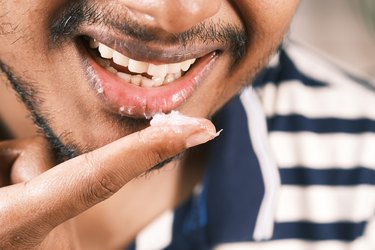
How to Get Rid of Pimple Holes

Holes caused by acne scarring can be embarrassing. There are actually three different types of holes, or scars, that might be staring back at you in the mirror: icepick acne scars, boxcar acne scars and rolling acne scars. Icepick scars look like deep punctures caused by an icepick, according to the American Academy of Dermatology's online article, "Depressed Acne Scars: Effective Treatment Available." Boxcar acne scars are named for the boxlike walls that surround them. Rolling acne scars can be identified by their wavy texture. These holes may be treatable by your dermatologist or with a home chemical peel or microdermabrasion kit.

Step 1

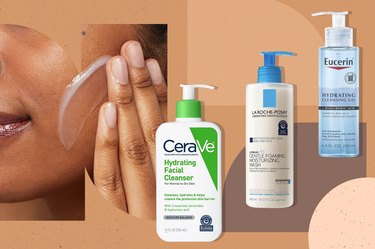
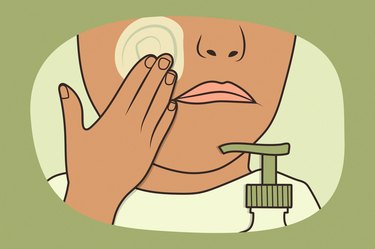
Wash your face twice a day with an antimicrobial face soap. Apply a topical acne medication to dry, clean skin once a day as well. Benzoyl peroxide and salicylic acid are two popular ingredients that work to prevent and treat existing acne and lower your chances of getting scars from pimples.

Step 2

Try a home chemical peel. Chemical peels may reduce scars by removing the top layer of skin, according to an article on Dermadoctor.com called "Chemical Peels," and the American Academy of Dermatology. Be careful and follow the directions on the box exactly because even light chemical peels can irritate your skin or cause more scarring as they do contain acid. Have an aesthetician or dermatologist perform the chemical peel instead, if possible. These chemical peels will likely be stronger and can go deeper than home chemical peel kits, which are usually superficial, says Audrey Kunin, MD on DermaDoctor. Dr. Kunin recommends MD Formulations My Personal Peel System, Cellex-C Speed Peel Facial Gel and MD Skincare Alpha Beta Daily Face Peel.

Step 3

Give yourself a microdermabrasion using a home kit with a microdermabrasion cream. Microdermabrasions as a series of treatments may also remove the top layer of skin, improving the condition of shallow scars, according to the American Academy of Dermatology. Home kits may be abrasive, though, says Dr. Kunin, so if you can have your dermatologist do microdermabrasion with a machine you will likely get better results. Chemical peels and microdermabrasions work well together as part of an acne-scar fighting team.

Step 4

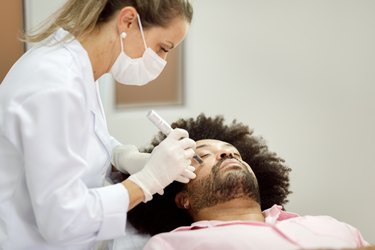
Ask your dermatologist to apply a filler such as PMMA (polymethylmethacrylate) to fill in acne holes. PMMA is the only permanent filler, according to the American Academy of Dermatology. A collagen injection or hyaluronic acid may fill holes for three to six months.

Tips and Warnings

  • Laser resurfacing and acne-scar surgery are two other treatment options for acne holes. Laser skin resurfacing is particularly effective for icepick and some boxcar scars, according to the American Academy of Dermatology. Acne-scar surgery and laser skin resurfacing requires recovery time of a couple of weeks. Both procedures must be performed by a dermatologist.

Things You'll Need

  • Microdermabrasion kit
  • Chemical peel

References

Last updated on: Jan 2, 2010

Must see: Photo Galleries

Member Comments