











































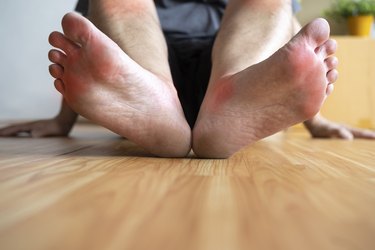























Diabetic Foot Pain Relief

Peripheral neuropathy affects 60 to 70 percent of all diabetics, with varying levels of pain in the hands, and in particular, the feet and toes, according to DiabeticLiving.com. Initially felt as numbness and tingling, as neuropathies increase in intensity, the pains may become stabbing and sticking and excruciating, interfering with sleep and your daily routine. Pharmaceutical medicines are available to help manage pain, but you may prefer combining conventional treatments with a multidisciplinary approach, using natural medicines, herbs and home remedies, including a few lifestyle changes, to manage pain.

Step 1

Apply a topical applications, such as capsaicin cream, available in pharmacies, which is made from red chili peppers, and relieves neuropathy pains for some people, according to an overview of studies, published in the July 1994 edition of "European Journal of Clinical Pharmacology." Although capsaicin may feel hot to the skin initially, the compounds from the chili peppers bind to pain receptors, lessening pain over a period of time.

Step 2

Take omega-3 and omega-6 fatty acids in the form of fish oil supplements. The healthy fats help relieve pain and inflammation.

Step 3

Wear appropriate shoes that fit well, with large enough toe boxes that don't put pressure on your toes.

Step 4

Use homeopathic remedies. Prescribed by a qualified homeopath, these natural medicines have been reported to be effective for various types of pain relief. Remedies like Ledum, Colchicum, Agaricus, Plumbum and Pulsatilla, may help you overcome neuropathy pain according to esteemed homeopath William Boericke in his book "Materia Medica with Repertory."

Step 5

Use acupuncture and Chinese medicine, recommends Acufinder.com, for the reduction of stress hormones. This may lead to the reduction of inflammation and pain.

Step 6

Follow in the footsteps of participants in a study at the University of Alabama who found relief from diabetic foot pain from taking high doses of Inositol, one of the B vitamins. The study, along with reports from Robert Atkins, MD, in a 1996 issue of "AIDS Treatment News" confirm that inositol added to the diet helps reduce the frequency and pain of peripheral neuropathies.

Step 7

Keep pain levels managed by keeping glucose levels stable, suggests pain specialist Robert Gerwin MD, of Johns Hopkins University, to Diabetic Living.

Step 8

Use conventional medicines prescribed by your doctor if pain levels remain unmanageable after trying a multidisciplinary approach.

Tips and Warnings

  • Sit comfortably, but with legs uncrossed, to encourage proper blood flow to the feet. Wear warm shoes and gloves in cold weather to protect hands and feet.
  • Call your doctor immediately if you notice any dark blue or black spots on your feet or toes. The suggestions offered here are for educational purposes and not meant to take the place of medical advice.

Things You'll Need

  • Capsaicin cream
  • Omega fatty acid supplements
  • B complex vitamins
  • Inositol

References

Article reviewed by Elizabeth Ahders Last updated on: Jan 7, 2010

Must see: Photo Galleries