














































Parents' Effect on Child Behavior

Parents' Effect on Child Behavior
Photo Credit Image by Flickr.com, courtesy of Gordana Adamovic-Mladenovic

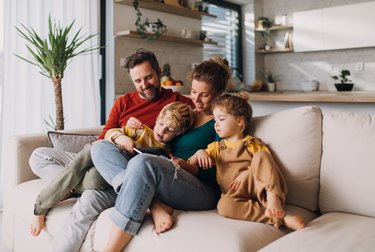
Parents greatly affect their children's behavior. Children are like sponges--they model everything a parent does and incorporate what they see into their own lives. It is important that parents set the right examples for their children. Negative examples can be detrimental to a child's development and can lead to bad behavior.

Social

Research done by the University of Chicago published in the Journal of Abnormal Child Psychology showed that antisocial children learn their behavior from their parents' examples. Social skills can be interpreted as everything from the basic polite "please" and "thank you" to speaking in front of crowds. Children model their parents and learn from them.

Stress

According to the website More4Kids.info, a parent's reaction to stress affects the way a child reacts to stress. If a parent reacts negatively, a child will learn to react negatively as well. In addition, negative reactions to stress, such as yelling and lashing out, can scare a child. Children can learn to shut themselves down and may even think that they are the cause of the stress. If stress is handled positively, it helps children see that their parents' love for them never changes, even when they are stressed out.

Discipline

The way a parent disciplines greatly affects their children's behavior, as explained on FamilyDoctor.org. When a parent elects to use physical punishment, such as spanking, it does not teach the child how to change his behavior. Children can also react aggressively to physical punishment. When parents chooses alternate forms of punishment, such as time-outs, they are helping modify the child's bad behavior in a calm manner.

Fighting

If arguing among parents is done fairly and with maturity, a child can actually benefit from seeing how conflicts are resolved. As explained on Child-Discipline-with-Love.com, verbal and physical fights are extremely hard on kids. Children may blame themselves for their parents' arguments and may be traumatizing for years to come. Children may develop low self-esteems and may even behave violently toward other children. Dysfunctional families breed dysfunctional children. Children often repeat this behavior in their future relationships.

Child Abuse

As the website HealthyPlace.com, explains, child abuse causes a range of antisocial and destructive behaviors. This is because abused children try to cope and to understand why they are being abused. Parents who abuse their children may cause their children to be aggressive and violent, experience learning problems and even become involved in drugs or alcohol. Parents who abuse provide the opposite of what a child needs to grow up healthy. Instead, they destroy the inside and outside world of a child.

References

Article reviewed by Danielle Last updated on: Jan 21, 2010

Must see: Photo Galleries