



























LED Light Therapy for Skin Care

LED Light Therapy for Skin Care
Photo Credit Image by Flickr.com, courtesy of THomas Hebert

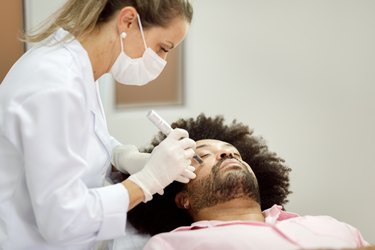
LED light therapy can have positive effects on skin. With a series of LED (light-emitting diodes) skin treatments, patients with aging skin may see a softening of wrinkles and folds, decreased lines, improved moisture, a more toned skin appearance and even a healthy glow. LED lights also are used to treat acne and scars. Treatments are available through dermatologists or you can purchase a personal LED unit to use at home. According to the National Institutes of Health, increasing physician expertise with the topical sensitizers and light sources employed in skin therapy has led to the use of LED to improve the visible signs of photoaging.

Function

LEDs (light emitting diodes) produce lights at different frequencies and can penetrate more deeply than lasers with less damage. The LED light interacts with skin cells and stimulates them, causing them to form collagen and elastin. That makes the skin look younger and healthier. In treating scars, the increased collagen production causes less scar tissue to form at the damaged site.

Skin Rejuvenation

Yellow light LEDs most often are used for skin rejuvenation. When the deeply penetrating LED lights are aimed at the skin, the treatment leads to tightening, fewer wrinkles, better tone and shrinking of pore size, according to the American Academy of Dermatology. Typically, dermatologists say patients will see results after several months' worth of treatments. Because the skin continues to age, maintenance treatments may be necessary every few months after the initial course of treatment. A 2004 study published in the journal "Skin Therapy Letter" reported that topical agents can be used to enhance the cosmetic effects of LED lights on the skin.

Acne Treatment

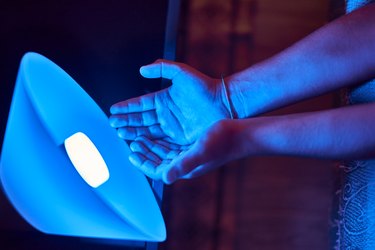
Dermatologists use blue LED lights to treat severe, stubborn acne, either alone or with a topical medication. If a medication is used, a light-sensitive cream is applied to the skin first. Then the treatment technician shines the blue LED lights onto the skin, activating the medication that has been absorbed into the skin cells. This kills the bacteria that causes acne. A review of the medical literature conducted in 2009 by University of Kansas dermatologists found that protocols using light-sensitive cream in conjunction with LED light therapy appears to be more effective in treating acne than those using light therapy alone, but the researchers noted that there's not enough evidence yet to determine the most effective technique for the procedure.

Scar Reduction

Scars such as stretch marks and those resulting from severe acne also can be treated with LED light therapy. In the case of stretch marks, the LED lights are beamed directly on them, flattening them and softening their appearance. According to New York City dermatologist Dr. David Kriegel, at least 10 to 20 professional sessions are needed over the course of up to 10 weeks to see improvement. Home treatment devices also are available to treat scars.

Effects

Dermatologists believe there are few or no side effects involved with LED light therapy for skin care. The procedure appears to be completely safe. Some dermatologists warn that hand-held LED light therapy devices designed for use at home are less powerful than those available in doctors' offices, and therefore will take longer to produce results. Experts advise treatments no more than twice a week, because the collagen in the skin needs time to rejuvenate in between treatments for the LED light therapy to have its full effects.

References

Article reviewed by Elizabeth Last updated on: Jan 24, 2010

Must see: Photo Galleries

Member Comments