





























































Angina is a sign of heart disease. The heart is not getting enough blood flow, resulting in chest pain. There are three types of angina. Stable angina involves a recurrent chest pain usually during physical exertion. Unstable angina appears suddenly and may indicate an impending heart attack. Variant angina is rare and results from a coronary artery spasm.
Common Symptoms
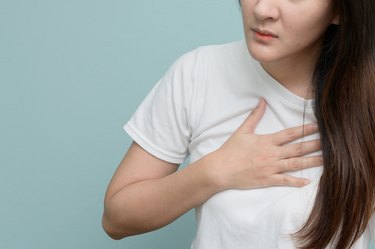
Angina usually starts with pain and discomfort in the chest behind the breastbone, according to the National Heart Lung and Blood Institute. It is often described as heaviness, tightness, squeezing or pressure on the chest. There may be a burning sensation or a feeling of indigestion. The pain may also appear in the arms, shoulders, neck, throat or jaw. Women may feel discomfort in the back, shoulders and abdomen. In some cases, it is difficult for people to describe the pain or where it is coming from. Nausea, fatigue, weakness, lightheadedness, sweating and shortness of breath are other possible symptoms.
Stable Angina Symptoms
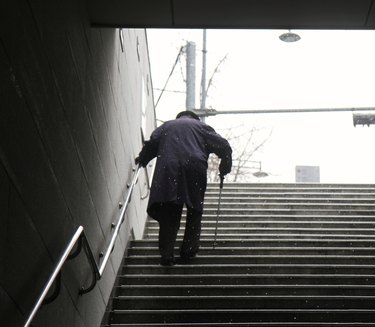
Stable angina is a persistent or recurring pain that is not a new feeling to the person. Exercise or climbing stairs may bring on the pain because the heart is working harder. It may last for only a few minutes. It may feel like indigestion. Pain from the chest may spread to the arms, back or other spots. Medicine or rest can relieve it.
Unstable Angina Symptoms
A person experiencing unstable angina is usually startled because the pain has not been felt before. The pain may occur at rest or while sleeping. It may be a more severe pain than stable angina and can last up to a half hour. The pain may get worse and cannot be relieved by medicine. It might be a warning of a heart attack.
Variant Angina Symptoms
With this form, the person has pain or discomfort that often occurs at rest or while sleeping. Variant angina is usually severe, but it can be relieved with medication.
Symptoms in Women
Women may have signs of angina that are different from those affecting men. The chest pain may be a stabbing, pulsating or sharp chest pain instead of the tightness and pressure feeling, the Mayo Clinic explains. The symptoms of nausea, shortness of breath and abdominal pains are more often experienced by women with angina. Because women may have these different symptoms, they might not seek medical help. If the pain or discomfort does not go away after resting or taking medication for angina, emergency treatment is important in case of a heart attack.


