









































How to Remove Hyperpigmentation Caused by Acne

How to Remove Hyperpigmentation Caused by Acne
Photo Credit was ist da??? image by martin schmid from Fotolia.com

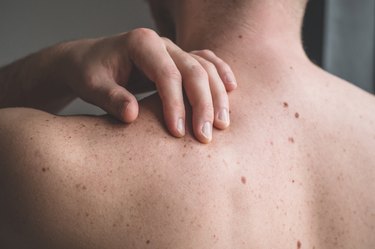
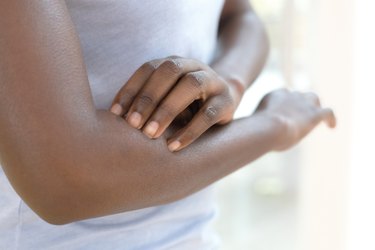
Hyperpigmentation is a darkening of the skin that can occur as a result of acne. More commonly known as postinflammatory hyperpigmentation, or PIH, it isn't actually a form of scarring, but more a prolonged inflammatory response of the skin. This discoloration of the skin is far more prevalent in people with darker skin types, according to the American Academy of Dermatology, though almost anyone may notice darkened areas of the skin after a papule, pustule or nodule is gone. Treatment typically relies on time, medications and cosmetic procedures to remove hyperpigmentation.

Step 1

Give the skin time to heal. The American Academy of Dermatology states that PIH will eventually fade, so you may not need to do anything to improve the appearance of your skin. However, the institute explains that it may take months to years before all signs of PIH have disappeared.

Step 2

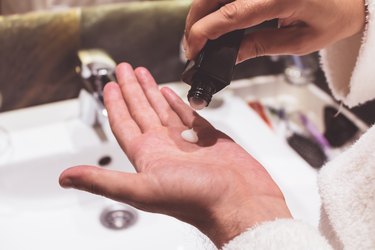
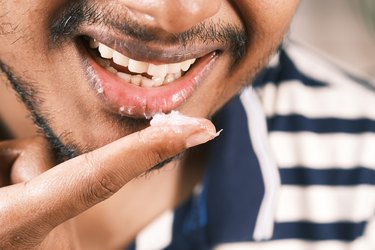
Try using a medicated cream to remove hyperpigmentation. It isn't necessary to wait for PIH to clear up by itself. You can also use medicated creams that lighten the skin, asserts the American Academy of Dermatology. Hydroquinone, tretinoin and adapalene can all be used for this purpose. Hydroquinone is a skin-bleaching substance, while tretinoin and adapalene promote cell turnover, which can cause darkened areas of the skin to fade.

Step 3

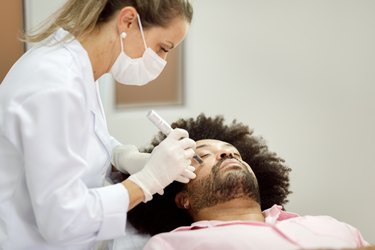
Talk to your dermatologist about microdermabrasion. Though this cosmetic procedure is often used for minor scarring, it can gradually reduce the signs of postinflammatory hyperpigmentation. According to the Mayo Clinic, microdermabrasion uses fine crystals to buff the surface of the skin, removing blemishes and improving the complexion. Darker spots may need a series of treatments to cause them to fade effectively.

Step 4

Consider a chemical peel. The American Academy of Dermatology offers this cosmetic procedure to remove hyperpigmentation from the skin. Chemical peels essentially peel away the epidermal layer of the skin, maintains the Mayo Clinic, allowing new skin to form in its place. This can help to remove PIH.

Tips and Warnings

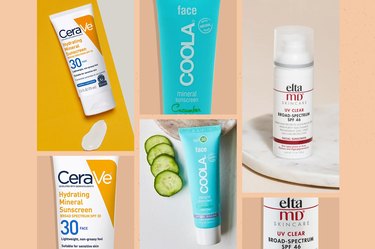
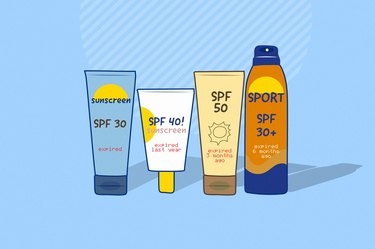
  • As you allow the hyperpigmentation to fade, the American Academy of Dermatology recommends using sunscreen. Sunscreen with a sun protection factor (SPF) of 30 or more can prevent PIH from darkening.
  • Both the National Institutes of Health and the Mayo Clinic warn that creams containing retinoids, like tretinoin and adapalene, shouldn't be used by women who are pregnant or trying to conceive. These products may cause birth defects, even when used in a topical cream. Avoid using exfoliants or astringents on areas of the skin suffering from PIH, urges the American Academy of Dermatology. It may irritate and exacerbate the complexion of your skin.

References

Article reviewed by J.A. Rist Last updated on: Aug 24, 2010

Must see: Photo Galleries

Member Comments