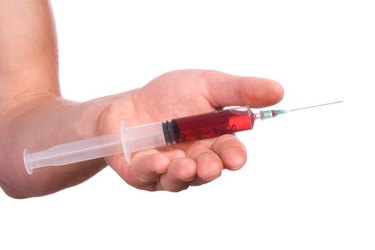
There are numerous effects of anemia on the cardiovascular system. According to the U.S. National Library of Medicine and the National Institutes of Health, iron deficiency is one of the principle causes of anemia, although certain medical conditions, including sickle cell anemia and cancer, can also cause anemia. The human body needs iron to produce hemoglobin, which carries oxygen from the lungs to the body's tissues and organs. Anemia is particularly challenging on the cardiovascular system.
Oxygen Delivery
Video of the Day
Decreased oxygen delivery to the tissues and organs is one of the main effects of anemia on the cardiovascular system. According to the American Association of Kidney Patients (AAKP), while anemia is characterized by decreased oxygen delivery to the tissues, muscle tissue is particularly affected. The National Heart Lung and Blood Institute (NHLBI), a division of the National Institutes of Health, states that a person with anemia has a lower than usual number of red blood cells (the red blood cells don't contain enough hemoglobin). In both situations, a person's body does get enough oxygenated blood, which may cause fatigue or other symptoms. Over time, states the NHLBI, decreased oxygen delivery by the cardiovascular system can cause heart and brain damage, along with damage to the body's other organs, and in some cases, anemia may even cause death.
Video of the Day
Hematocrit
Anemia affects a person's hematocrit, a measure of the percentage of the volume of whole blood, including plasma, that's made up of red blood cells. According to the National Institutes of Health, a person's hematocrit depends on the number of red blood cells and the size of his red blood cells. The NHLBI adds that hematocrit quantifies the amount of space red blood cells take up in a person's blood, and that a low hemoglobin or hematocrit is a sign of anemia. The National Anemia Action Council, an online resource for anemia patients and their caregivers, states that anemia is categorized as mild, moderate or severe based on how far a person's hematocrit levels are below the normal range. Normal hematocrit levels for men are 39 percent or higher, which means that, in a blood sample, 39 percent or more of the blood sample's volume should be red blood cells. The normal hematocrit values for people who are not pregnant are 36 percent or higher.
Heart Rate
Resting heart rate (the number of times the heart beats each minute while a person is at rest) is significantly affected by anemia. According to the University of Maryland Medical Center, increased heart rate (tachycardia) is one of the most common symptoms of iron-deficiency anemia. Resting heart rates are higher in people with anemia due to the decreased number of red blood cells present in the circulatory system. Because there are fewer total red blood cells available to deliver the appropriate amount of oxygen to the body's tissues and organs, or because each red blood cell carries less oxygen to the cells, the heart pumps faster to circulate the available red blood cells more quickly throughout the system to keep the cells alive. Along with an increased resting heart rate, anemia also causes a prolonged, elevated heart rate when exercising. After exercise, the heart takes longer than normal to return to a reasonable heart rate.
- National Institutes of Health: Anemia
- American Association of Kidney Patients: Loss of Voice
- National Heart Lung and Blood Institute: What Is Anemia?
- National Institutes of Health: Hematocrit
- National Heart Lung and Blood Institute: How Is Iron-Deficiency Anemia Diagnosed?
- National Anemia Action Council: Anemia Basics
- University of Maryland Medical Center: Iron-Deficiency Anemia
Is this an emergency? If you are experiencing serious medical symptoms, please see the National Library of Medicine’s list of signs you need emergency medical attention or call 911.