








































How to Get Rid of Ingrown Hairs After Waxing

How to Get Rid of Ingrown Hairs After Waxing
Photo Credit wall of pills image by Margaret M Stewart from Fotolia.com

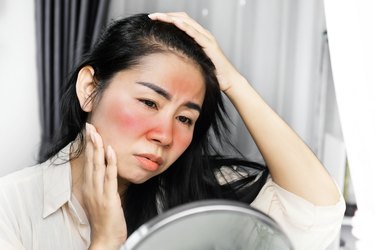
Any time you remove body hair using conventional forms of epilation or depilation, you risk getting ingrown hairs. Waxing can put you at increased risk for getting ingrown hairs. As Cornell Medical School dermatologist Harvey Jay explains, waxing leaves the hair follicle with a sharp tip that is more likely to dig back into the skin when it grows back, often resulting in irritated, acne-like pustules. There is no miracle cure that enables you to get rid of ingrown hairs after waxing overnight, but you can help those tender, unsightly red bumps heal faster.

Step 1

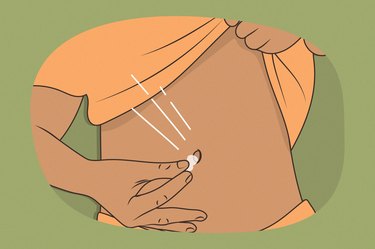
Apply an aspirin-based anti-inflammatory to ingrown hairs. Paula Begoun, cosmetics expert and consumer reviewer, says that products with stabilized aspirin can reduce most types of skin irritation. Two aspirin-based products to check out are Tend Skin and Paula's Choice Skin Relief. You can also make your own using Begoun's recipe by simply crushing or dissolving one or two aspirin tablets in a quarter cup of water. Add glycerin to thicken.

Step 2

Use an over-the-counter (OTC) cortisone cream if ingrown hair bumps are unresponsive to aspirin-based topicals. You can purchase these without a prescription.

Step 3

Apply an antibacterial cream if you start to notice signs of infection. These too can be purchased at the drugstore without a prescription. Begoun lists Neosporin, Polysporin and Bacitracin, because all three products act quickly against minor skin infections.

Step 4

Avoid vigorously scrubbing ingrown hairs when inflammation is present, advises the cosmetic scientists at the Beauty Brains website. Doing so will only make the condition worse. Mayo Clinic experts note that you can bathe the affected area twice a day and gently rub a washcloth or soft-bristled toothbrush in circular motions to release any ingrown hairs that are trapped.

Step 5

See a doctor if ingrown hairs continue to be a problem. Your health care provider may recommend a stronger topical cream, such as a retinoid, corticosteroid or antibiotic. If your inflammation is severe, oral antibiotics may be recommended.

Step 6

Stop what you are doing. If waxing causes you to get ingrown hairs, avoid this particular method of hair removal. Although you may have more success with shaving or cream depilatories, Mayo Clinic experts advise you to consider laser hair removal as a semi-permanent method to reduce the density of hair growth.

Tips and Warnings

  • Mayo Clinic experts note that individual ingrown hairs that have penetrated the skin may be removed by using the tip of a sterile needle. Simply insert the tip of the needle through the ingrown hair "loop," and lift it away from the skin.
  • Chronic ingrown hairs are more than a cosmetic nuisance. These may lead to scarring and hyperpigmentation. If you scratch or pick at the bumps, you could also get a bacterial infection.

Things You'll Need

  • Topical anti-inflammatory, aspirin-based
  • Topical cortisone cream (optional)
  • Topical antibiotic (optional)
  • Toothbrush, soft-bristled
  • Washcloth
  • Sterile needle or pin

References

Article reviewed by Helen Covington Last updated on: Aug 24, 2010

Must see: Photo Galleries

Member Comments