








Complications from Kidney Stones

Complications from Kidney Stones
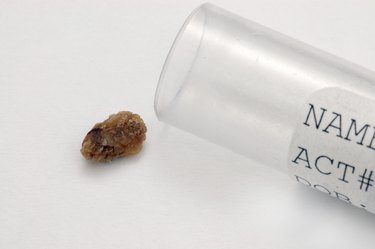
Photo Credit stones image by Zbigniew Nowak from Fotolia.com

Usually kidney stones can pass without assistance or are removed from the body without causing permanent damage. However, if a kidney stone blocks urine flow for a period of time, complications can arise. The National Kidney Foundation (NFK) warns that prevention of kidney stones is important because repeated occurrences of kidney stones increase the risk of developing chronic kidney disease.

Recurrent Kidney Stones

The NKF reports that having a kidney stone increases your risk of developing another one. You have a 50 percent chance of developing another stone within a 5- to 7-year period.

Infection

Kidney stones can cause infection. Cystitis, which is inflammation of the bladder, can develop if a kidney stone is blocking urine flow from the bladder. Inflammation of the bladder lining from the stone and concentrated urine can lead to infection. Donna D. Ignatavicius, MS RN, and M. Linda Workman, Ph.D., authors of "Medical-Surgical Nursing: Critical Thinking for Collaborative Care," explain that if a bladder infection is not caught early and treated appropriately it can spread to the kidneys. Pyelonephritis, an infection of the kidney and ureters, can develop, which can become very serious and make you quite ill.

Urinary Retention

Another complication of kidney stones is urinary retention. If the stone blocks the urethra you will be unable to urinate. Along with the risk of infection, your bladder will become distended and cause you considerable pain. Surgical intervention may be necessary.

Surgical Intervention

A complication of kidney stone is the need for invasive treatments. If the stone cannot pass on its own, the initial treatment may be shockwave lithotripsy. This procedure uses high-energy sound waves directed at the stone to break it up into smaller pieces so that it may be more easily passed.
If shockwave lithotripsy does not work or you are not a candidate for this procedure, surgical intervention is the next step. This requires a hospital stay and increases your risk for complications such as infection, and prolongs your recovery period.

Kidney Failure

A serious complication of kidney stones is acute kidney failure. If the kidney stone blocks the ureter so that urine cannot drain from the affected kidney, urine will back up in the kidney. Pressure inside the kidney can affect blood flow to the organ and damage the kidney. Infection can also develop, causing its own damage to the kidney. Impaired renal function creates more health problems requiring medical intervention. If you cannot urinate, you cannot excrete waste products from the body. Surgical intervention is necessary; however, if the damage to the kidney is severe enough, you may also need acute dialysis for a brief period of time.
Repeat infections and trauma from repeat kidney stones increases your risk of permanent kidney damage. This can lead to chronic kidney disease and chronic kidney failure

References

Article reviewed by Mona Newbacher Last updated on: Mar 10, 2010

Must see: Photo Galleries