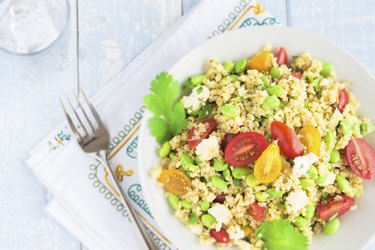
After menopause, many women put on extra pounds. In addition, their nutritional needs shift, and they may be at higher risk for certain health conditions, like heart disease and osteoporosis. For best weight-loss results and overall good health, post-menopausal women should follow a simple whole foods diet filled with lean protein, vegetables, fruits, whole grains, nuts, legumes and seeds.
Foods to Eat
Video of the Day
A study published in "Menopause" in 2012 found that the depletion of estrogen after menopause can lead to oxidative stress, a known risk factor for diseases such as heart disease and cancer. Fill up on vegetables and fruits, which are high in vitamin C and other antioxidants that help mitigate the effects of aging. Get dietary phytoestrogens from foods such as soy and flaxseeds. Choose fiber-rich whole grains, which help fill you up so you eat less -- oatmeal, quinoa and brown rice are good choices. Opt for heart-healthy unsaturated fats from nuts, seeds, avocados, fatty fish and olive oil. Finally, make sure you get adequate calcium to protect your bones -- you need 1,200 milligrams daily from age 51 to 70. Low-fat dairy, sardines, salmon, broccoli and kale will help you meet your needs. Vitamin D from fortified foods and oily fish helps you absorb calcium.
Video of the Day
Foods to Avoid
Processed foods full of added sugar and salt are detrimental to your health at any time, but especially as you age. Sugar promotes weight gain, while too much salt in your diet can lead to high blood pressure and cardiovascular problems. Cut back on empty calories from sugary treats and drinks, and season your foods with herbs instead of salt. Combine your post-menopausal diet with physical activity for an overall healthier lifestyle.