










































More than 2 million Americans suffer from gout, a form of arthritis caused by excessive uric acid in tissue that primarily affects the foot, knee and hand joints. Uric acid can build up in the body due to existing medical conditions, family history, medications, age, gender and dietary factors. Gout was once known as the "disease of kings," because the people who had gout were usually those who could afford to indulge in rich foods and alcohol. Gout can be treated with medicine, but some foods can also prompt and prevent gout flare-ups.
High Purine Foods
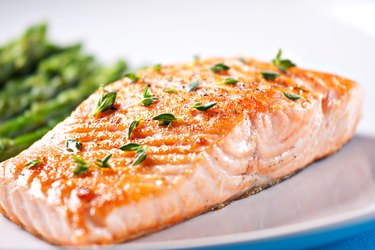
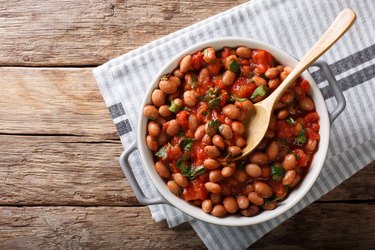
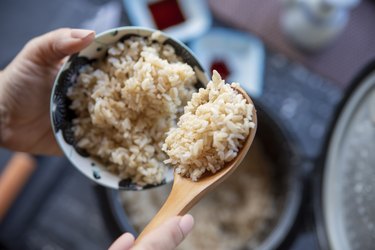
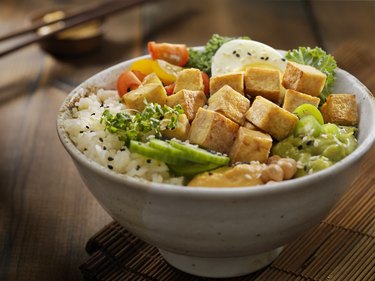
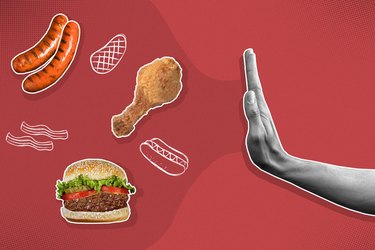
Purine is a component of DNA and produces uric acid when it is broken down. High purine foods include organ meats, mussels, herring, smelt, sardines, dried beans, dried peas and asparagus. Foods with moderate levels of purine are oysters, shellfish, mutton, veal, bacon, salmon, turkey, trout, duck, pork and Lima beans. A study reported in January 2005 of "Arthritis and Rheumatism" looked at the relationship of purine-rich foods to uric acid in the blood and concluded that uric acid rises with a higher consumption of meat and seafood, but it is not affected by total protein intake. The American Dietetic Association recommends that individuals with gout limit intake of meat and seafood and use other foods like beans, soy, dairy and grains as protein sources. Vegetables high in purine are not associated with an increased risk of gout.
Alcohol
A study reported in the April 2004 "Lancet" examined the relationship between alcohol and gout. Researchers found a strong association between alcohol intake and the incidence of gout. Researchers also noted that the risk varied, according to the type of alcohol consumed. Drinking beer posed a greater risk than spirits, while moderate wine intake did not increase the risk. The Arthritis Foundation recommends avoiding all alcohol, especially beer.
Coffee and Tea
A study published in June 2007 in "Arthritis and Rheumatism" found that consumption of coffee was associated with lower serum uric acid levels, which could decrease the incidence of gout. The same study did not find a decrease in uric acid with tea consumption and suggested that the positive effects of coffee were from substances other than caffeine.
Vitamin C
"The Journal of Rheumatology," in results published in the September 2008 issue, looked at the relationship between Vitamin C and serum uric acid concentrations in men and found them to be inversely associated. Results supported the notion that Vitamin C could prevent high concentrations of uric acid in the blood and, therefore, inhibit gout. According to the Mayo Clinic, while Vitamin C reduces uric acid in the blood, it is not a proven treatment for gout. Patients should talk to their doctors before they begin taking vitamin C supplements.
Cherries
Cherries have been associated with a reduction in uric acid, but not enough research exists to determine if it has any effect on gout.
References
- "Arthritis and Rheumatism;" Intake of Purine-Rich Foods, Protein and Dairy Products and Relationship to Serum Levels of Uric Acid; H.K. Choi, S. Liu, G. Curhan; January 2005
- "Arthritis and Rheumatism;" Coffee, Tea and Caffeine Consumption and Serum Uric Acid Level;" H.K. Choi, G. Curhan; June 2007
- "Journal of Rheumatology;" Vitamin C Intake and Serum Uric Acid Concentration in Men; X. Gao, G. Curhan, J.P. Forman, A. Ascherio, H.K. Choi; September 2008
- "Lancet;" Alcohol Intake and Risk of Incident of Gout in Men;" H.K. Choi, K. Atkinson, E.W. Karlson, W. Willett, G. Curhan; April 2004
- The Arthritis Foundation


