








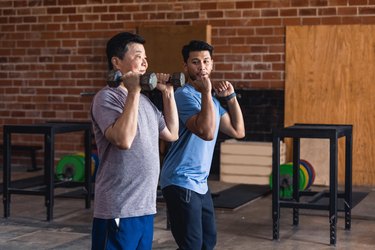


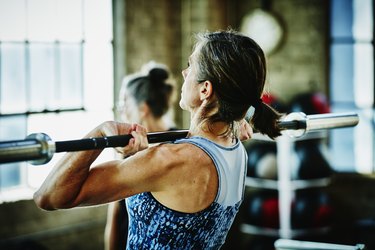


































In the past, it was common belief that a pregnant woman should be inactive and careful not to perform any strenuous activities. Physicians and fitness professionals have held fears of overheating or harmful effects on the fetus during any exercise. This thinking, however, is beginning to shift as the health field learns more about the benefits of exercise during pregnancy. The American College of Sports Medicine and the American Congress of Obstetricians and Gynecologists recommend that normally healthy pregnant women continue an already established exercise regimen. Weight training is of particular importance and offers the expectant mother several benefits.
Goals
The goal of strength training during pregnancy is to maintain strength and muscle mass rather than to develop them. According to the American Congress of Obstetricians and Gynecologists, strength training will promote muscle tone, strength, and endurance and may help prevent some of the aches and pains common in pregnancy. An adequate prenatal strength training program can thoroughly equip the musculature of your legs and back to support the change and distribution of weight during pregnancy.
Active Mothers
If you regularly participated in a strength training routine before you became pregnant, and you are in a healthy pregnancy, then it is safe to continue your routine. Of course, as a precautionary measure, you should always confer with your doctor to check for any contraindications for exercise. According to the American College of Sports Medicine, if you choose to continue your strength training routine, you should decrease your intensity. Remember that pregnancy should be a maintenance stage for your workouts rather than developmental. The use of lighter weights is recommended during pregnancy.
Benefits
The benefits of strength training during pregnancy are not limited to your pregnancy itself, but also continue on into your labor, delivery and postpartum stages as well. The benefits begin with increased strength to help support and carry around your ever-growing baby belly. A strong back will be better equipped to handle the extra strain it must endure as your pregnancy progresses. According to the American Congress of Obstetricians and Gynecologists, training will help to increase your energy, improve your mood and posture, and help you to sleep better. Per ShapeFit.com, physically fit women who continue to perform weight-bearing exercise during pregnancy and lactation gain less weight, deposit and retain less fat, feel better, have shorter and less complicated labor and recover more rapidly. It has also been suggested that strength training during pregnancy can help to build extra bone density to offset the loss of bone density induced by lactation.
Considerations
While strength training during pregnancy is beneficial for most healthy women, there are some particulars to take into consideration:
If you have not exercised regularly, you should be very cautious about beginning an exercise routine once you become pregnant.
The hormones produced during pregnancy cause the ligaments that support your joints to become relaxed, according to the American Congress of Obstetricians and Gynecologists. The resulting increased mobility can increase your risk for injury, so be sure to perform an adequate warm-up before any exercise.
Stay adequately hydrated and wear appropriate clothing that will help to keep you cool, especially while you are exercising.
The extra weight you gain in the front of your body during pregnancy shifts your center of gravity. This can make you less stable and more likely to lose your balance. For this reason you should avoid any exercises that require a reasonable amount of balance to perform.
Pregnancy requires an additional 300 calories per day. The American College of Sports Medicine suggests that you consume additional calories to meet the needs of exercise and pregnancy.
What to Avoid
According to the American College of Sports Medicine, you should avoid exercise in the supine position after your first trimester. Lying flat on your back will decrease the blood flow to the uterus and can compromise one of the largest veins in your body, restricting the return of blood to your heart.
Avoid exercising in hot, humid weather.
Avoid all risk of abdominal trauma.
Avoid lifting heavy weights or performing any other activities that would facilitate a Valsalva maneuver.
References
- "ACSM's Guidelines for Exercise Testing and Prescription"; Seventh Edition; Lawrence Armstrong, PhD, FACSM, et al; 2006
- American Congress of Obstetricians and Gynecologists: Exercise During Pregnancy
- Shape Fit: Weight Training During Pregnancy
- American College of Sports Medicine: Exercise During Pregnancy


Member Comments