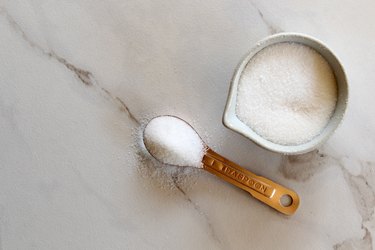
Because sucralose, aspartame and Splenda don't have calories, you may think they're healthy choices, but the facts surrounding artificial sweeteners aren't so sweet. Like many people, you've been watching your weight, but you're suddenly craving a can of soda.
Due to your new motivation to drop a few pounds, you decide to try the diet version of your favorite brand. The top pops, the bubbles fizzle, and as you tip the can, you feel pleased. You made a healthy decision — or did you? Unfortunately, it's not that simple. Diet beverages, along with many other low-calorie foods, aren't exactly what they seem.
Video of the Day
Video of the Day
Tip
Even though they're artificial sweeteners, Splenda, sucralose and aspartame may increase both your glucose and insulin levels. Aspartame also acts as a chemical stressor that can increase cortisol, causing weight gain, as well as increase the production of free radicals.
Sugar Substitutes Versus Artificial Sweeteners
You've heard words thrown around like food additives, artificial sweeten__ers and sugar substitutes. But what are they exactly? A sugar substitute is just that: an alternative to sugar. These substances are either processed by chemical synthesis or made from plant extracts. One of the main ingredients in most diet beverages and sweetened, low-calorie foods is artificial sweeteners, like sucralose and aspartame. Although these sweeteners don't contain any calories or carbohydrates, they come with their own potential dangers.
Artificial sweeteners are a type of sugar substitute that's chemically created. In other words, they're made in a lab, rather than coming directly from nature, while some sugar substitutes, like stevia, are made from plants.
These artificial sugar substitutes are added to food and drinks to make them sweet, but unlike sugar, they contain zero calories and are free of carbohydrates. When you see the words "low-calorie," "zero-calorie," or "diet" on a box or bottle, but the food or drink inside still tastes sweet, it likely contains an artificial sweetener.
Sources of Artificial Sweeteners
According to a report published in Physiology and Behavior in October 2016, the main consumption of sugar substitutes came from tabletop packets or from diet beverages, but now, these sweeteners are found in everything from candy, baked goods and "light" yogurts to reduced-calorie breads and everything in between.
The report notes, however, that diet beverages are still the largest source and that approximately 20 percent of Americans over the age of 2 consume at least one diet beverage sweetened with an artificial sweetener every day. Six artificial sweeteners and two natural, no-calorie sugar substitutes are approved as Generally Recognized as Safe (or GRAS) by the Food and Drug Administration. These sugar substitutes include:
- Sucralose
- Aspartame
- Acesulfame potassium (or Acesulfame-K)
- Advantame
- Neotame
- Saccharin
- Stevia (in the forms of stevioside and rebaudioside A)
- Monk fruit (otherwise known as luo han guo)
Artificial sweeteners were developed for people who want a sweet taste without any of the calories. Food scientists figured out a way to give consumers what they wanted without any of the harmful side effects of sugar — or at least they thought they did. But, as studies delved deep into the effects of artificial sweeteners, like sucralose and aspartame, research began to surface showing that they may not be as safe as previously believed.
Read more: The 10 Worst Chemicals in Our Food
The Dangers of Sucralose
Sucralose, often sold under the brand name Splenda, is one of the most commonly used artificial sweeteners on the market. In addition to sucralose, other Splenda ingredients include maltodextrin, sugar and soluble corn fiber, depending on which product you choose. Like all artificial sweeteners, sucralose was originally developed to give consumers a sweet taste without a resulting rise in blood glucose or insulin levels; however, research shows that it might not be that simple.
The Dangers of Aspartame
Just as "Splenda" is a sucrose-based product, brands like "NutraSweet" and "Equal" are aspartame-based products. Although aspartame is frequently recommended as a safe alternative to sugar for Type 2 diabetes, a 2018 report in Current Diabetes Reviews suggests that maybe it's not the best option.
According to the report, aspartame may cause weight gain, rather than weight loss, and impaired response to glucose and insulin resistance, especially in people with Type 2 diabetes. However, the authors of the study note inconsistencies in the findings and suggest more clinical research to support the dangers of aspartame.
To add to that, the report states that aspartame may also act as a chemical stressor in the body, increasing levels of the hormone cortisol, which promotes weight gain especially around the belly, and produces free radicals that cause oxidative stress in the body.
Another report published in Nutritional Neuroscience in February 2017 adds to these findings, stating that aspartame has also been linked to various behavioral and cognitive problems, including:
- Learning difficulties
- Headache
- Seizures
- Migraines
- Irritability
- Anxiety
- Depression
- Insomnia
Although, again, the authors of this report note inconsistency in findings and that more research is needed.
Aspartame and Phenylalanine
If you look on a can of diet soda or a processed food that contains aspartame, you may see a warning to the effect of "Phenylketonurics: Contains phenylalanine." This warning informs consumers that the aspartame in the product gets broken down into a compound called phenylalanine. Although this isn't a problem for most people, it can be a serious problem for people with a genetic disorder called phenylketonuria, or PKU, or other people with certain health issues.
In large doses, aspartame can cause a rapid increase in the levels of phenylalanine in your brain. This rapid increase can lead to brain damage and seizures in those who are sensitive or unable to process phenylalanine correctly.
In addition to those with PKU, others who should be cautious with aspartame include those who:
- Have tardive dyskinesia (a disorder involving muscle movement)
- Have a sleep disorder
- Have an anxiety disorder or other mental health disorder
- Take certain medications (MAO inhibitors, neuroleptics or anything containing levodopa)
Artificial Sweeteners and Weight Gain
All types of artificial sweeteners, including sucralose and aspartame, have also been linked to weight gain, increased waist circumference and a higher body mass index, or BMI. According to one study published in the Journal of the American Geriatric Society in April 2015, intake of artificial sweeteners, specifically in the form of diet soda, was directly related to increased abdominal obesity, especially in aging adults.
The study further clarified that, because the artificial sweeteners found in both foods and beverages increase the amount of fat in your abdomen — the biologically active fat referred to as visceral fat — they may also cause other health problems more dangerous than weight gain on its own. These potential health problems include:
- Disruptions in metabolism
- Metabolic syndrome
- Diabetes
- Increased risk of heart problems
- High insulin levels
- High blood pressure
Other Dangers of Artificial Sweeteners
It isn't just the direct health effects of artificial sweeteners that are a cause for concern, though. According to Dr. David Ludwig, an obesity and weight-loss specialist at Boston Children's Hospital, there's also a concern that people who use artificial sweeteners like sucralose and aspartame in place of sugar will just replace those calories and carbohydrates with other sources, a habit that can lead to weight gain over time.
Dr. Ludwig also notes that, because these artificial sweeteners are so much sweeter than sugar, regularly consuming them can overstimulate the sweet receptors in your brain and negatively change your taste buds. When you take in too many sweet foods and beverages, it makes you crave them more. It also makes you feel less satisfied with healthier options that aren't sweet, like vegetables.
Is Splenda Keto Friendly?
Because artificial sweeteners like the original Splenda don't contain any carbohydrates, you could argue that Splenda is keto friendly, but based on the research, it's probably not the best choice. One of the major goals of the keto diet is weight loss and regulation of glucose and insulin levels, and since artificial sweeteners like Splenda interfere with your hunger signals and metabolism, it can make it more difficult for you to lose weight.
Will having an artificially sweetened beverage or food once in a while throw you completely off track? Probably not. But it's best to choose natural options instead.
Choose Stevia Instead
Although it's recommended to choose whole foods instead of processed ones and unsweetened beverages like water, stevia may be your next best choice. Unlike sucralose and aspartame, stevia, which comes from a plant native to South America, doesn't seem to have any ill effects on your health or hunger levels.
According to a report published in Nutrition Today in May 2015, stevia is not only a safe alternative to both sugar and sugar substitutes, but it also doesn't seem to cause any changes in satiety. However, the report also notes that too few long-term studies have been done to make conclusive statements about this.
It's also important to note that not all stevia options are created equally. Some are more highly processed than others, while others may be mixed with other types of artificial sweeteners in processed foods.
Read more: The Ultimate Guide to Natural Sweeteners
The Bottom Line
Although the jury is still out about the dangers of artificial sweeteners, to be safe, consuming small amounts every once in a while should be harmless. It's overindulgence and long-term consumption that could potentially create the real problems.
You can use artificial sweeteners to wean yourself off sugar or for a periodic treat; however, like many artificial or chemically created substances, too much may be a bad thing. So be careful, and remember, there's usually a natural option available.
The best choice is always a natural diet filled with fresh whole foods rather than processed drinks and foods. Even then, you still want to keep your added sugar intake low — women no more than 6 teaspoons a day and men no more than 9 teaspoons a day — without replacing them with artificial sweeteners like aspartame and sucralose. Choose fresh fruits for natural sweetness, as well as vegetables, lean proteins and healthy fats instead.
- Journal of Toxicology and Environmental Health: "Sucralose, A Synthetic Organochlorine Sweetener: Overview of Biological Issues"
- Journal of the American Geriatric Society: "Diet Soda Intake Is Associated With Long-Term Increases in Waist Circumference in a Bi-Ethnic Cohort of Older Adults: The San Antonio Longitudinal Study of Aging"
- Current Diabetes Reviews: "Aspartame: Should Individuals With Type II Diabetes Be Taking it?"
- Nutritional Neuroscience: "Neurophysiological Symptoms and Aspartame: What Is the Connection?"
- Mayo Clinic: "My Favorite Diet Soda Has a Warning About Phenylalanine. Is Phenylalanine Bad for Your Health?"
- Physiology and Behavior: "Trends in the Consumption of Low-Calorie Sweeteners"
- Iranian Journal of Kidney Diseases: "Nephrotoxic Effect of Aspartame as an Artificial Sweetener"
- Harvard Health Publishing: "Artificial Sweeteners: Sugar-Free, but at What Cost?"
- Harvard T.H. Chan School of Public Health: "Low-Calorie Sweeteners"
- Nutrition Today: "Stevia, Nature’s Zero-Calorie Sustainable Sweetener"
- Splenda: "SPLENDA No Calorie Sweetener, 1 Gram of Fiber"
- Splenda: "SPLENDA No Calorie Sweetener, Granulated"
- American Heart Association: "Cut Out Added Sugars"