




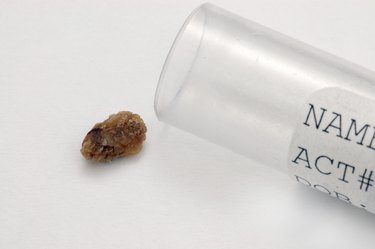
Calcium And Kidney Stones

What Causes Calcium Kidney Stones?

Kidney stones can be both a painful and dangerous medical condition. Calcium-based kidney stones make up the majority of kidney stone cases and are typically the most painful type of stone. Individuals at risk for calcium kidney stones should...

What Are the Causes of Calcium Kidney Stones?

Calcium kidney stones form in individuals with high levels of calcium in their kidneys and urinary tract. Over time, calcium can build up in the kidneys and urinary tract as a result of a number of genetic, lifestyle and dietary factors....

How to Prevent Calcium Kidney Stones

Kidney stones can be one of the most painful conditions that someone can suffer. They are one of the most common disorders of the urinary tract, and are responsible for one-half million emergency room visits per year, according to the National...

How to Dissolve Calcium Kidney Stones

Calcium kidney stones result from a buildup of calcium in the kidneys, commonly due to consuming too much calcium and inadequate fluid intake, according to "Foundations of Nursing." If these kidney stones are small, the acid in lemon juice may be...

Facts on Calcium & Kidney Stones

Most kidney stones include a combination of calcium and substances called oxalates, organic acids that occur naturally in plant foods. If you have kidney stones, you may have too much calcium in your urine, a condition doctors call hypercalciuria,...

Coral Calcium & Kidney Stones

Coral calcium comes from aquatic coral structures and reefs. This nutritional supplement may contain varying amounts of both calcium and magnesium, depending on the source. Although some manufacturers of coral calcium claim this supplement...

A Diet for Calcium Kidney Stones

Around 80 percent of all kidney stones contain calcium, usually combined with oxalate, according to gastroenterologist Frank W. Jackson. Changing your diet may decrease the formation of often painful kidney stones by lowering the mineral content...

Topiramate & Calcium Kidney Stones

Topiramate, or Topamax, is a drug called an anticonvulsant that is used to prevent seizures. It is used alone in adults and children age 10 or older and may also be used in combination with other drugs. Topamax is also used in adults to prevent...

Diet for High Calcium & Kidney Stones

The kidneys remove waste products from your blood. Kidney stones develop when the kidneys become over-saturated with minerals and can no longer dissolve them into urine. Undissolved minerals can form crystals and clump together and form stones....

Decreased Calcium & Kidney Stones While Pregnant

Kidney stones are one of the most common urinary tract disorders, causing about 3 million doctor visits each year, according to the National Kidney & Urologic Diseases Information Clearinghouse, or NKUDIC. Stones are a complication for 1 in...

Calcium Kidney Stone Symptoms

According to The National Institute of Diabetes and Digestive and Kidney Diseases (NIDDK), the great majority of kidney stones cases occur from the build up of calcium in the urinary tract with other substances in the urine such as oxalate and...

Calcium & Kidney Stone Diet

Kidney stones are one of the most painful problems you can have with your urinary tract and also are extremely common. According to the National Institute of Diabetes and Digestive and Kidney Diseases, Americans make about 3 million health care...

Calcium in the Diet & Kidney Stones

Having a kidney stone can be an extremely painful situation. Kidney stones are hard deposits that can form inside of your kidneys; in order for the kidney stones to exit your body, they have to travel out of the kidney through the ureter and the...

Calcium Oxolate Kidney Stones

A kidney stone is a hard mass that develops in the kidneys as a result of separation of crystals from the urine. Kidney stones may be composed of a variety of different compounds and substances, but the most common type is called a calcium oxalate...

Dose Calcium Cause Kidney Stones?

Calcium is a vital nutrient required for several critical biological functions, including bone health and nervous system function. People take health supplements containing calcium to ensure sufficient levels of calcium in the blood. Although...

Excessive Calcium Intake and Kidney Stones

Kidney stones are deposits of crystals or minerals within the kidney tissue that can prove uncomfortable and occasionally pose a serious harm to your health. There are a number of types of kidney stones, but the most common type of kidney stones...

Calcium Oxalate and Kidney Stones

A kidney stone, also called renal lithiasis, is a small, hard mass that develops in the kidneys. Kidney stones may be composed of a variety of minerals and acid salts, but the most common kidney stone forms when the substances calcium and oxalate...

Can Too Much Calcium Cause Kidney Stones?

About 75 percent of kidney stones contain calcium. Kidney stones form when components of urine solidify, sometimes causing painful urine blockages, according to an article in the November 2002 "Cleveland Clinic Journal of Medicine." A high level...

What Causes Calcium Oxalate Kidney Stones?

Calcium kidney stones make up the majority of kidney stones, representing about 80 percent of the total incidence of renal stone disease. Calcium combines with oxalate and phosphate in the intestines and urinary tract to promote the formation of...

Calcium Supplements & Kidney Stones

In the fight against osteoporosis and broken bones, nothing is more important than calcium supplements. However, taking too much calcium can open you up to painful kidney stones. These form when there is too much calcium in the blood and the...

Vitamin D & Calcium to Fight Kidney Stones

If you have ever had a kidney stone, you might be worried about the possibility of experiencing this extremely painful condition again. There are some dietary changes you can make that might help prevent you from developing kidney stones in the...

Calcium-Based Kidney Stones

Kidney stones, or urinary calculi, are solid particles that form in your urinary tract. About 80 percent of all urinary calculi in the U.S. contain calcium. Most are made of calcium oxalate. The remainder consist of calcium phosphate, uric acid,...

Can Taking Calcium Cause Kidney Stones?

The human body contains more calcium than any other mineral. Calcium supports the formation of strong bones, stimulates muscle contraction, transmits electrical impulses between nerves and muscles and regulates the heartbeat. Although necessary to...

Can Tap Water High in Calcium Cause Kidney Stones?

About 1 in every 20 Americans will form a kidney stone some time during their lifetime, and your risk for having a repeat episode within 10 years of your first kidney stone could be as high as 50 percent, according to the University of Kansas...

Calcium Oxalate and Kidney Stone Problems

The kidneys are your body's main filtration organs. They filter out waste products from the blood and make urine to excrete these waste products. Kidney stones are hard masses that develop from a separation of crystals from the urine. Many kidney...

Calcium Intake & Kidney Stones

Diet is an important part of the treatment plan for kidney stones, according to research by Grases, Costa-Bauza and Prieto. The majority of kidney stones are composed of calcium oxalate; in fact, a study by Reynolds found that 75 percent of kidney...

Calcium Pills & Kidney Stones

You need calcium for healthy bone function and for your teeth and muscles. You can, however, to get too much of a good thing. For some people, too much supplemental calcium can increase the risk of developing kidney stones. Talk to your doctor...

Calcium Deficiency & Kidney Stones

Your kidneys remove excess water and waste products from the blood, forming urine. Kidney stones occur when crystals separate from the urine in the urinary tract. Kidney stones most commonly consist of calcium and other substances like oxalate or...

Calcium Citrate & Kidney Stones

Kidney stones are painful formations of minerals in your kidneys that can take months or years to accumulate. A majority of kidney stones are a combination of calcium and oxalate, which are naturally present in your diet. While it may seem that...

Healthy Food Choices for Vitamin D (Video)

Vitamin D is an important nutrient for the maintenance of organ systems, including kidney function and bone formation. Try these tips for buying foods rich in vitamin D in this healthy shopping video.