




















































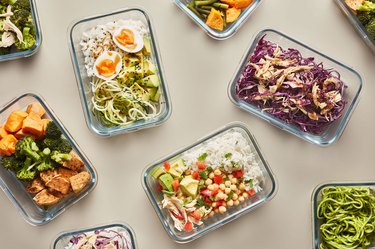







A slow-carb diet focuses on eating more “slow” or complex carbohydrates, which raise blood-sugar levels gradually so you get a steady stream of energy to your body’s cells. Simple carbohydrates make up “fast” carbs, which digest quickly, causing your blood-sugar levels to rise and then suddenly drop. The fast carbs cause your body to yearn for more simple carbohydrates for more energy. If you experience increased hunger on a slow-carb diet, you may need to include more healthy fats.
Carbohydrates can be categorized into two groups: simple and complex. Simple carbohydrates contain either one-part sugars, such as fructose or galactose, or two-part sugars, such as lactose, maltose or sucrose. In contrast, com...
They are then passed out of the digestive system undigested, which regulates weight gain. Refined carbohydrates are another matter. Complex carbohydrates are usually found in the most natural, least processed foods. Refined car...
Carbohydrates are the main source of fuel for the body and brain to perform their daily physical and mental tasks. Carbs are frequently restricted in many low-carb diet plans, such as the Atkins Diet by Dr. Robert C. Atkins, wh...
Fortunately, the U.S. Food and Drug Administration mandates that all processed foods have a nutrition fact label right on the packaging. Figuring out how many carbohydrates are in non-packaged foods is trickier than with packag...
Healthy eating involves a balance of nutrients. Carbohydrates are major nutrients, and usually account for a significant proportion of the total calories you consume. Carbohydrates are found in many foods, including bread, past...
Inadequate carb intake can lead to symptoms such as fatigue, weakness, headaches, difficulty concentrating as well as nutritional deficiencies. Carbohydrates are divided into simple and complex carbs, the latter of which is div...
You need both simple and complex carbohydrates to maintain a number of bodily functions, including digestion and brain activity. While you are reducing carbs, however, make sure to include a wide range of healthy foods that don...
Additionally, no more than one-third of the calories you consume from fat should be from saturated fat. Limit cholesterol intake to 300 mg per day or less. Recording your food intake is an effective way to monitor carbs and fat...
If you are diabetic, a miscalculation can result in urgent medical concerns, particularly if you use insulin to regulate your blood sugar. Whether monitoring your carbs for weight loss, diabetes management or just as a dietary ...
For many, however, this might seem like too much. For example, the South Beach Diet advises followers not to exceed 28 percent per day in its final "maintenance" phase. Some foods are extremely high in carbs and eating them wil...
Athletes who are training for an event or people who are interested in improving their diet may look to whole food sources that offer both carbohydrates and protein. According to Merck, carbohydrates and protein, along with fat...
In the last few days before an endurance competition, such as a marathon, a triathlon or a long-distance mountain-bike race, you may benefit from a carbohydrate-loading diet. The goal of following this diet after a after carboh...
Carbs are an important part of your diet because they give your body the energy it needs to function from day to day. However, not all carbs are created equal. "Slow"-carb foods are an integral part of a healthy diet while "fas...
If you are following a low carbohydrate diet to lose weight or manage your weight, you might be curious which are the most healthful foods that do not contain significant amounts of carbohydrates. Remember, as Health Services a...
Turnips are a root vegetable with white flesh and a white and purple exterior. They are low in calories, providing only 20 calories in a 1/2 cup serving. If you are searching for a low-carbohydrate vegetable choice, try experim...
The total amount of carbohydrate found in food corresponds to the sum of the starch, sugar and dietary fiber. Both sugar and starch contribute to elevating your blood sugar levels and can be used for energy. Dietary fiber, on t...
Carbohydrates are among the primary nutrients found in food sources. Carbs are the body's principal energy source for daily tasks and mental focus. However, excess intake of some types of carbs, particularly simple carbs such a...
The much-maligned carbohydrate is actually needed in your daily diet because it is the main source of fuel for your body. Carbohydrates are neither all good nor all bad. It is true that some are healthier for you than others. C...
Carbohydrates are found in many foods, including breads, cereals, grains, baked goods, fruits, vegetables, sugars and dairy products. Some foods, such as cheese and eggs, are classified as carbohydrate free, but actually they c...
Living completely carbohydrate-free may be difficult, however, you can choose foods that are as close to carb-free as possible. According to Weight Loss Resources, a low-carb diet is a good option when you're trying to drop wei...
Carbohydrates, when consumed, are converted by the body to the usable form of sugar, glucose. Some carbohydrates are slow-acting, meaning it takes several hours for the glucose to be dispersed into the bloodstream. This prevent...
The glycemic index, or GI, ranks carbohydrate-containing foods on a scale of zero to 100 based on how they affect blood sugar. The glycemic index is most often used by people with diabetes to help them manage their blood sugar,...
The general public refers to "carb-friendly" as meaning low-carb foods. Many fad diets have led the public to believe that all carbohydrates lead to weight gain; however, complex carbohydrates provide vitamins, minerals, dietar...
The Atkins diet has a two-week induction phase that restricts most carbs, including fruits, followed by a gradual introduction of certain permissible low-sugar carbs. Still, this diet has its skeptics and critics -- and the May...
Complex carbs digest slowly, so cause a slow rise in blood sugar. They also contain lots of fiber, which the body cannot digest, and so help you feel fuller longer. Complex carbs are the healthier of the two types, and include ...
Foods that contain the most carbohydrates include starchy vegetables; grains, whether whole or refined; fruits; sweetened beverages; candies and desserts. Carbs are essential nutrients, and a daily minimum of 130g is recommende...
Carbohydrates are your body's main energy source. While complex carbohydrates, such as whole grains and starchy vegetables, provide rich amounts of nutrients and heart-healthy fiber, refined carbohydrates can dampen your wellne...
The Harvard School of Public Health states that while carbs are a necessary part of your diet, providing your body with fuel and energy, "bad" carbs such as the ones found in processed foods like white bread, white rice, pastri...
These carbohydrates are sometimes not counted by low-carbohydrate dieters because their impact on the blood glucose levels is less dramatic than those of dietary sugar. A variety of zero net carbohydrate foods are available for...
If you and your doctor have decided a reduced carbohydrate diet is best for you, you may be struggling to choose healthy, zero-carbohydrate snacks. With some planning, you can enjoy an array of zero-carbohydrate snacks.
Carbohydrates provide the energy necessary to keep the body functioning efficiently, according to Medline Plus. Simple carbohydrates, also known as bad carbs, are easily digested by the body and tend to cause spikes in blood su...
In fact, low-carb diets may actually be effective for weight loss, MayoClinic.com reports. Because they are lower in total calories and higher in appetite-suppressing protein, low-carb diets are an ideal weight loss plan.
A ...
The type of carbohydrates you eat can make a difference in your blood glucose levels, which determine whether you're edging into diabetic territory. Basing your diet on complex carbs, low-fat proteins and healthy fats will help...
Carbohydrates are built from basic units of sugar. Some carbohydrates have a simple structure, others have a very complex structure, built of many units of sugar. Carbohydrates are used for the body's energy needs. Many foods c...
Once consumed, your body converts the carbohydrates into fuel for your cells and muscles. Simple and complex carbohydrates are the types of carbohydrates found in food, with simple carbohydrates being the "empty" calorie foods,...
The term "net carbohydrates" does not have an official definition through the Food and Drug Administration, but it generally signifies the number of carbohydrates in a food serving after subtracting the number of carbohydrates ...
A decrease in carbs causes a decrease in insulin production and a lowered blood sugar. The body must then break down fat to keep up your energy. A successful no-carb diet plan rests on a number of key foods.
With the increased popularity of low-carbohydrate diets, identifying net carbohydrate content of the food you eat is important. Net carbohydrates refer to the amount of carbohydrates that contribute calories in a given food. Fo...
Fiber is a form of carbohydrate. It is the skeleton or structural part of all plants. Plant foods also contain other forms of carbohydrate that are broken down into glucose for immediate energy and glycogen for future energy ne...
While carbohydrates provide energy and are a necessary part of the most people's diets, they can also be stored as fat and cause weight gain. If you plan to go on a low-carb diet, or just want some foods without carbohydrates t...