














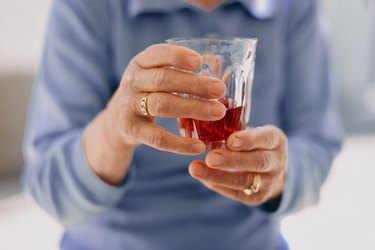




































Coumadin is a prescription anticoagulant drug for patients at risk for blood clots. Each patient begins on a low dose, and then receives higher doses under a doctor's close supervision. Monitoring to maintain the desired anti-clotting target continues for as long as the patient uses Coumadin. The medical literature reports case studies in which drinking cranberry juice appears to trigger serious, even fatal Coumadin side effects, but evidence for this Coumadin:cranberry interaction does not prove conclusive.
Elevated INR
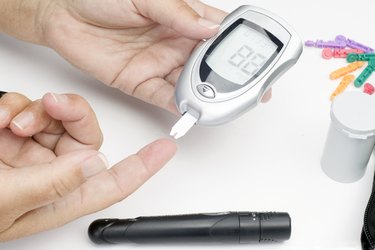
Coumadin's generic name is warfarin. Coumadin functions as an anticoagulant by inhibiting vitamin K dependent enzymes of the coagulation process. INR stands for "International Normalized Ratio," a standardized score for how much the drug impedes clotting time. The therapeutic range for INR is 2 to 3. In 2003, the British Committee on Safety in Medicine issued a report citing eight cases of elevated INRs with consumption of cranberry juice. In the November 2008 issue of the "American Journal of Health System Pharmacy," Dr. KA Mergenhagen reported one case of elevated INR after a patient had consumed cranberry sauce every day for a week. This occurred during the week after Thanksgiving. In contrast to the case studies, in one controlled clinical trial 30 patients stabilized on warfarin drank eight ounces of cranberry juice cocktail daily for two weeks. Their INRs did not significantly increase. The cranberry amount may not have proved enough to elicit an interaction.
Bleeding
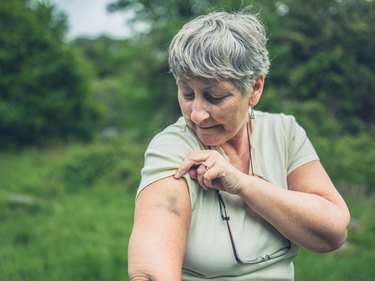
Signs of uncontrolled bleeding due to anti-coagulation activity include blood in urine or stool, coughing up blood, ease of bruising, nose bleeds, gum bleeds, drop in blood pressure and stroke. According to Dr. JP Rindone in the May 2006 issue of "American Journal of Therapeutics," one case study reported bleeding in addition to elevated INRs. The proposed mechanism for the interaction is that cranberries contain substances that inhibit enzymes in the liver responsible for metabolically inactivating Coumadin, resulting in higher than expected blood concentrations and higher potency.
Rarer Coumadin Side Effects
Beyond elevated INR and bleeding side effects, which actually result because of the stronger than anticipated intended effects, there are rarer side effects reported for Coumadin. These include "purple toes syndrome," caused by blockage of small arteries in the feet, necrosis or gangrene of skin and tissues and death. According to Dr. AP Griffiths in the November 2008 issue of "Journal of the Royal Society for the Promotion of Health," one case study reported the death of a patient who had started drinking cranberry juice while maintaining his usual dose of Coumadin.
Cranberry Juice Side Effects
Cranberry juice does not have any side effects. In a clinical trial published by Dr. Marion McMurdo in the May 2005, issue of "Age and Aging," for 376 older men and women, half getting 300 ml/day cranberry juice cocktail and half a placebo drink for 40 days. The results reported significant differences in adverse events or dropouts between the two groups. Thus, Coumadin cannot potentiate or suppress nonexistent cranberry side effects.
References
- Current Problems in Pharmacovigilance (UK): Interaction between warfarin and cranberry juice: new advice
- "American Journal of Health System Pharmacy": Elevated International Normalized Ratio after concurrent ingestion of cranberry sauce and warfarin
- "Journal of Clinical Pharmacology": The absence of an interaction between warfarin and cranberry juice: a randomized, double-blind trial
- "American Journal of Therapeutics": Warfarin-cranberry juice interaction resulting in profound hypoprothrombinemia and bleeding
- "The Journal of the Royal Society for the Promotion of Health": Fatal haemopericardium and gastrointestinal haemorrhage due to possible interaction of cranberry juice with warfarin


Member Comments