

































































Duathlon Training & Diet

Duathlon Training & Diet
Photo Credit John Foxx/Stockbyte/Getty Images

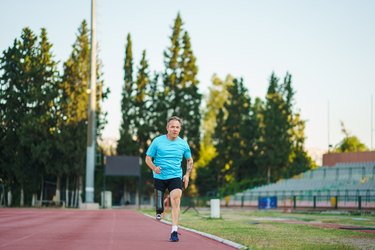
Duathlon is a rigorous sport that requires participants to train in a consistent and regimented manner in order to improve without risking overuse injuries. Well-designed training programs gradually increase both mileage and intensity to maximize race day performance. A good diet can complement training by providing carbohydrate to fuel workouts and recovery, fat to promote normal cellular function, and protein for energy and muscle growth.

History

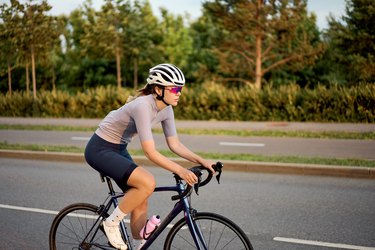
Duathlon is a sport combining running and biking, generally in a run-bike-run combination, according to USA Triathlon (USAT), the duathlon governing body. USAT notes that duathlons vary in length, with international-length duathlons involving a 10K run followed by a 40K bike and then another 5K run. Long-course duathlons follow a 10K run with a 60K bike and a 10K run. Duathlons provide a mechanism for athletes interested in multisport combinations (such as triathlon) to become involved in the sport without having to swim.

Training Principles

According to Joe Friel, the author of "The Triathlete's Training Bible" (which addresses duathlon as well as triathlon training), it is important for a training duathlete to be willing to "listen to science and pay attention to the needs of their bodies." He further suggests, "If you are to succeed in multisport, the first thing you must do is believe in yourself." Friel advises formulating a training plan and sticking to it rather than changing direction frequently.

Periodization

Friel suggests developing duathlon training around a periodized year, in which the early part of the season is given over to base training. During this period, he recommends long, endurance-building bike and run sessions. He further advises combining the two sports in at least one workout a week, forming a "brick" in which a bike ride is followed by a run. Base training typically lasts eight weeks. He calls the second period of the year the build period, in which workouts should continue to add endurance while focusing on sport-specific limiters, such as speed or hill-climbing ability. A weak climber, he suggests, would want to work on improving climbing ability during this time, while a weak sprinter would do focused track work. Friel suggests that the build period last until week 42 of the year. The next five weeks are given over to competition, while the final five weeks of the year should be spent in a "transition" or recovery phase, during which exercise should be fun and of moderate intensity.

Diet

Suzy Favor Hamilton, Olympic medalist and author of "Fast Track," recommends both dairy and meat as important parts of a training diet. She states, "After a workout, you have small tears in your muscle fibers. To repair this damage, it's essential that you eat plenty of protein." She recommends a balanced diet containing carbohydrate, lean protein and healthy fat as well as plenty of fruits and vegetables. Hamilton notes that it's important to eat immediately after training or racing in order to speed post-workout recovery.

Diet Periodization

Friel suggests that periodization of diet is just as important as periodization of training. He suggests that approximately 25 percent of calories come from protein throughout the year, but recommends increasing carbohydrate relative to fat during the racing season (up to 50 percent of calories from carbohydrate), while increasing fat during the base period (as much as 35 percent of calories from fat). Friel also notes, "Your pre-race fueling strategy must ensure that you will have plenty of water, carbohydrate, and sodium throughout the event." To make certain of this, he recommends consuming a sodium-containing sports drink during workouts and while racing.

References

  • USA Triathlon: Duathlon
  • "The Triathlete's Training Bible"; Joe Friel; 1998
  • "Fast Track"; Suzy Favor Hamilton; 2004

Article reviewed by Dan Mausner Last updated on: Mar 11, 2011

Must see: Photo Galleries

Member Comments