






























































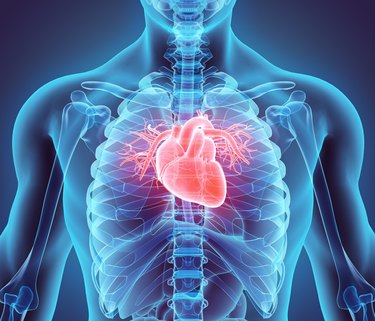
An EKG, or electrocardiogram, measures the electrical activity of the heart through electrodes that are applied to the chest. These electrodes measure the amount of time it takes an impulse to travel through the atria, or upper chambers, then into the ventricles, or lower chambers, of the heart. When the heart works properly, it's like a well-oiled machine, but when the electrical activity is impaired by drugs, illness, disease, aging or trauma, the result is dropped, blocked or misfired signals that cause the heart to behave erratically, or not at all. The causes of an abnormal EKG usually require medical intervention, but not always.
Heart Block
A heart block, or AV block, is an impairment, or hiccup of sorts, of the signal from the atria to the ventricle. A first-degree, second-degree and third-degree complete heart block will cause an abnormal EKG result.
A first-degree block occurs when the signal is slower than normal as a result of medication or exceptional physical condition. A second-degree block occurs when the signal falls short of the ventricle, causing a dropped beat. There is a Type I and a Type II second-degree block; Type I is a skipped beat, while Type II skips a beat and actually slows the heart rate, which may require a pacemaker to regulate.
A third-degree complete heart block occurs when the signal drops altogether. A complete heart block can cause cardiac arrest and requires immediate medical attention. This block can be the result of medication, injury or a surgical mishap, to name a few causes.
Bradycardia
Bradycardia occurs when the heart beats fewer than 60 beats per minute; however, individuals in excellent physical condition will often have a resting heart rate lower than 60 beats per minute, which is normal for them. For individuals who are not in tip-top shape whose hearts are beating fewer than 60 beats per minute, it's an indication of impaired circulation and insufficient blood flow to the brain and internal organs. A dangerously low sustained heart rate is corrected by implanting a pacemaker to increase the heart rate and improve blood flow.
Tachycardia
Tachycardia, signifying a heart rate over 100 beats per minute, can escalate and become life-threatening. Tachycardia causes dizziness, chest pain and a pounding sensation in the chest. This arrhythmia can develop into ventricular tachycardia and ventricular fibrillation.
Ventricular tachycardia compromises blood flow to the brain and internal organs. Ventricular fibrillation causes the heart to become totally ineffective, causing cardiac arrest and death if it is not treated immediately. All of these arrythmias can be seen on an EKG.
Premature Contractions
Premature atrial contractions, or PACs, are premature or irregular beats originating in the atria, and are usually of little or no consequence. A PAC is often referred to as a heart palpitation. A premature ventricular contraction, or PVC, occurs when the heartbeat begins in the ventricles, instead of the SA node, where it normally starts. This beat is easily recognized on an EKG as a skipped beat.


