






























































Bell's Palsy Signs & Symptoms

Bell's Palsy Signs & Symptoms
Photo Credit face image by Dmitri MIkitenko from Fotolia.com

Bell's palsy, the most common type of facial paralysis, is named for Sir Charles Bell, an early 19th-century surgeon who charted the course of the facial nerve and the muscles of facial expression that are served by that nerve. Though the precise cause of the condition is unknown, the Merck Manual cites swelling and damage of the facial nerve through an immune or viral reaction as the most probable cause. The signs and symptoms of Bell's palsy can help in ruling out a more serious condition like stroke.

Early Symptoms

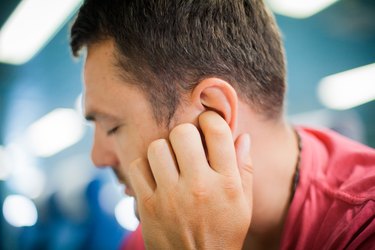
Though certainly not the rule, many people experience pain in the area of the jaw, neck or ear of the affected side prior to the onset of obvious facial weakness. Headache may also precede the facial symptoms. These early symptoms add some credence to the notion that Bell's palsy is caused by a virus or an immune system reaction.

Appearance

Bell's palsy most often involves the facial nerve on one side of the face only. The primary role of the facial nerve is to control the muscles of facial expression. When the nerve is damaged, the face will begin to droop on the involved side. Because of a lack of muscle tone, the smile and frown lines will be reduced. This sometimes leads to an appearance of swelling when there is no actual swelling. The eye may appear larger because the "squint" muscles are deactivated.

Functional Signs Relating to Movement

When raising the eyebrows, there will be no furrowing of the brow on one side. The eye cannot be closed tightly. Smiling and frowning will accentuate the facial asymmetry. Whistling, blowing up a balloon, or drinking through a straw are examples of relatively simple tasks made difficult or impossible with Bell's palsy.

Secondary Symptoms

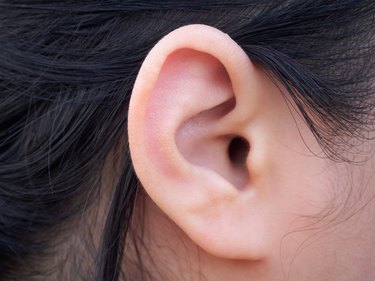
In his book, "Examination of the Cranial Nerves," Dr. David Perkin describes additional functions of the facial nerve, including control of the tear glands and salivary glands. This means that in someone suffering from Bell's palsy, the eye of the involved side will be dry and the mouth may also be somewhat dry. In addition, the facial nerve is responsible for the sense of taste on the forward part of the tongue, so Bell's palsy can cause a loss of the ability to taste on the affected side of the tongue. Occasionally, Bell's palsy results in enhanced hearing in one ear because the muscle that stretches the eardrum is paralyzed.

"Red Flags"

Changes in vision, numbness of the face, difficulty moving the tongue or swallowing are examples of deficits that would not relate to the facial nerve. These, as well as any neurological deficits from the neck down, would suggest a condition other than Bell's palsy.
Any case of facial weakness or paralysis warrants an evaluation by a health care provider to rule out more serious conditions and to determine the best course of treatment.

References

Article reviewed by Mia Paul Last updated on: May 3, 2010

Must see: Photo Galleries