






































































Advanced Lyme Symptoms

Advanced Lyme Symptoms
Photo Credit female sharm image by Vasily Smirnov from Fotolia.com

Lyme disease is caused by a bacterium that is transferred to humans by ticks. The bacterium, Borrelia burgdorferi, is spread to humans when a tick bites the patient and transfers the bacterium to the patient's bloodstream. Most tick bites do not cause Lyme disease. If the patient does develop symptoms of Lyme disease, treatment should be given immediately in order to avoid advanced symptoms of the disease. Advanced symptoms of Lyme disease typically occur weeks to years after the initial exposure, states Kids Health.

Arthritis

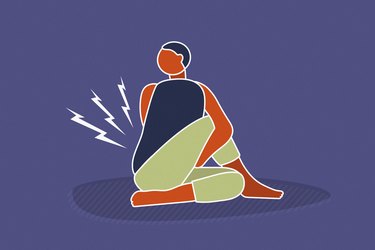
Arthritis is one of the more common symptoms of Lyme disease, reports FamilyDoctor.org. The condition causes the patient's immune system to deposit substances in the joints. The joints become tender and start to swell. Movement worsens the arthritis. The arthritis associated with Lyme disease is often localized to one of the large joints, such as the knee. In some cases, the arthritis may affect two or more joints.

Neurological Problems

About 10 percent to 20 percent of patients manifest neurological problems during the late stages of Lyme disease, according to the University of Maryland Medical Center. Symptoms may include depression, attention or memory problems, and headache. The infection can cause pain or tingling in the legs or arms. This condition is called peripheral neuropathy. In rare cases, patients develop facial paralysis, which is called Bell's palsy. Patients may also develop mood changes. These symptoms usually resolve within a year.

Heart Symptoms

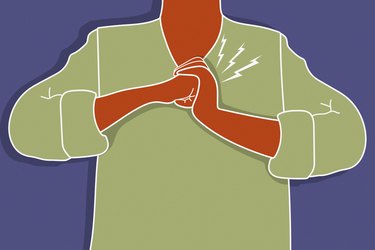
Lyme disease can cause various problems in the heart, states FamilyDoctor.org. An irregular heartbeat is the most common manifestation of advanced Lyme disease. The patient can develop a rapid heartbeat or the heart may slow down to an abnormally low pace. Furthermore, patients may also develop chest pain.

Post-Lyme Disease Syndrome

A syndrome is a group of symptoms that regularly occur together. In rare cases, Lyme disease can develop a group of symptoms that last for years after the initial infection. These symptoms include persistent fatigue, muscle aches, memory problems and headache. This group of symptoms is called post-Lyme disease syndrome, according to the University of Maryland Medical Center. Any patient who experiences symptoms more than six months after the initial infection is diagnosed with this syndrome. It only occurs in 5 percent of all Lyme disease cases. Post-Lyme disease syndrome used to be called chronic Lyme disease.

References

Article reviewed by Marilyn Simons Last updated on: May 16, 2010

Must see: Photo Galleries