


























































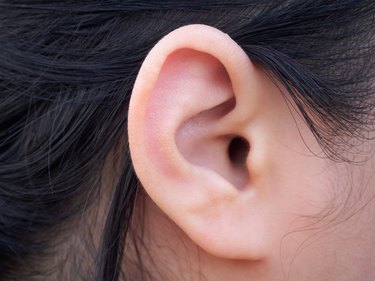









The Eustachian tubes are the openings that connect the middle part of the ear to an area in the back of the nose called the nasopharynx. Their function is to help keep the pressure stable in the middle ear and drain extra fluid from behind the eardrum. In children, the Eustachian tubes are narrow and are very pliable; they are also at an angle that makes them more likely to malfunction. Together, these three childhood attributes are the main reason that very young children, especially those younger than age five, get frequent ear infections. In most cases, the Eustachian tubes become fully functional and normalized by adulthood. However, poorly functioning Eustachian tubes can last into adulthood for some people, leading to painful ear infections and other recurring symptoms.
Acute Otitis Media
Acute otitis media, also known as a middle ear infection, is an infection caused by fluid buildup behind the eardrum. Although the infection is more common in children, it can happen to anyone with poorly functioning Eustachian tubes. One big problem with this infection is that not only does it occur because of malfunctioning Eustachian tubes, but it also causes swelling and further closing off of the tubes. A course of antibiotics is often required to clear the infection. For children who have recurrent infections as they get older, some doctors recommend removing the adenoids and tonsils.
Anatomic Abnormalities
Abnormal anatomic features, such as cleft palate or other facial abnormalities, may lead to Eustachian tube abnormalities. In many cases, the Eustachian tubes are either too narrow or are blocked due to irregularities in the surrounding structures. For those individuals frequent ear infections may recur due to the failure of the Eustachian tubes to drain the middle ear.
Gastroesophageal Reflux
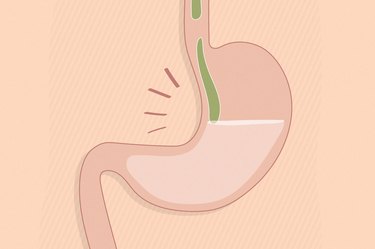
Gastroesophageal reflux disease, or GERD, has the potential to cause inflammation of the Eustachian tubes and the tissues surrounding the opening of the Eustachian tubes. The swelling from that inflammation can then block the Eustachian tubes and prevent them from functioning properly. The end result is an increased risk of ear infections.
Upper Respiratory Infections
Upper respiratory infections, usually caused by viruses, can cause swelling in the lining of the nose, sinuses and the tissues surrounding the openings of the Eustachian tubes. That swelling can block the Eustachian tubes, thereby preventing them from functioning correctly. Ear infections frequently form by this mechanism, especially in young children. Again, if frequent upper respiratory infections lead to adenoid and/or tonsil swelling, which contributes to ear infections, the surgeon may recommend a tonsillectomy and/or adenoidectomy.
References
- Children's Health Topics: Ear Infections
- Journal "Pediatrics"; Otitis Media with Effusion; American Academy of Family Physicians; American Academy of Otolaryngology--Head and Neck Surgery; American Academy of Pediatrics Subcommittee on Otitis Media with Effusion; January 2004
- "International Journal of Pediatric Otorhinolaryngology"; Gastroesophageal Reflux and ENT Disorders in Childhood; June 1995
- Journal "Acta Histochemica"; Palatal Fusion--Where Do the Midline Cells go?: A Review on Cleft Palate, a Major Human Birth Defect; Marek Dudas; March 2007


